

Introduction

I’m Mike Werner, CEO of Matera Builders. Salt air and humidity are hard on kitchens. Hardware pits, cheap cabinet boxes swell and some appliance finishes corrode years earlier than they would inland.
Here is how I guide clients through kitchen material choices in shore homes, from cabinet boxes to faucets.
What Salt Air Does to a Kitchen
Coastal air causes a few predictable problems:
- Corrosion: salt speeds up rust and pitting on lower-grade metals, hinges and fasteners.
- Swelling: humidity gets into particleboard and MDF edges, especially around sinks and dishwashers.
- Finish wear: some painted and coated surfaces chalk or peel faster near the ocean.
- Seasonal swings: homes closed for the winter see humidity changes that stress wood and joints.
The closer the home is to the ocean or bay, the more these choices matter.
Material Choices I Review
These are the six material decisions that make the biggest difference in a shore kitchen.
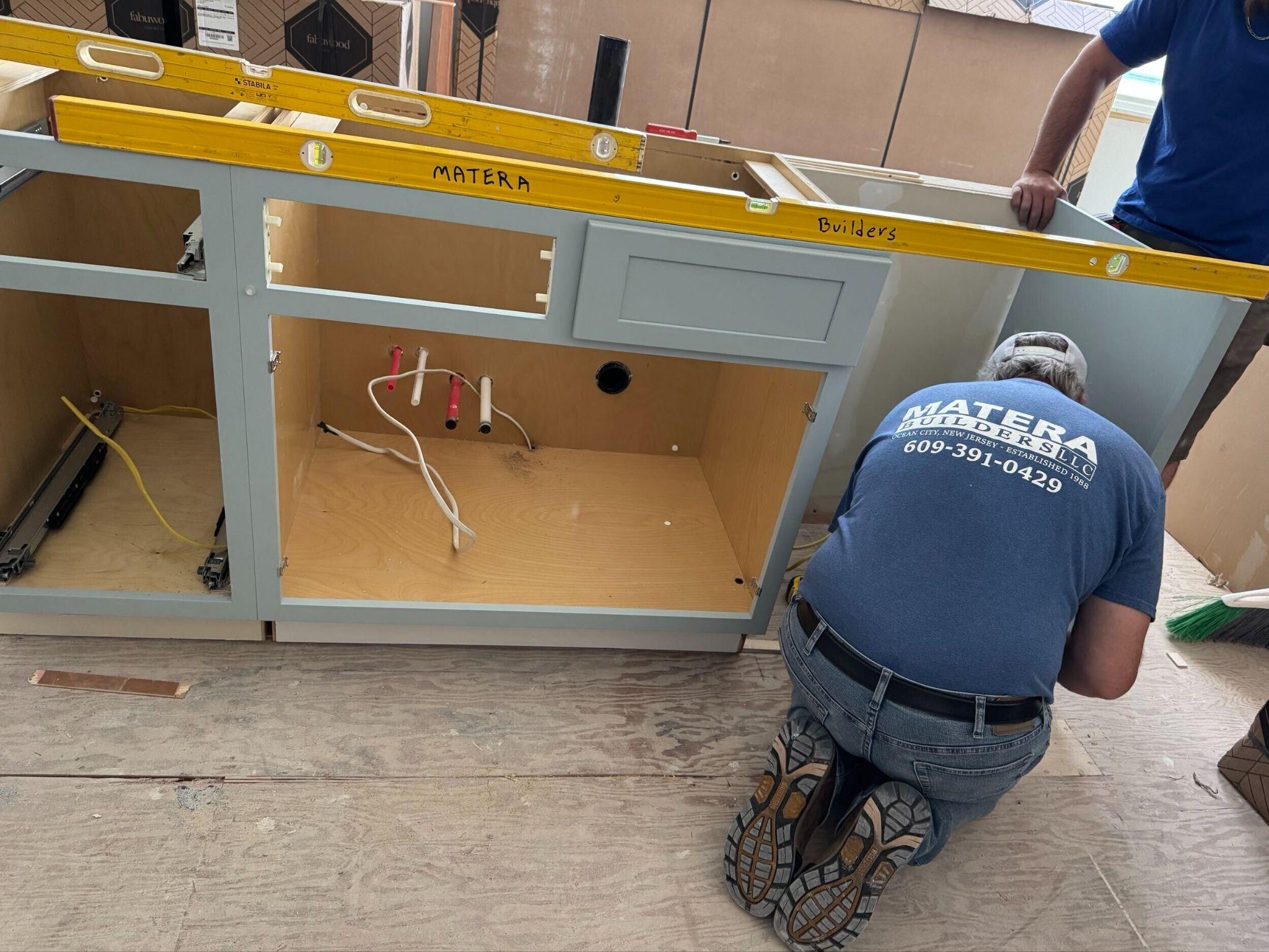
- Cabinet Boxes
- Why It Matters: The box is what fails first when moisture gets in.
- What I Look For: Plywood construction or moisture-resistant materials, sealed edges and a finished interior under the sink.
- Cabinet Finishes
- Why It Matters: Finish quality decides how cabinets look after a few seasons.
- What I Look For: Factory-applied catalyzed finishes, which resist moisture better than site-applied paint.
- Countertops
- Why It Matters: Some stones stain or etch, and some materials handle humidity better than others.
- What I Look For: Quartz and dense granite for low maintenance, or sealed natural stone if the owner accepts upkeep.
- Hardware and Hinges
- Why It Matters: Lower-grade metals pit and rust in salt air.
- What I Look For: Solid brass or high-grade stainless hardware and soft-close hinges rated for humid climates.
- Faucets and Sinks
- Why It Matters: Plumbing fixtures take constant water exposure on top of salt air.
- What I Look For: Solid brass faucet bodies, durable finishes and stainless or composite sinks.
- Appliances
- Why It Matters: Exterior finishes and internal components can corrode near the ocean.
- What I Look For: Finishes that resist fingerprints and corrosion, and a properly ducted range hood to move moist air out.
Oceanfront, Bayfront and Inland Blocks
Not every shore home faces the same exposure. An oceanfront home in Avalon or Stone Harbor gets more salt and wind than a house a few blocks inland in Ocean City, and material choices can be scaled to match.
Homes that sit closed for the winter add another factor. Humidity rises and falls without anyone running the heat or air conditioning, which is hard on wood and finishes. Planning for climate control or dehumidification protects the investment.
Kitchens that open onto decks see sand and wet traffic too. Flooring, cabinet toe kicks and door thresholds near those entries deserve the most durable materials in the room.
Planning Checklist
- Ask how cabinet boxes are built, not just how doors look.
- Choose countertops based on how much upkeep you will do.
- Specify solid brass or high-grade stainless hardware.
- Plan an exterior-ducted range hood.
- Discuss humidity control if the home sits closed in winter.
Common Mistakes to Avoid
These choices often look fine on day one and fail within a few seasons:
- Particleboard sink bases in a humid kitchen.
- Plated hardware that pits near the ocean.
- A recirculating hood instead of one ducted outside.
- Soft stone countertops in a busy rental kitchen.
- Site-painted cabinets with no moisture-resistant finish.
The right materials cost a little more up front and much less over time.
FAQ
What countertop is best for a beach house kitchen?
Quartz is the most popular because it resists stains and needs no sealing. Granite and other dense stones also work well when properly sealed.
Are wood cabinets OK near the ocean?
Yes, if the boxes are well built and the finish is moisture resistant. Plywood construction and factory finishes hold up much better than particleboard and site paint.
What hardware does not rust in salt air?
Solid brass and high-grade stainless steel perform best. Plated and low-grade metals tend to pit and discolor.
Do I need special appliances in a shore home?
Not special models, but finish quality matters, and a hood ducted to the outside is important for moisture control.
The Bottom Line
Material choices near salt air come down to what is under the surface: cabinet construction, finish quality and metal grade. Those details decide whether a kitchen still looks new in ten years.
Choosing materials over the winter gives time to compare options before a spring build. Call Matera Builders at 609-905-4156 or request a consultation.
Related Reading
- Kitchen and bath remodeling at the Jersey Shore
- Why Layout Comes First in Kitchen Remodeling
- How to Choose Flooring for Kitchens and Baths in Coastal Homes
- Why Shore Home Renovations Need Better Moisture Planning