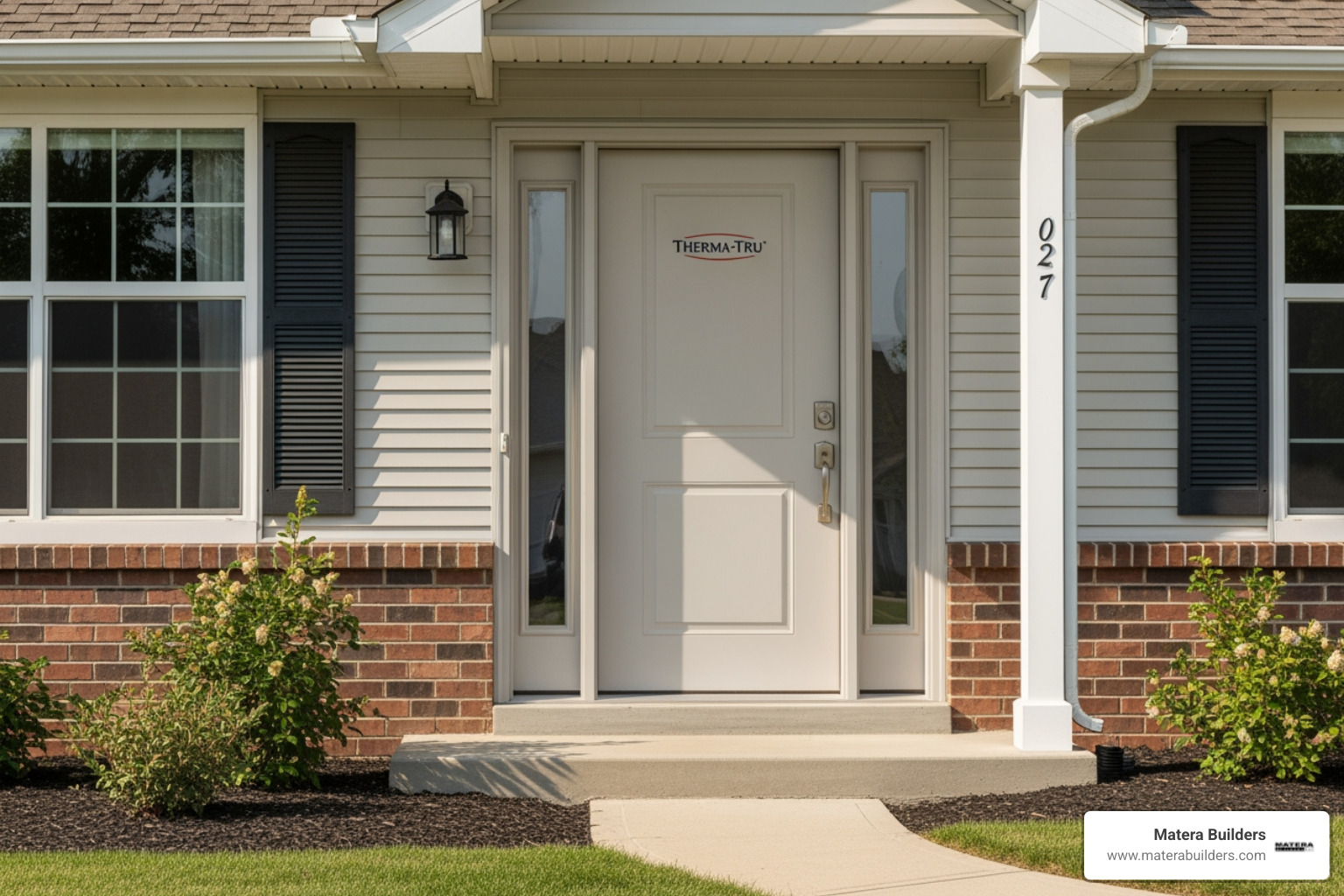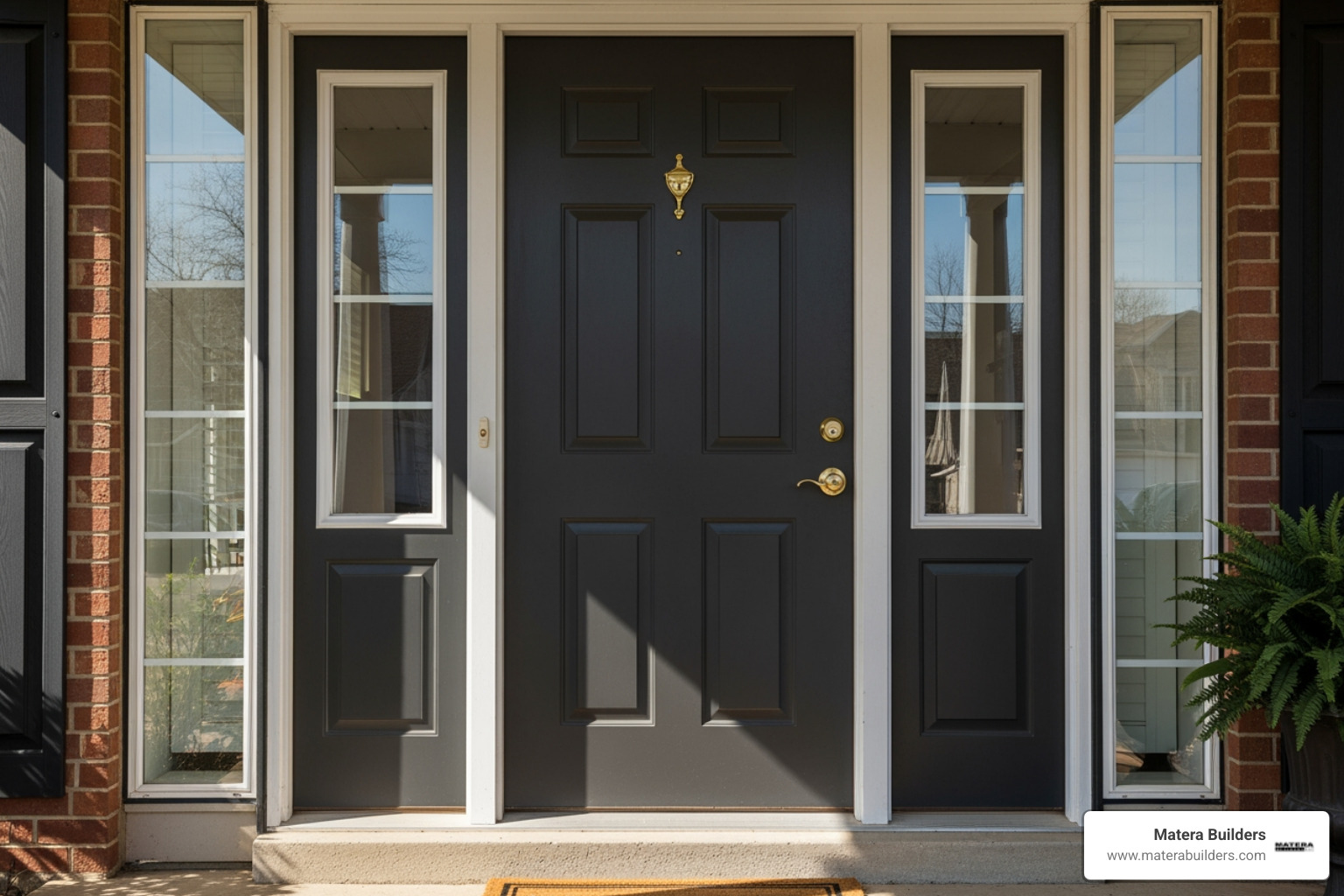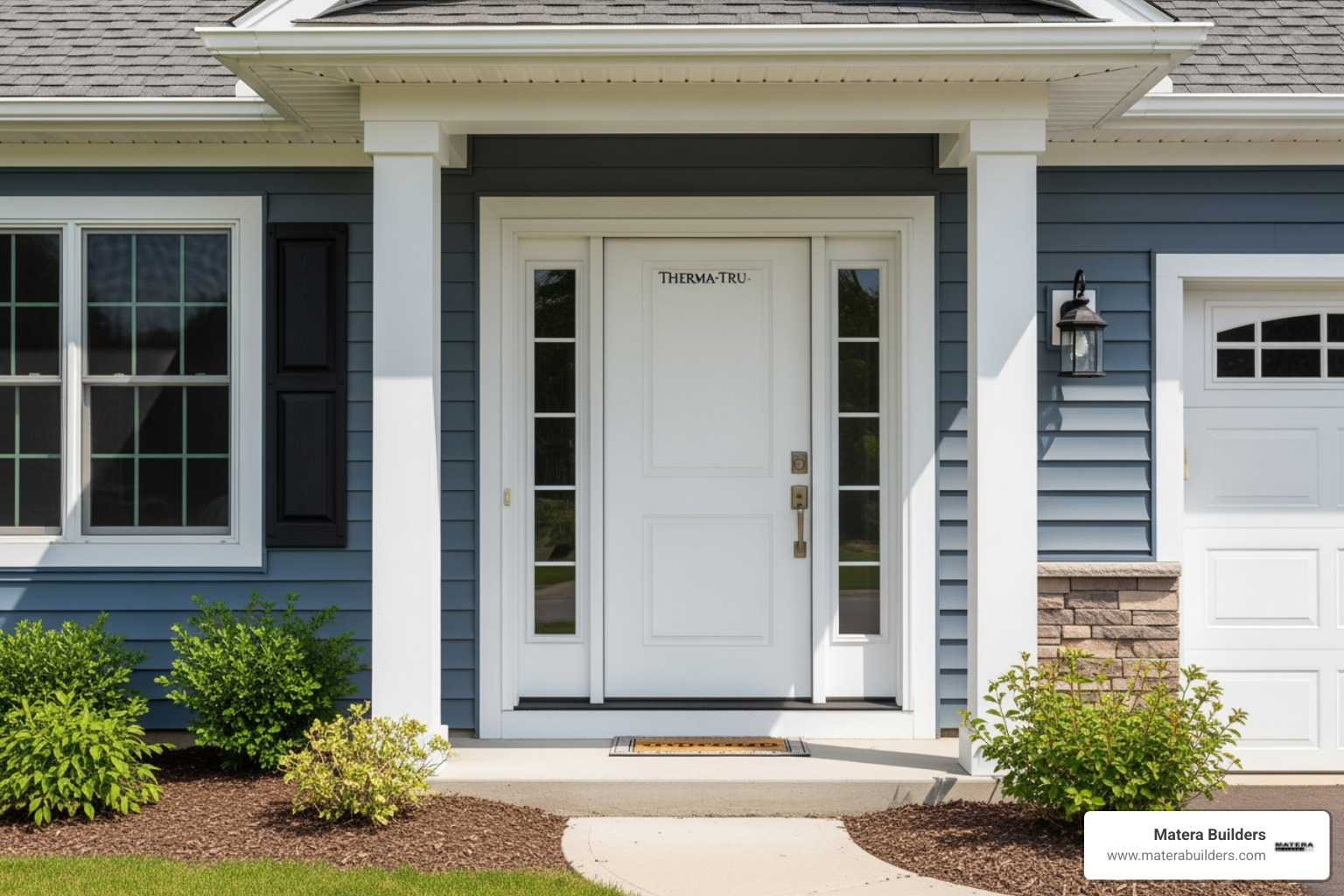



Why Installing Double Glazed Windows Protects Your Home
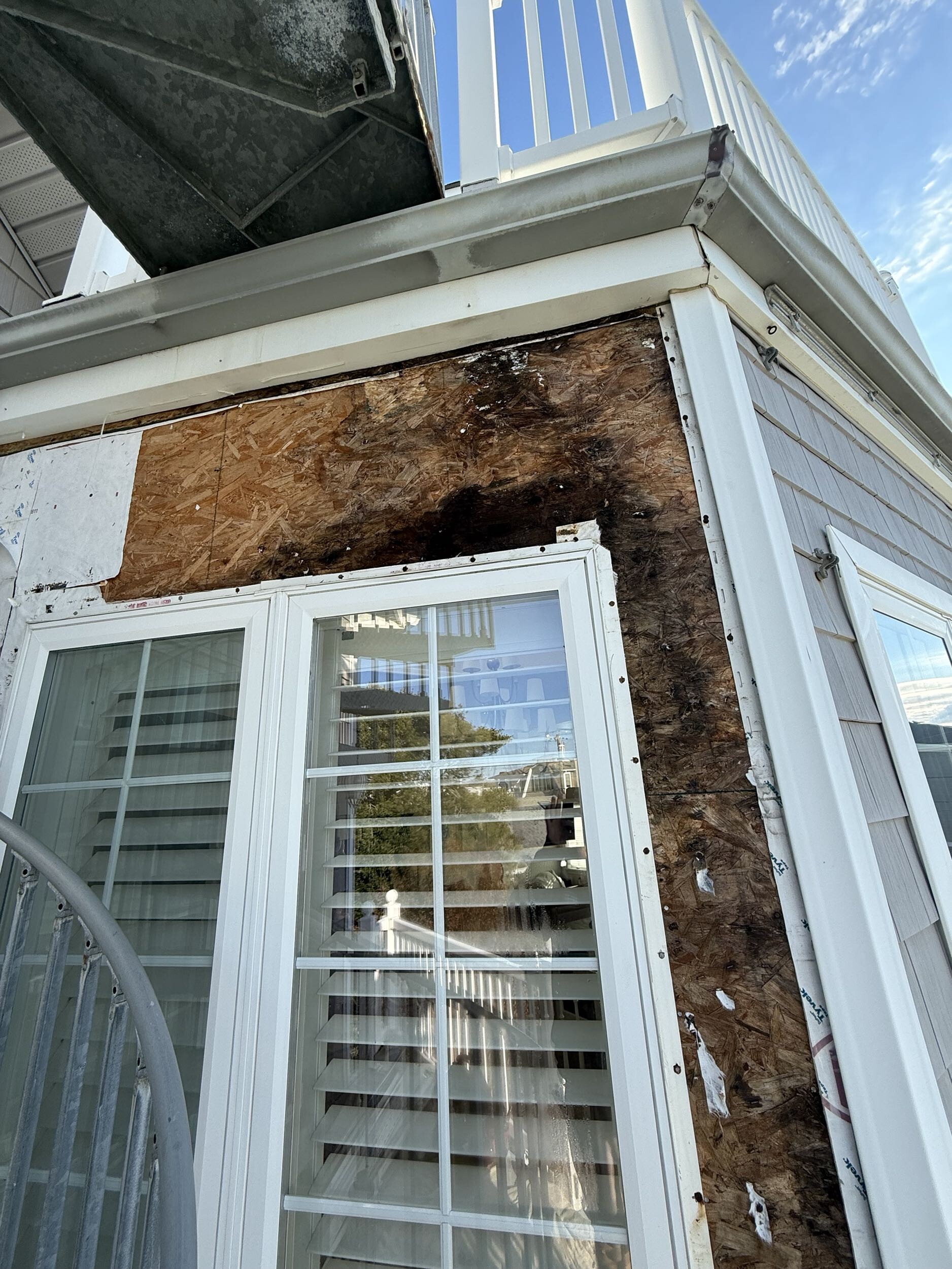
If your home has drafty frames or rising heating bills, you have a problem. Old windows do not just look tired. They let in wind, salt air, and water. Over time, that moisture can damage trim, wall cavities, and insulation. It can also leave you with peeling paint and soft wood around the opening.
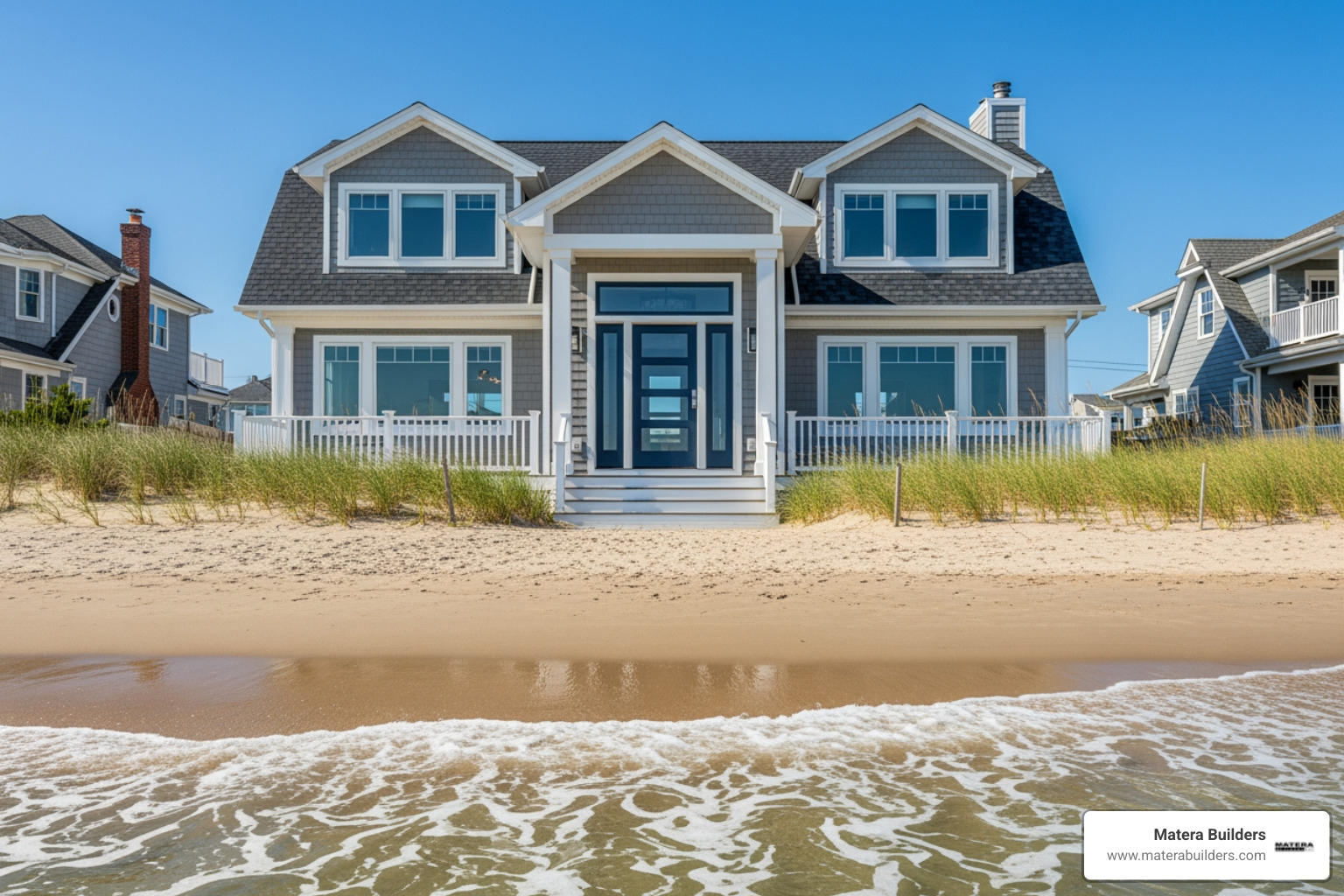
Along the Jersey Shore, the air carries salt. Salt speeds up corrosion on fasteners and hardware. It can also break down older seals faster than you would see inland. When a window leaks air, you pay for it every day. Your HVAC system runs longer. Rooms feel cold in winter and hot in summer. You might also notice that the house feels damp after storms.
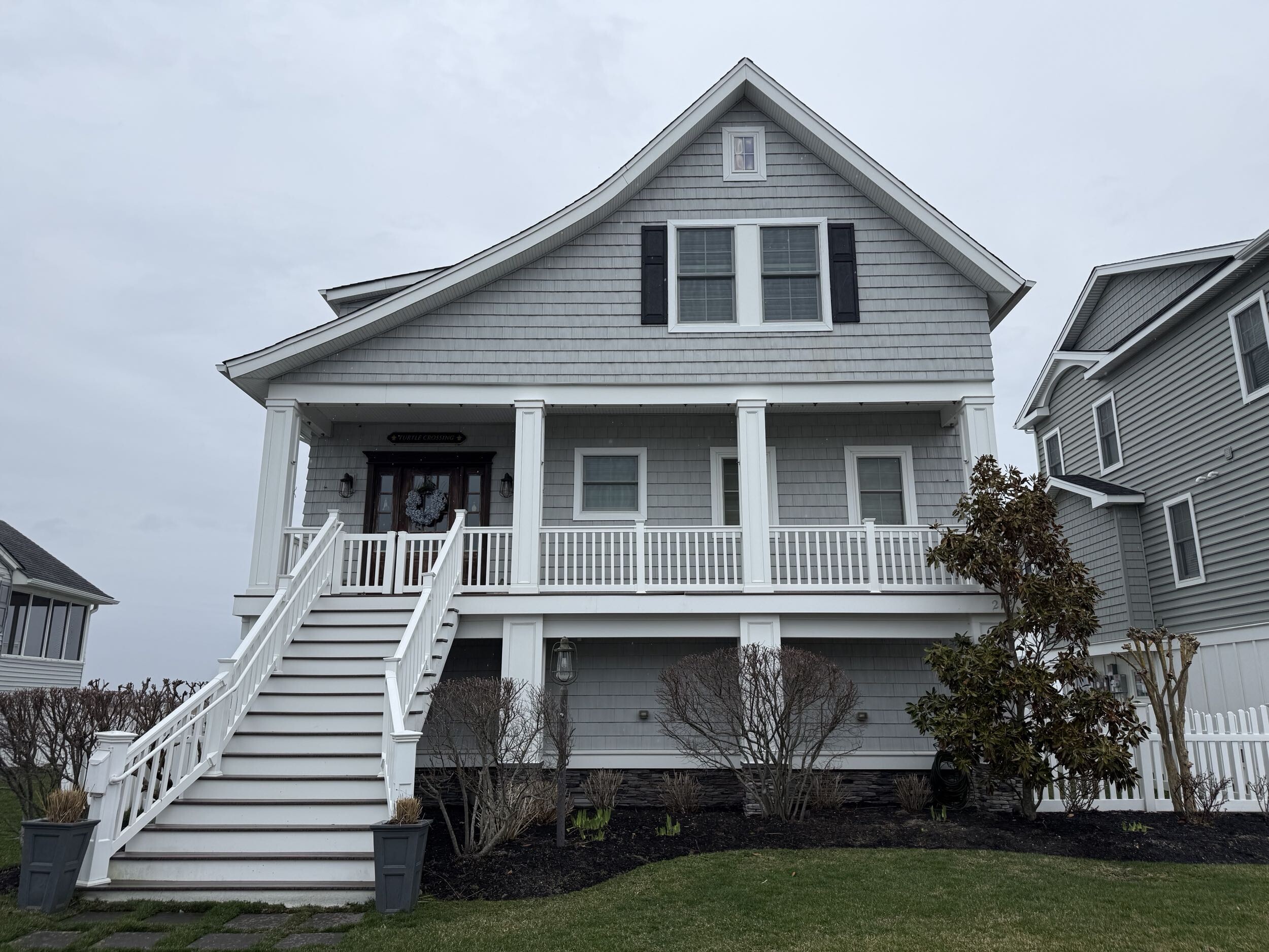
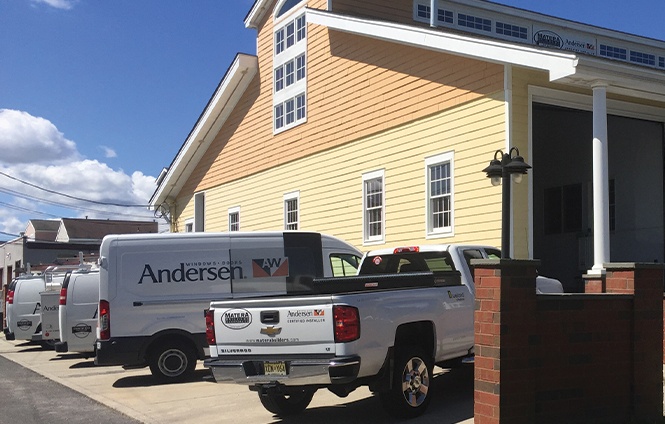
I am Mike Werner, CEO of Matera Builders, an Andersen Elite Certified Contractor focused on coastal window replacement in Ocean City, Avalon, Stone Harbor, and Sea Isle City since 1988. I have seen many windows fail because the product was average, but the installation details were worse. A strong window is only as good as the way it is anchored, flashed, insulated, and sealed.
This guide explains how we approach installing double glazed windows, including an Andersen Windows installation. The goal is simple. Keep water out. Stop air leaks. Let the house move without stressing the frame.
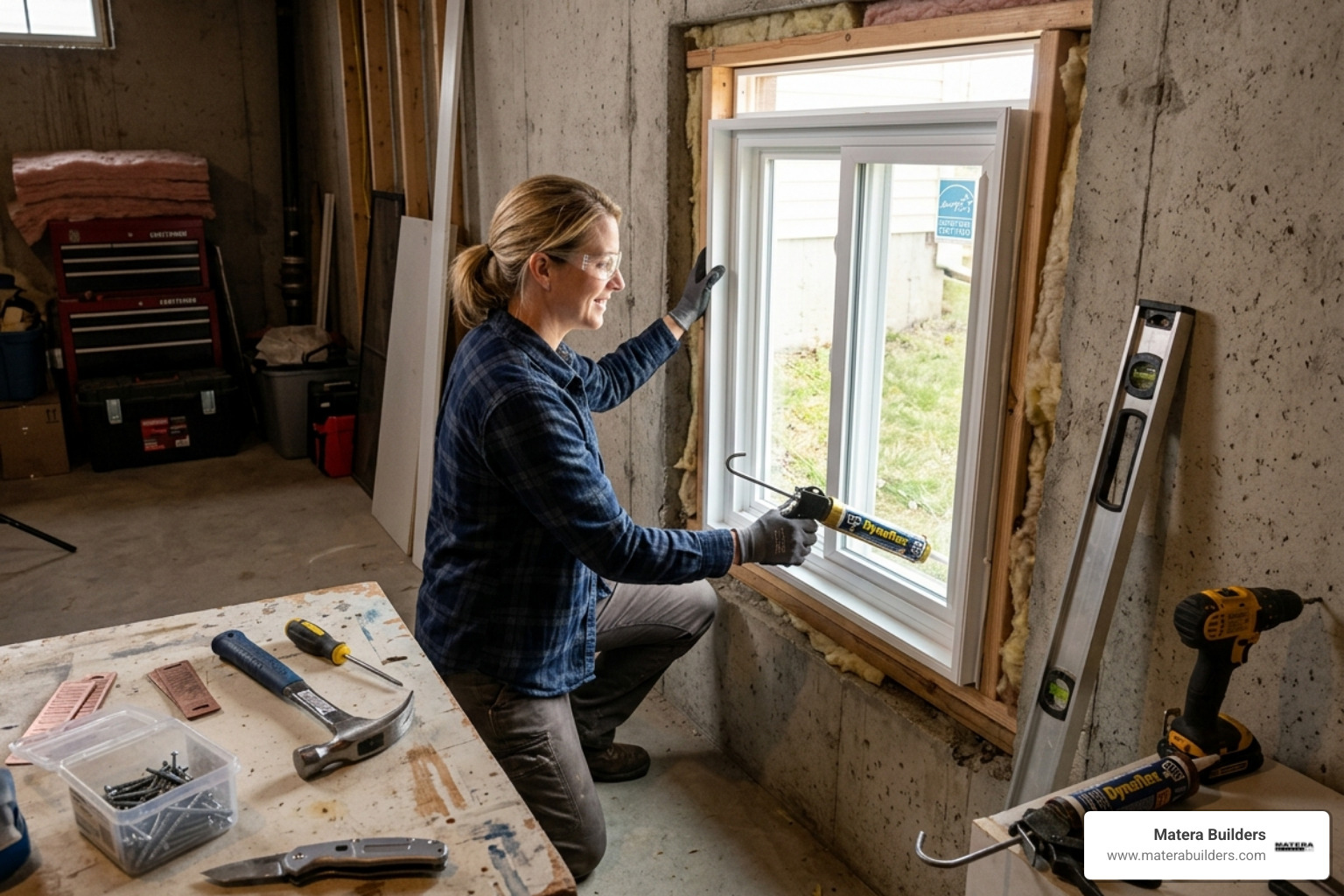
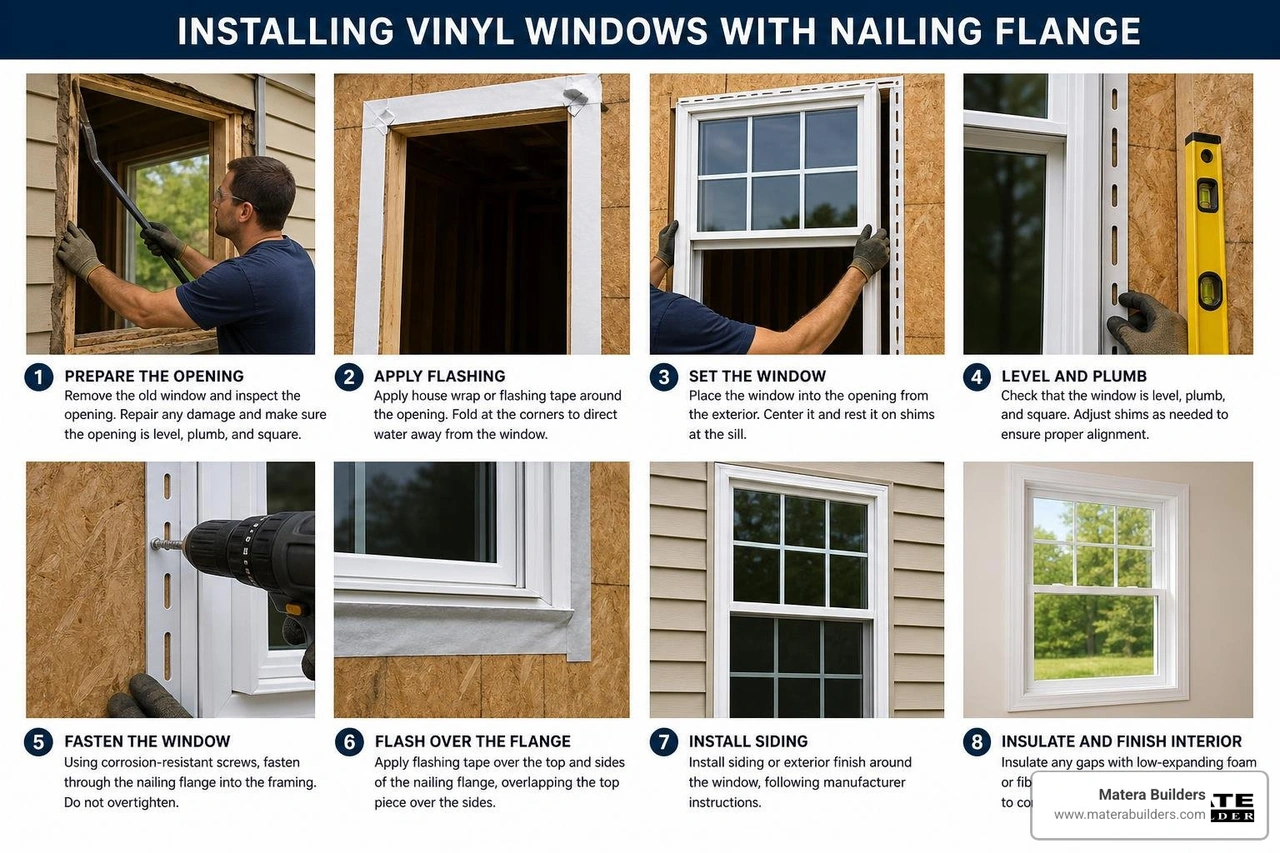
Here is the process we follow on most replacement projects:
- Measure the opening at three points.
- Confirm the opening is square and note any out of level conditions.
- Remove the old sashes and frame as needed.
- Clean the opening and check for rot or wet insulation.
- Correct the sill and jambs so the new unit sits flat.
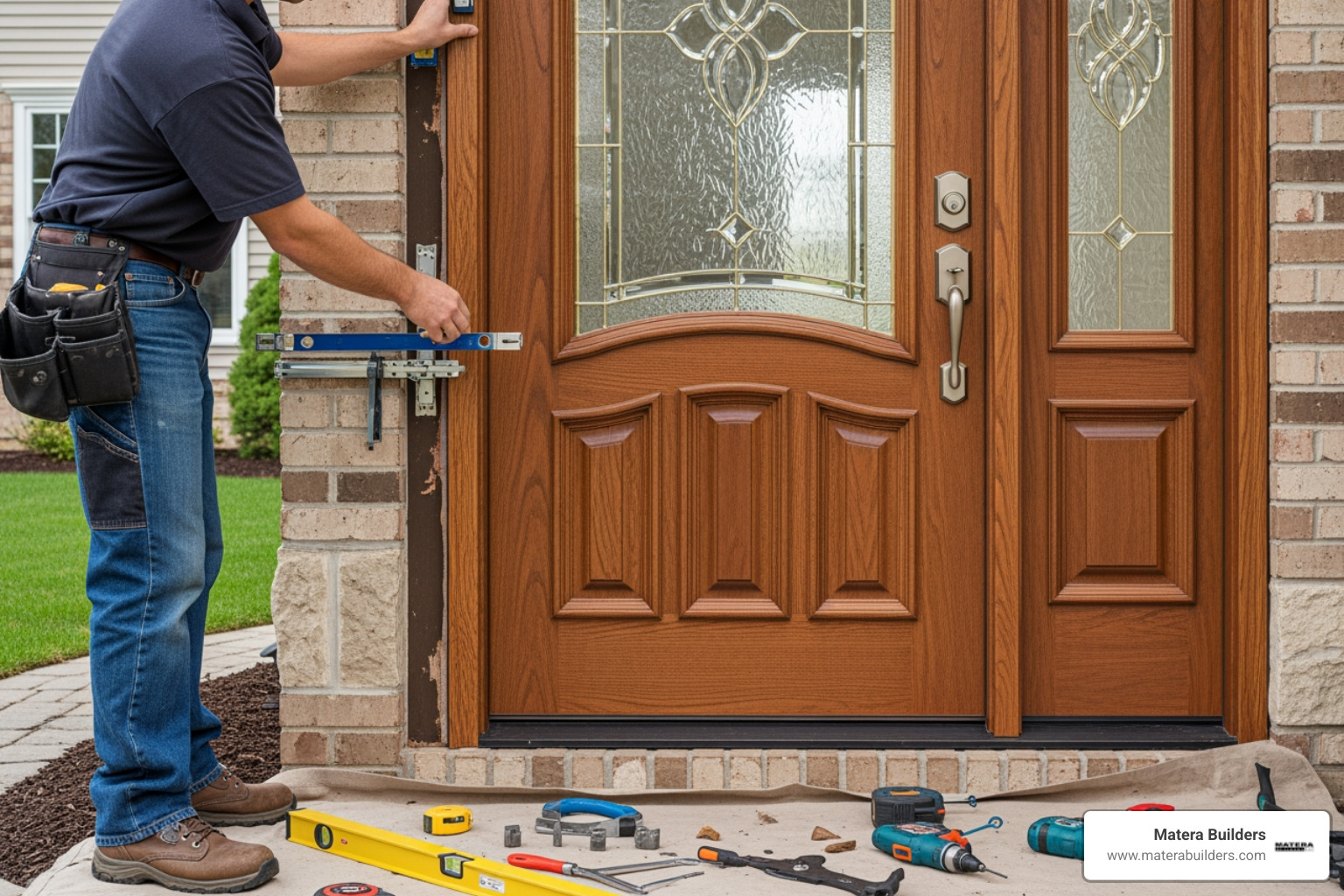
- Set the new frame, then level, plumb, and square it.
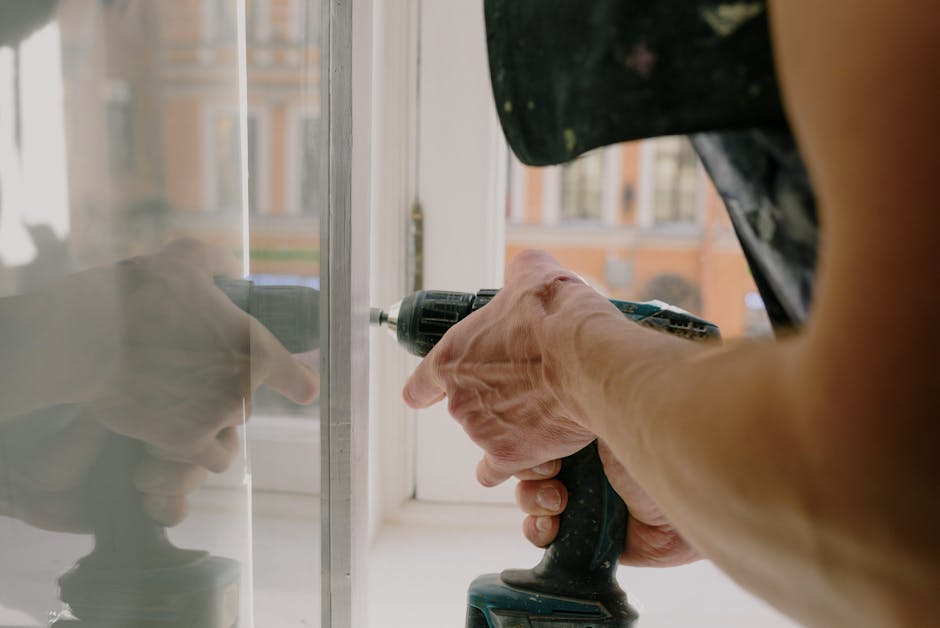
- Fasten the frame to the structure with corrosion resistant screws.
- Insulate the gap without bowing the frame.
- Install the glass or sash components.
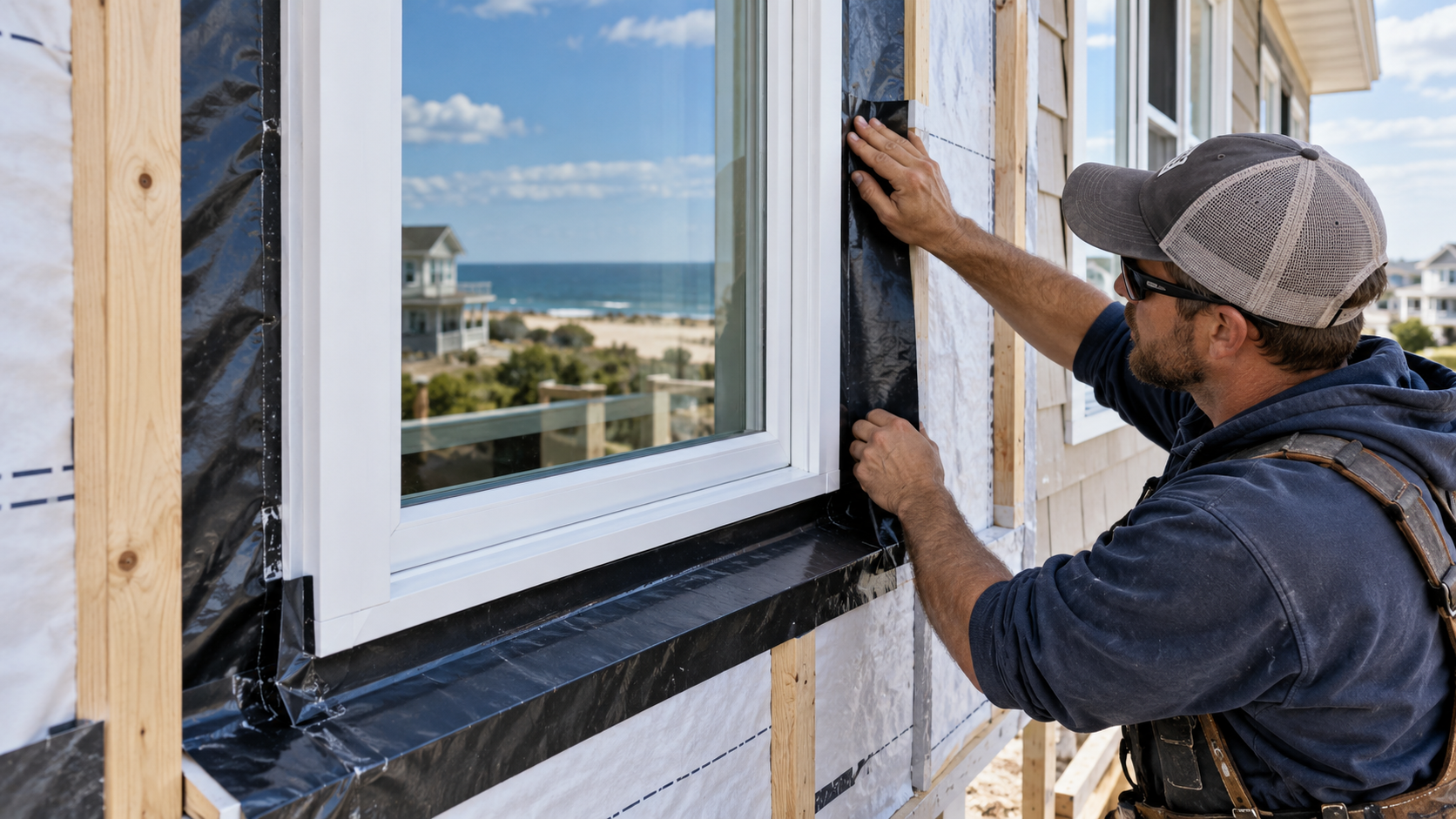
- Seal the edges and integrate flashing so water drains out.
- Test operation and lock alignment.
Upgrading to energy efficient windows can cut heating and cooling costs. Some homeowners report large savings, sometimes up to 40 percent, but results vary by home and how leaky the old windows were. The bigger point is this. Even a high quality double glazed unit will underperform if the install leaves gaps or weak seals.
In coastal towns like Ocean City NJ, we also plan for wind driven rain. That means the exterior seal and flashing matter just as much as the window itself. If water gets behind trim, it does not dry fast. That is when rot starts.
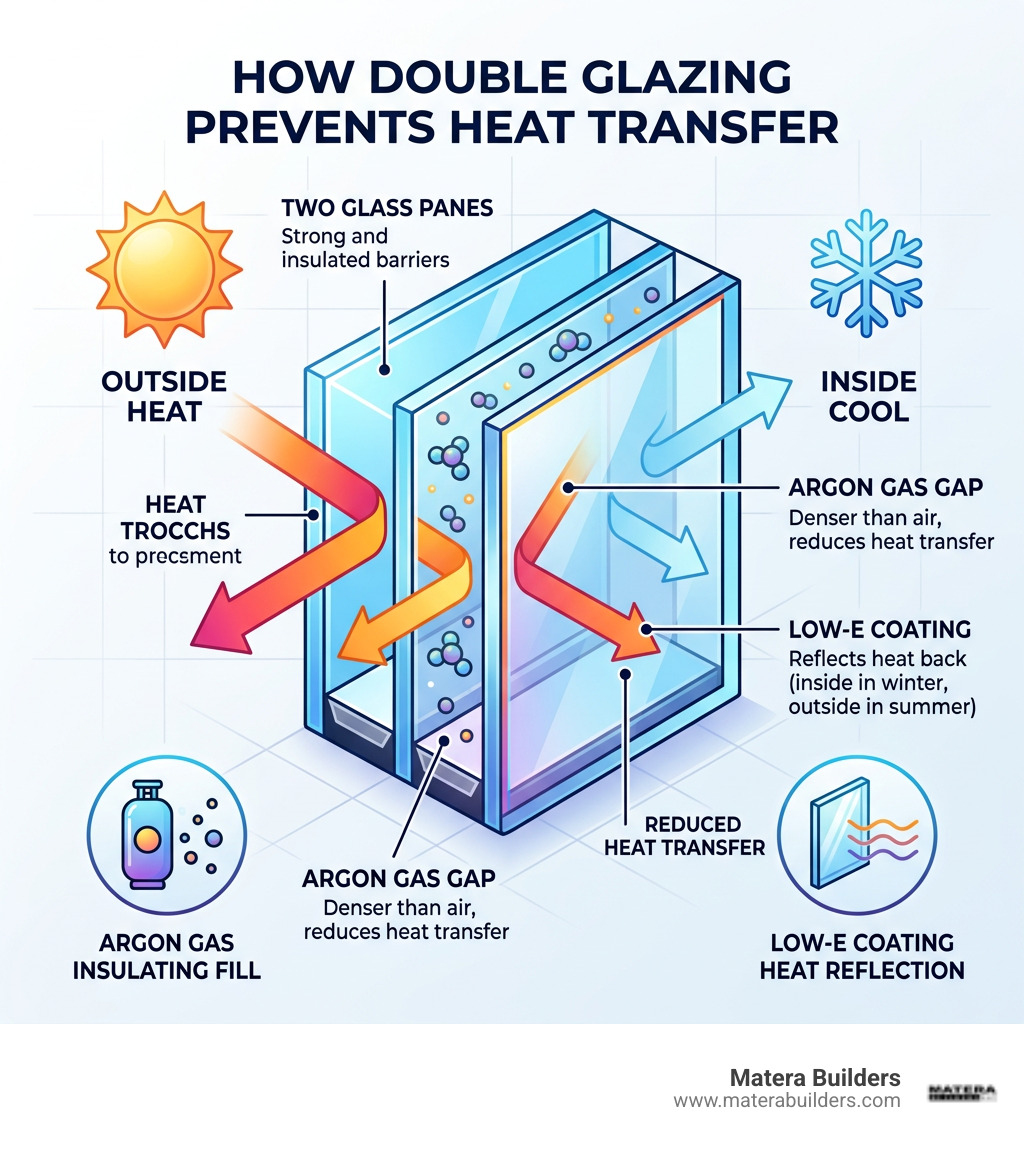
How Energy Efficient Windows Work
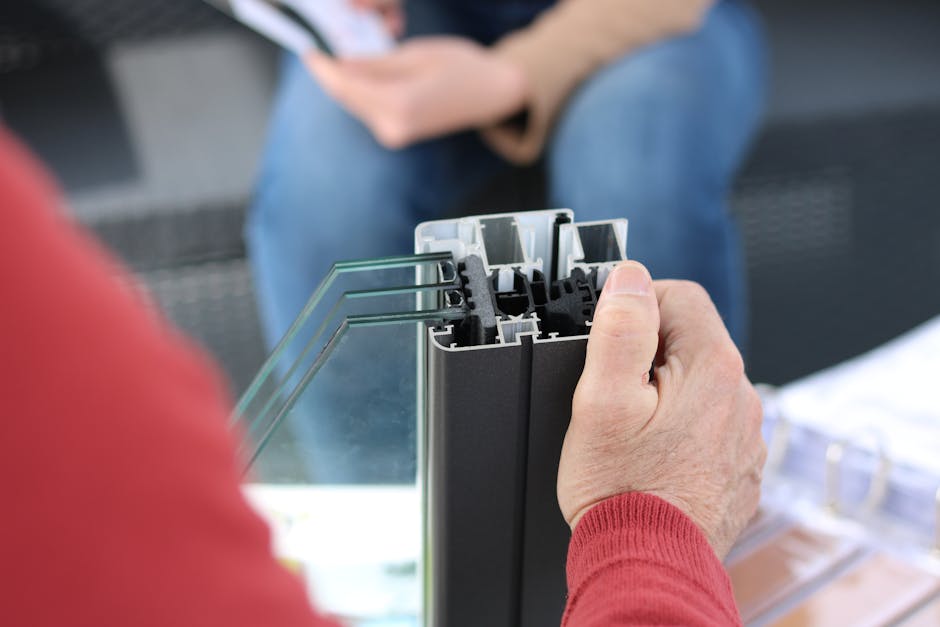
A double glazed window is a system, not just two pieces of glass. It creates a thermal and air barrier between your home and the weather. The space between the panes is sealed and filled with a gas, often argon. That gas slows heat transfer. The sealed unit also helps control moisture movement, which matters in high humidity areas.
Most energy efficient windows also use Low-E coatings on the glass. Low-E is a thin, clear layer that reflects heat. In winter, it helps keep indoor heat from escaping. In summer, it helps reduce heat coming in from the sun. That is a big deal in bright shore homes with lots of glass.
When you look at Energy Star window labels, focus on a few ratings:
- U-factor: How well the window resists heat loss. Lower is better.
- Solar Heat Gain Coefficient (SHGC): How much solar heat comes through the glass. Lower can help keep rooms cooler in summer.
- Air leakage (if listed): Lower means fewer drafts.
These numbers help, but they do not tell the whole story. A window can test well in a lab and still leak in your house if it is not set square, sealed correctly, and insulated without bending the frame. That is why homeowners should think about the product and the installer together.
Benefits of new windows
- Less Noise: Two panes and a sealed air space can reduce outside noise. Proper shimming and sealing also reduces whistling in wind.
- Less Drafts: A tight install stops air leaks that make rooms uncomfortable.
- No Fog: When the insulated glass seal fails, moisture can fog between panes. A quality unit installed correctly reduces that risk.
- Better Security: Two panes of glass and modern locks add resistance to break-ins.
- Home Value: Buyers in New Jersey often ask about energy bills and window age. Newer energy efficient windows can support resale.
Choosing the right materials
Salt air and sun are hard on window frames. Material choice matters for long term performance.
For coastal work, we recommend the premium Andersen series we install the 400 Series, E-Series, and A-Series. These frames hold fasteners well, stay stable through temperature swings, and do not rot the way wood trim can.
Other common frame options each have tradeoffs:
- Vinyl: Often lower cost and low maintenance, but it can expand and contract more with temperature changes.
- Aluminum: Strong, but it can transfer heat and may need thermal breaks to perform well.
- Wood: Great insulation and looks, but it needs paint and regular upkeep to stay protected from moisture.
For Jersey Shore projects, we also look at hardware and fasteners. Stainless steel and other corrosion resistant parts help prevent early failure. That is a detail many homeowners do not see until locks and balances start sticking.
Measuring for a Perfect Fit
Getting the numbers right is the key to a window that lasts. A window should not be forced into an opening. If it is too tight, the frame can bind when the house moves. If it is too loose, you end up relying on foam and caulk to do structural work they were not meant to do.
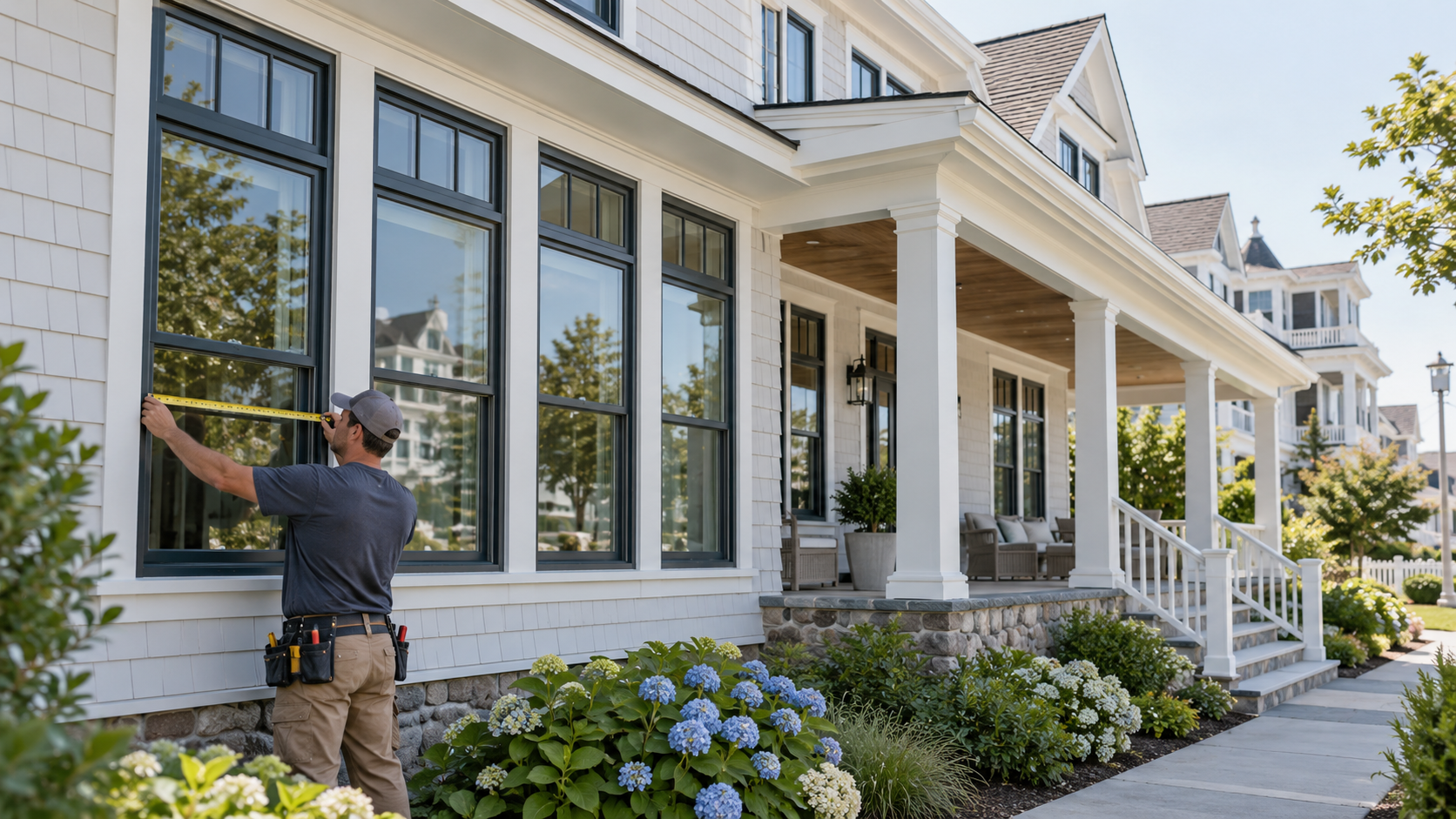
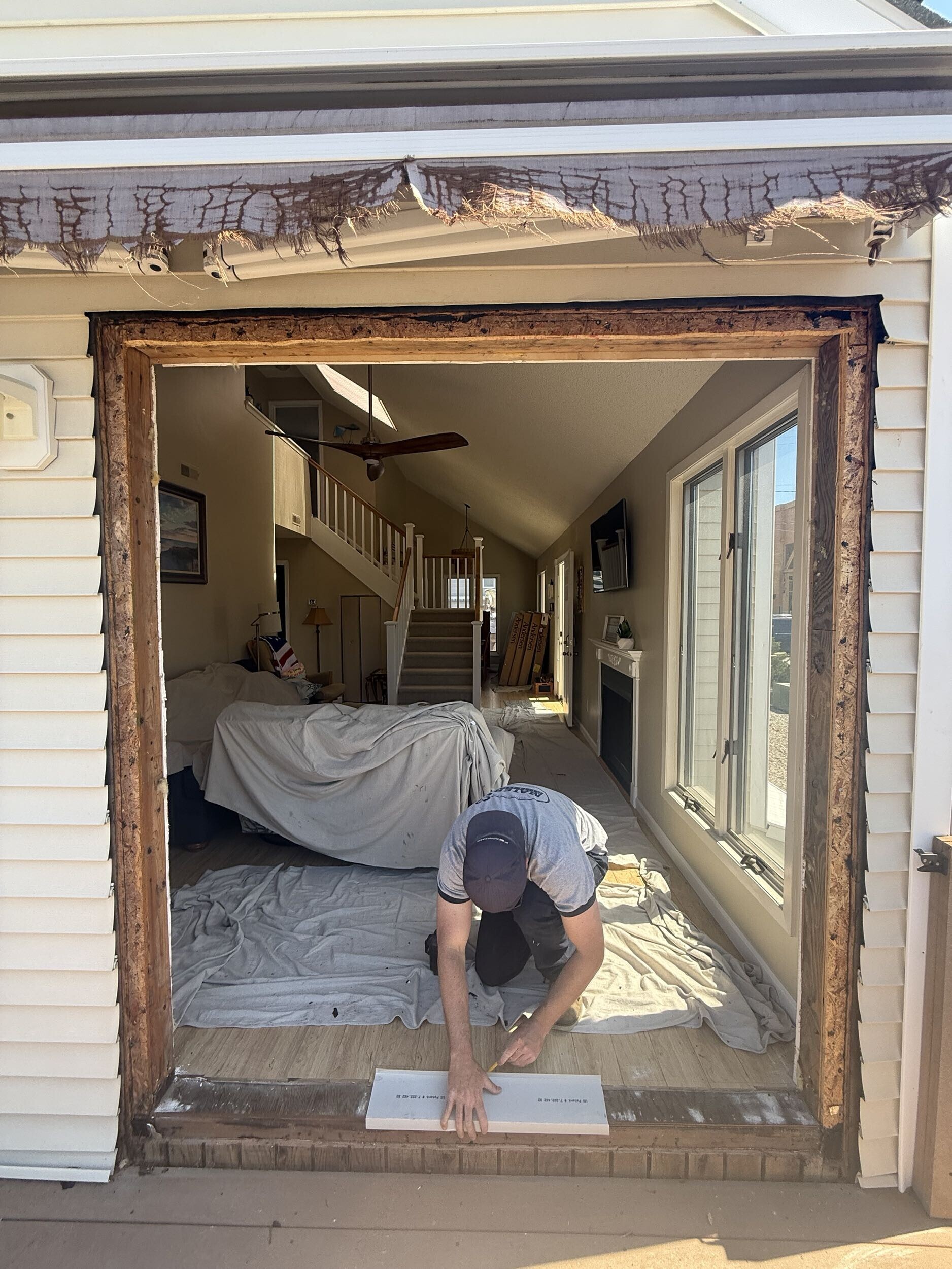
We measure width and height in three places and use the smallest number. We also measure the diagonals to see if the opening is square. If it is not square, we plan shim points so the unit sits level and the sashes operate smoothly.
In older NJ homes, it is common to see settling. The sill may tilt slightly. The jambs may be out of plumb. We correct what we can during prep, and we leave the right expansion gap so seasonal movement does not stress the frame.

Tools for the job
The right tools help us hit tight tolerances without damaging the home.
- Spirit level and framing square for level and plumb checks
- Tape measure for three point measurements
- Shims to fine tune the frame position
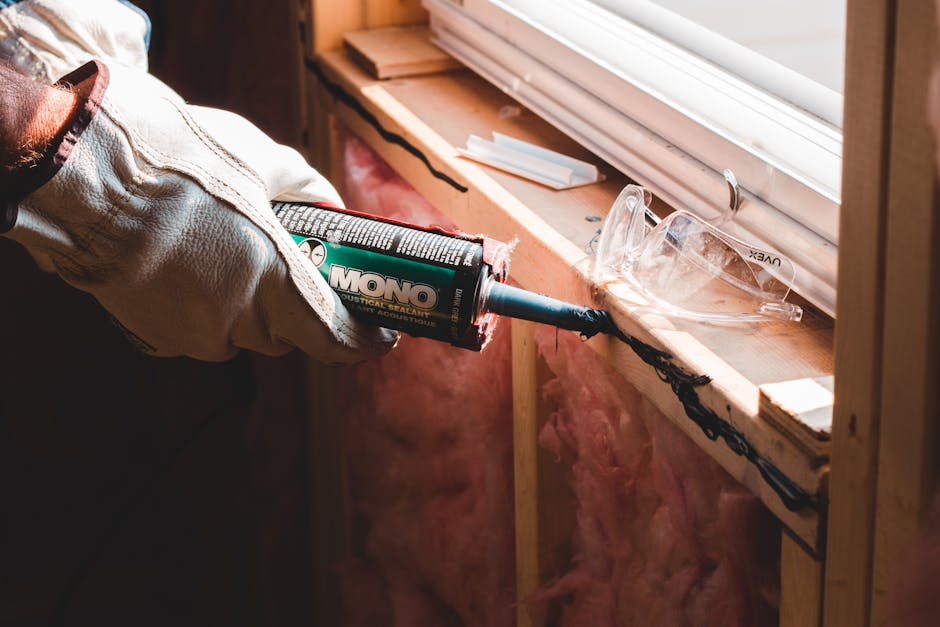
- Polyurethane caulk because it stays flexible and bonds well
- Stainless steel screws for coastal durability
- Utility knife and oscillating tool to cut old paint and trim cleanly
We also stage materials before we pull the old unit. On the coast, weather can change fast. The goal is to keep the opening exposed for as little time as possible.
Safety in older homes
Homes built before 1978 may have lead paint. When we work in these homes, we use containment practices like plastic sheeting and controlled cleanup. We also use proper PPE and dust control so debris does not spread through the home.
Older double hung windows may have weight pockets. When those are left empty, they can become hidden air leaks. During a window replacement, we often insulate those cavities. That step helps stop drafts around the new frame and improves comfort in the room.
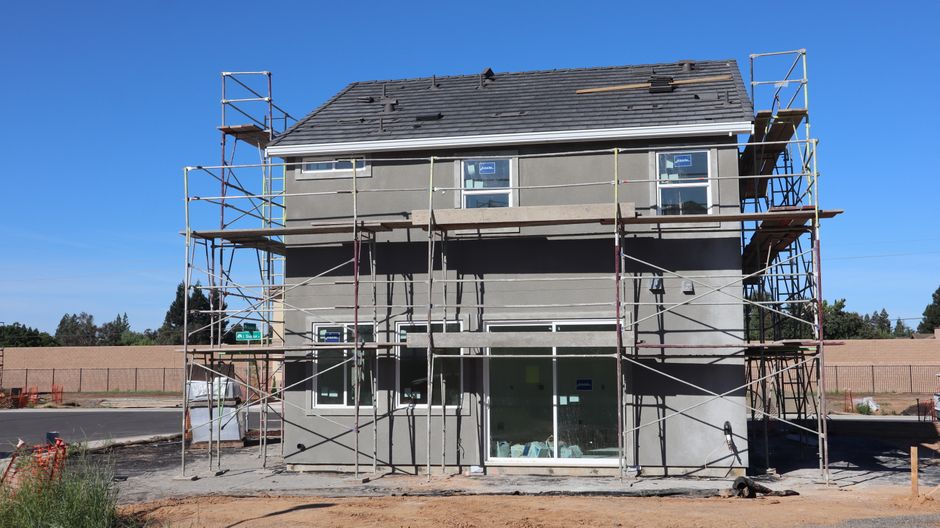
Removing the Old and Installing the New
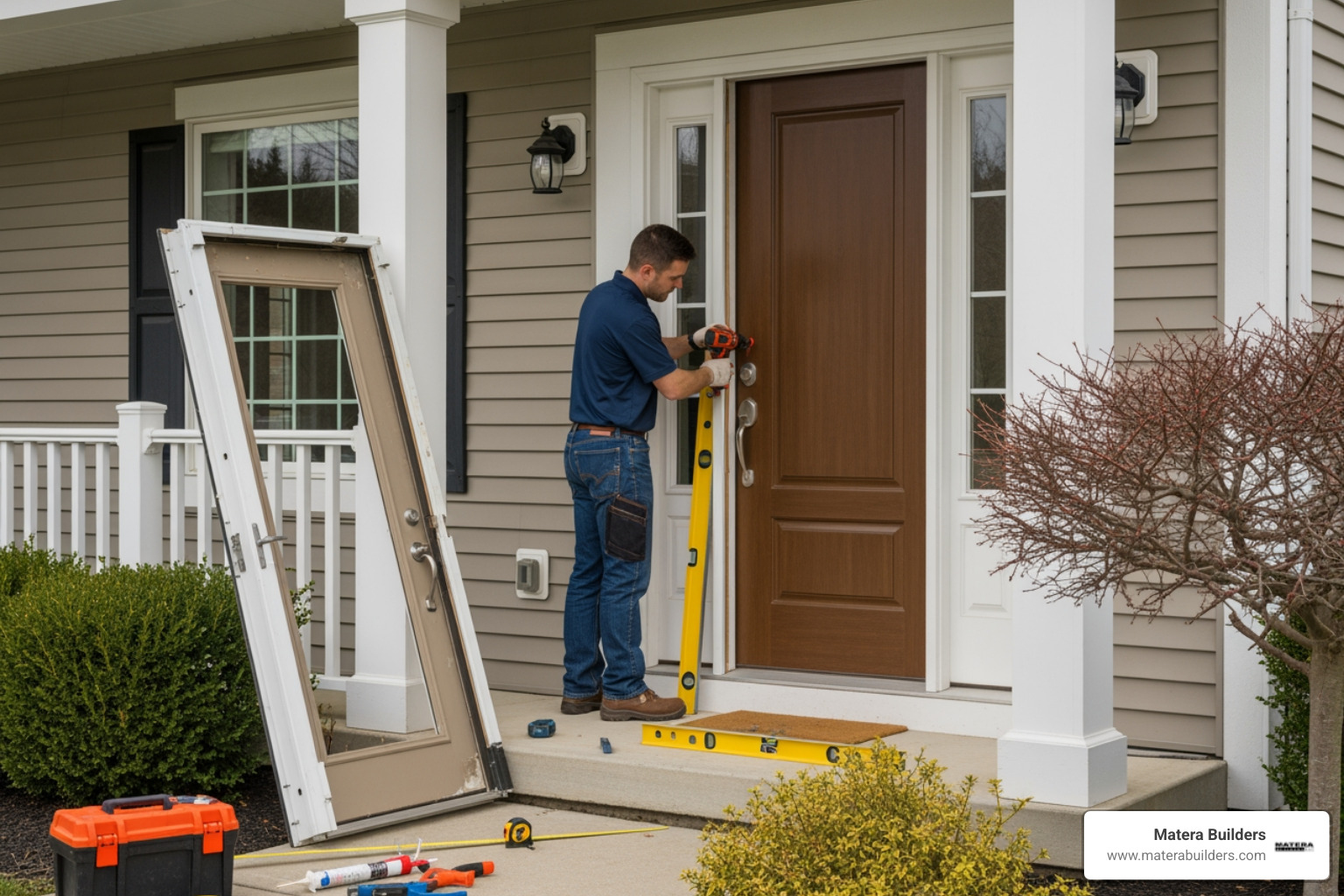
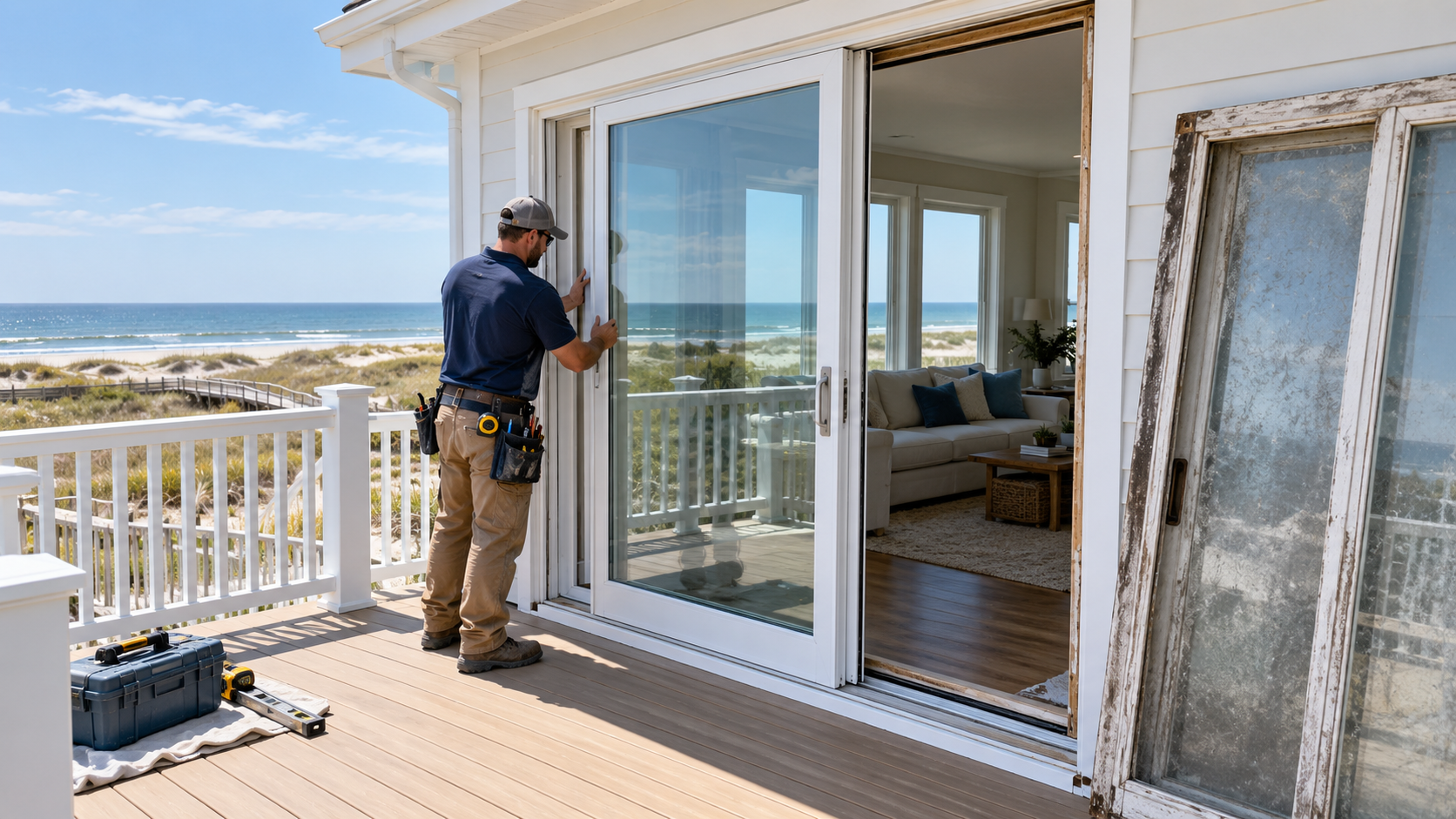
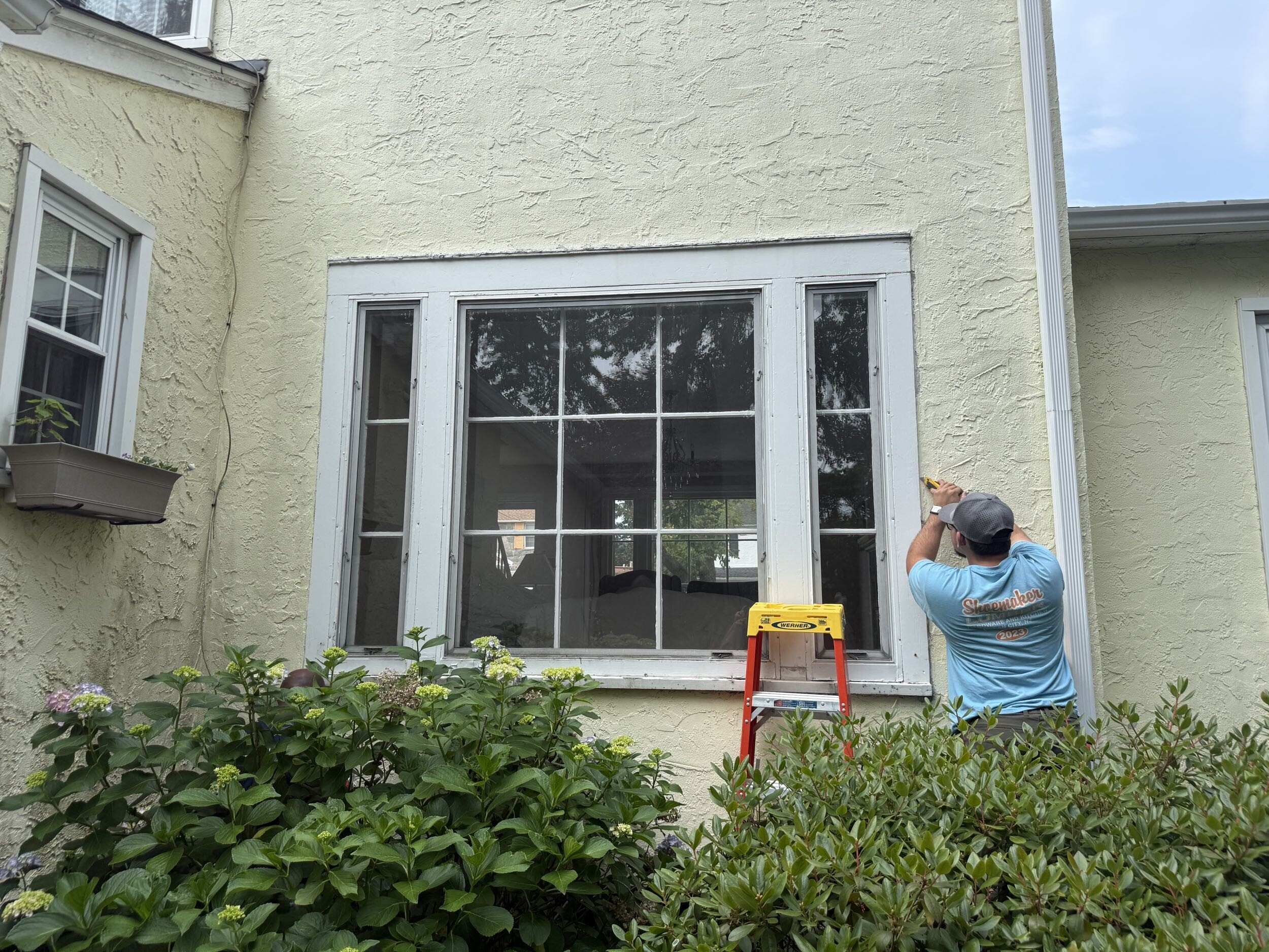
We start by protecting the work area. Then we cut the paint line so trim releases without tearing. After that, we remove the old sashes and any stops or parting beads that need to come out. If the frame is staying, we clean it and confirm it is still solid.
If the existing frame is rotten or out of square beyond what we can correct, it is usually better to remove more of the old assembly and rebuild the opening correctly. Skipping that step is how you end up with a new window in a failing structure.
Installing Andersen Windows
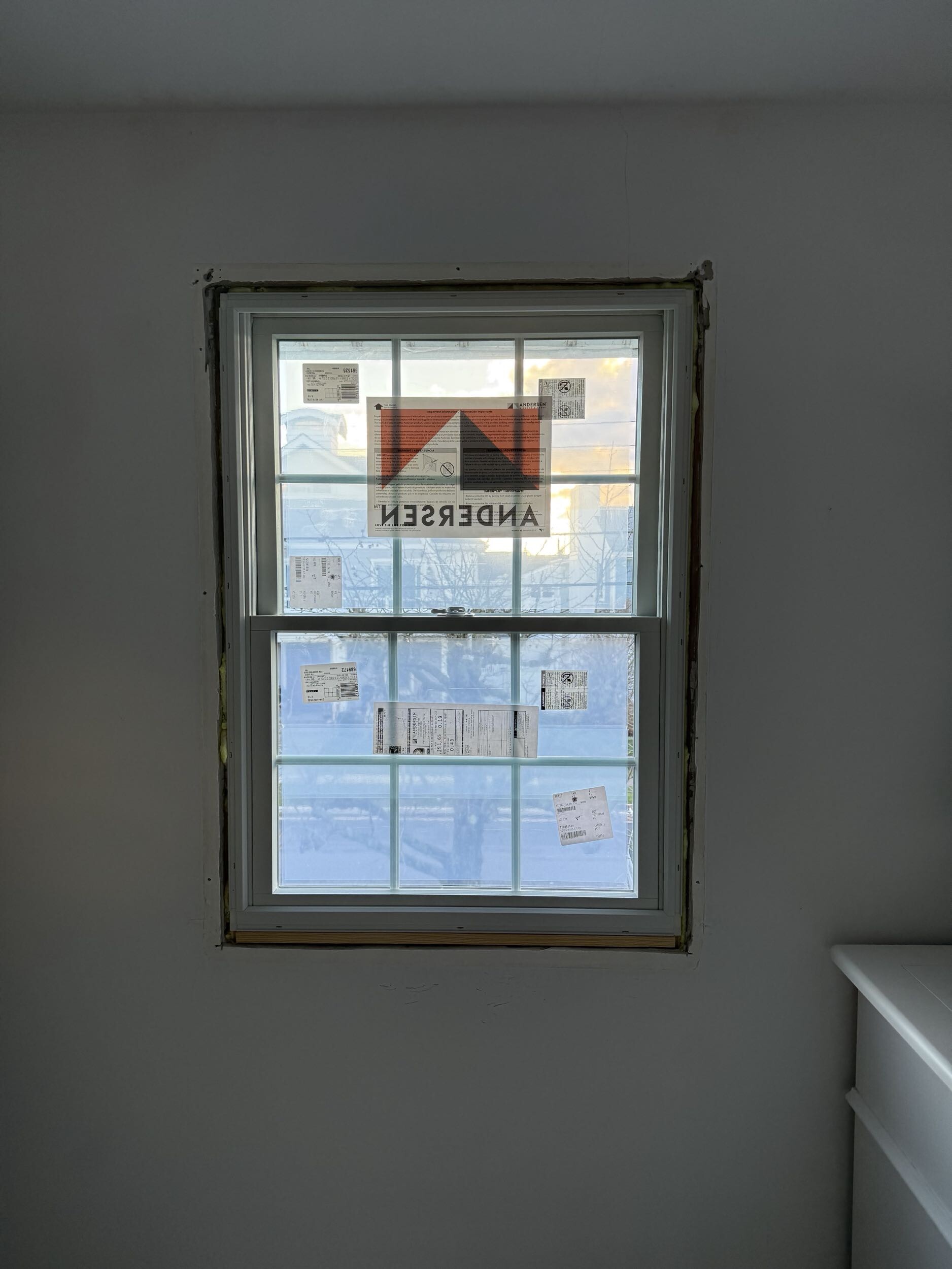
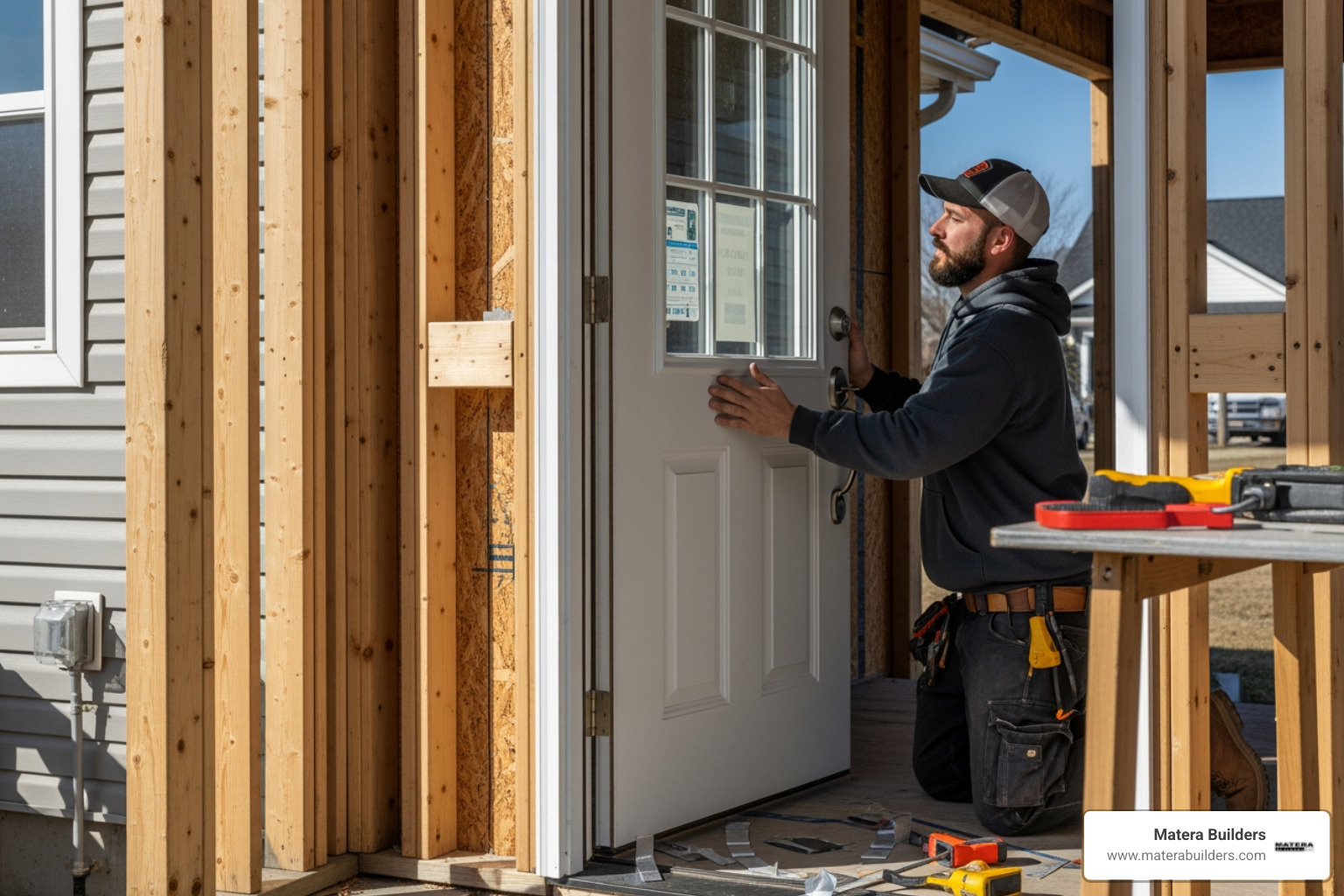
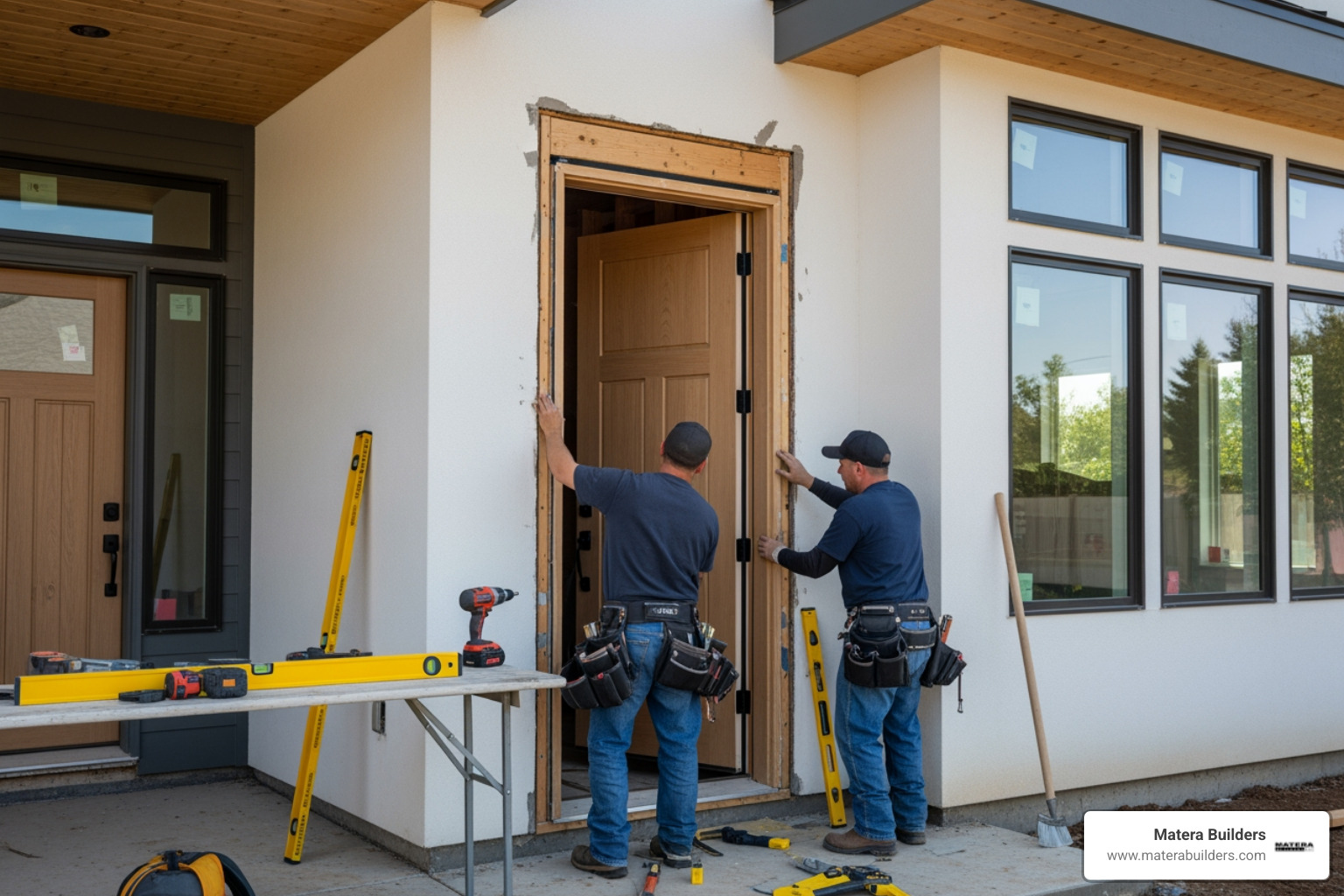
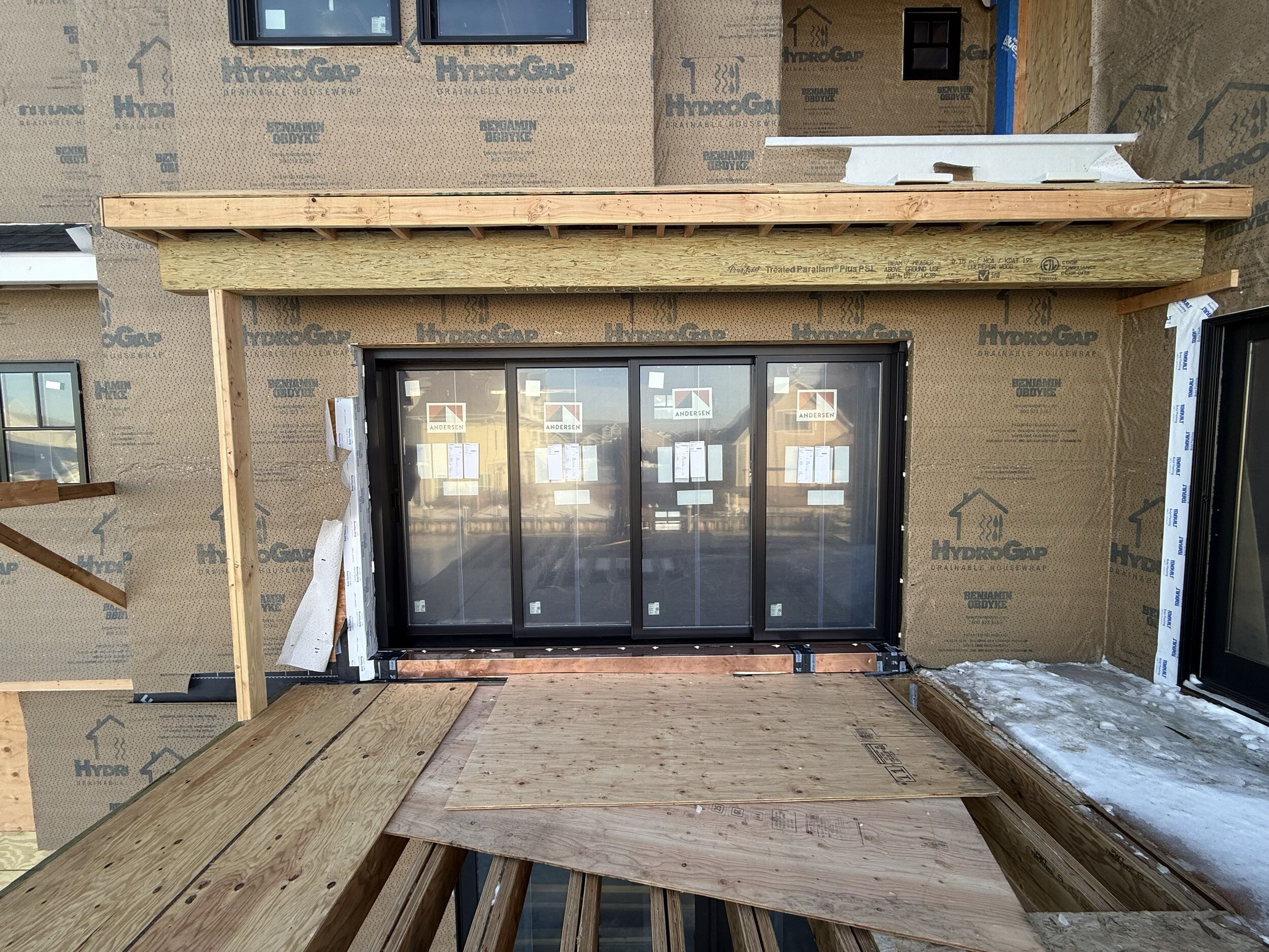
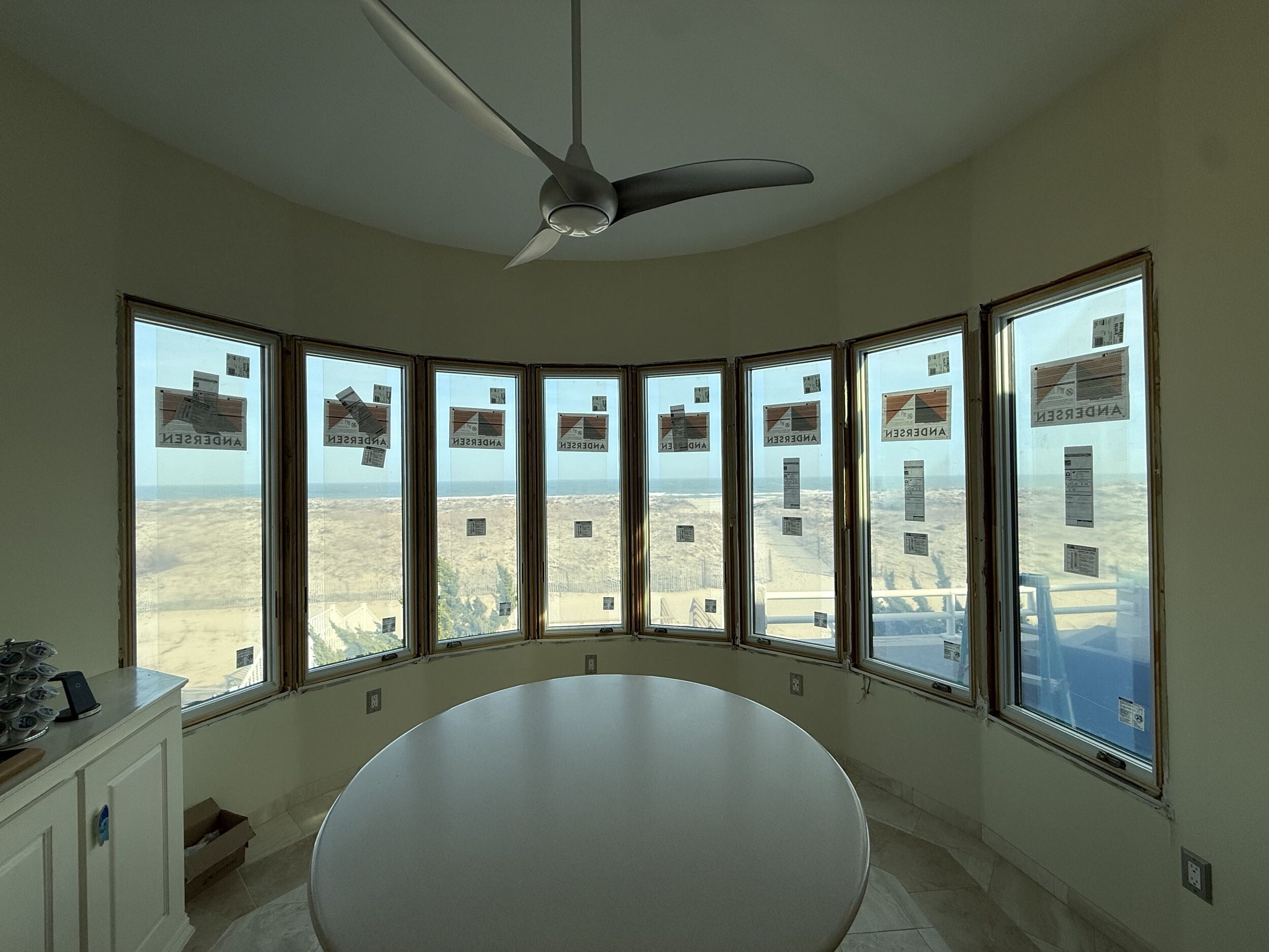
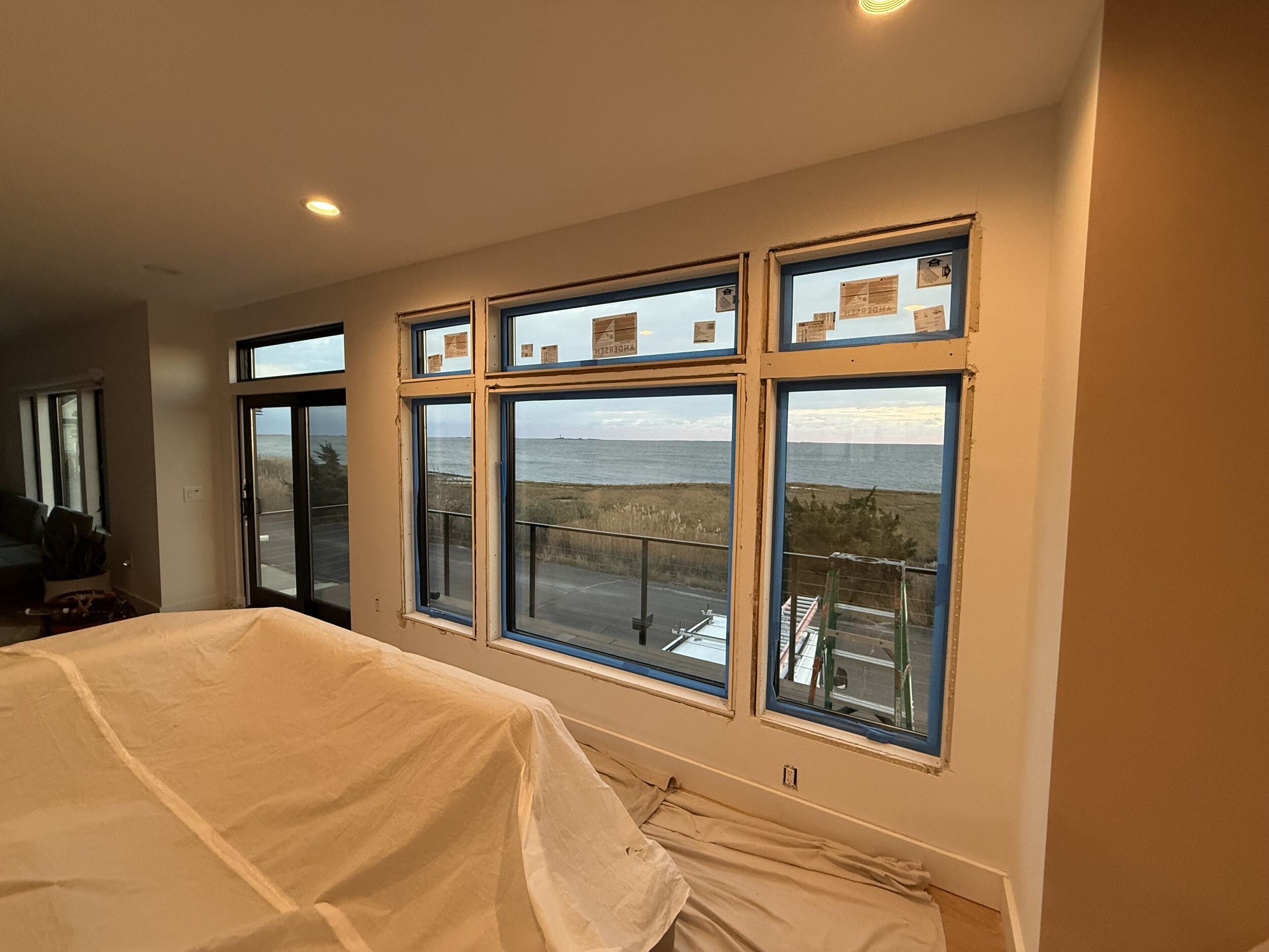
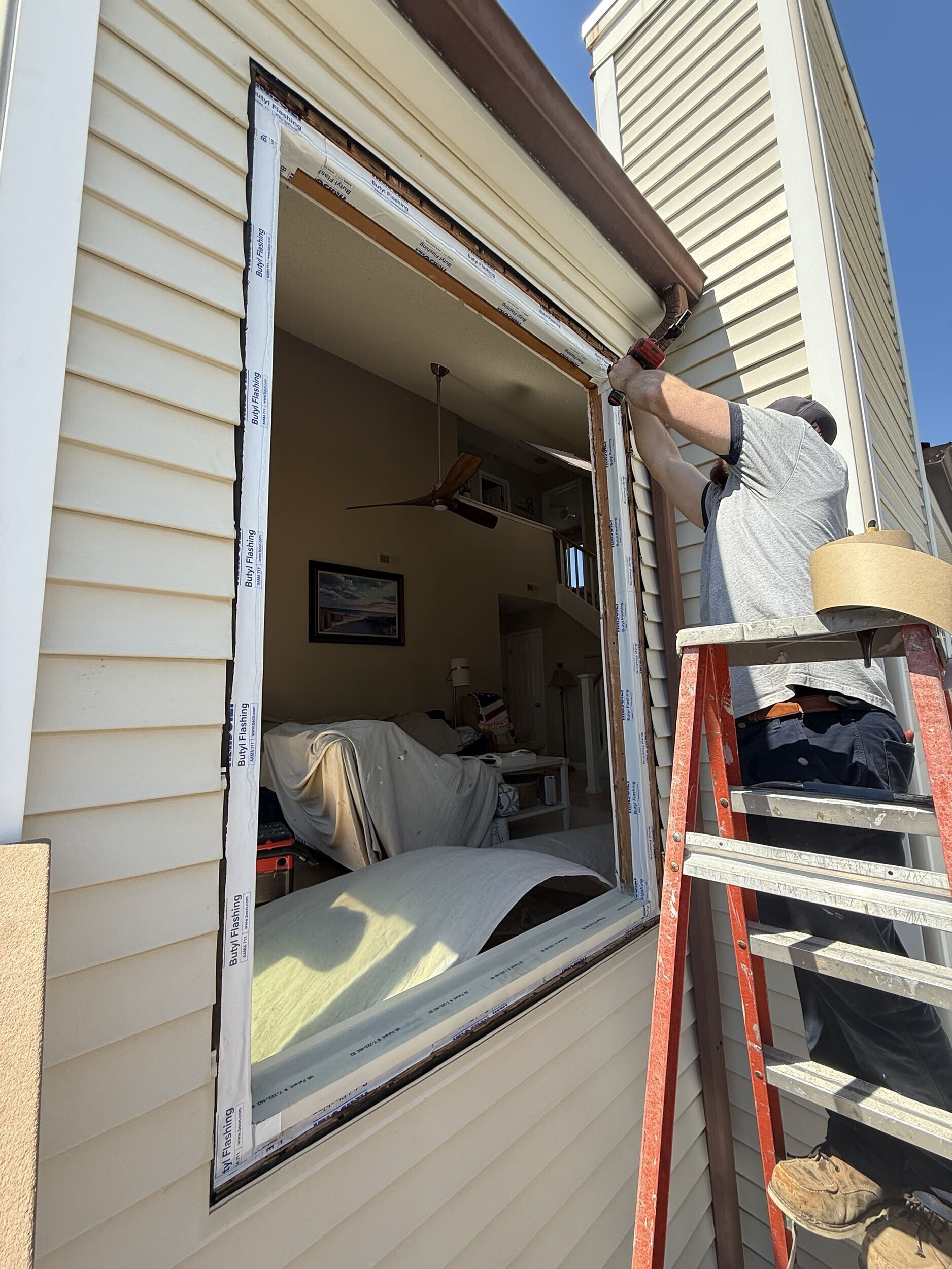
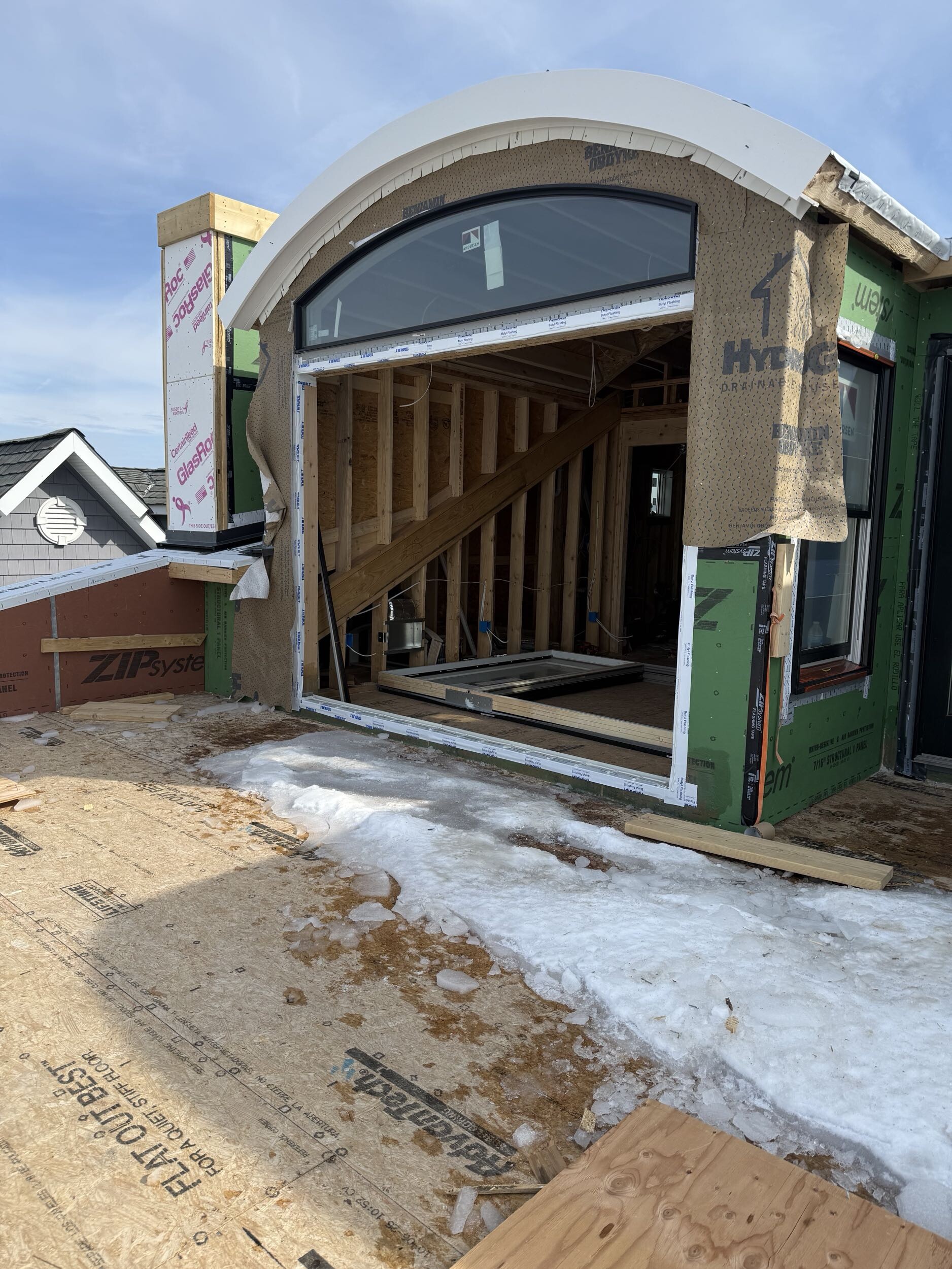
A clean, flat opening is the foundation. We dry fit the unit, then apply sealant where required. We set the window in place and use shims to level, plumb, and square it. This is where many installs go wrong. If the frame is not square, the sash will drag, locks will not line up, and weatherstripping will not seal evenly.
In New Jersey, wind loads matter, especially near the water. We use corrosion resistant fasteners, often stainless steel screws, to secure the unit. We tighten fasteners to the right pressure. Over-tightening can bow the frame, and that can cause operating problems.
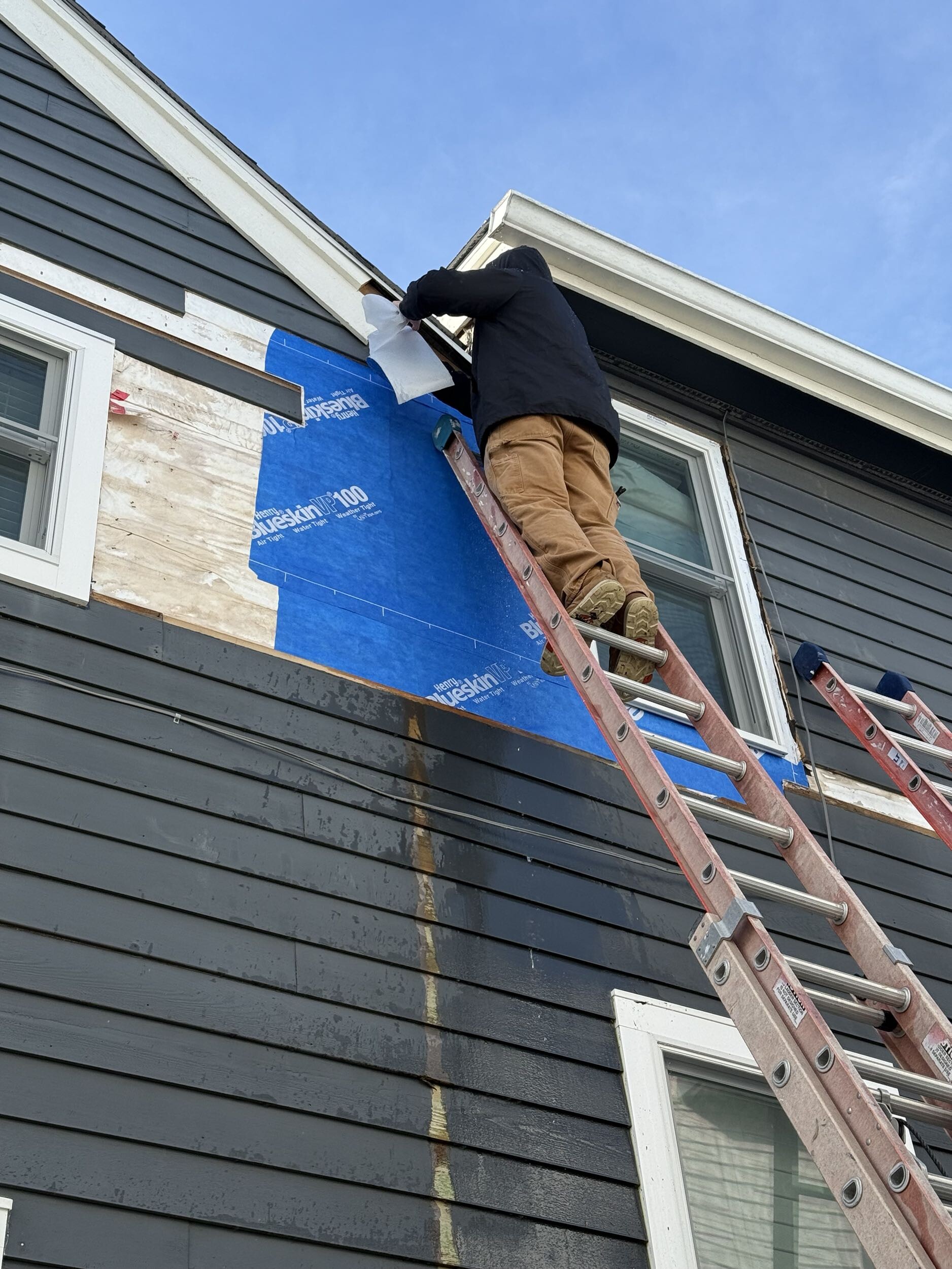
After fastening, we insulate the perimeter gap carefully. Expanding foam is useful, but it must be the right type and applied with restraint. Too much pressure can distort the frame.
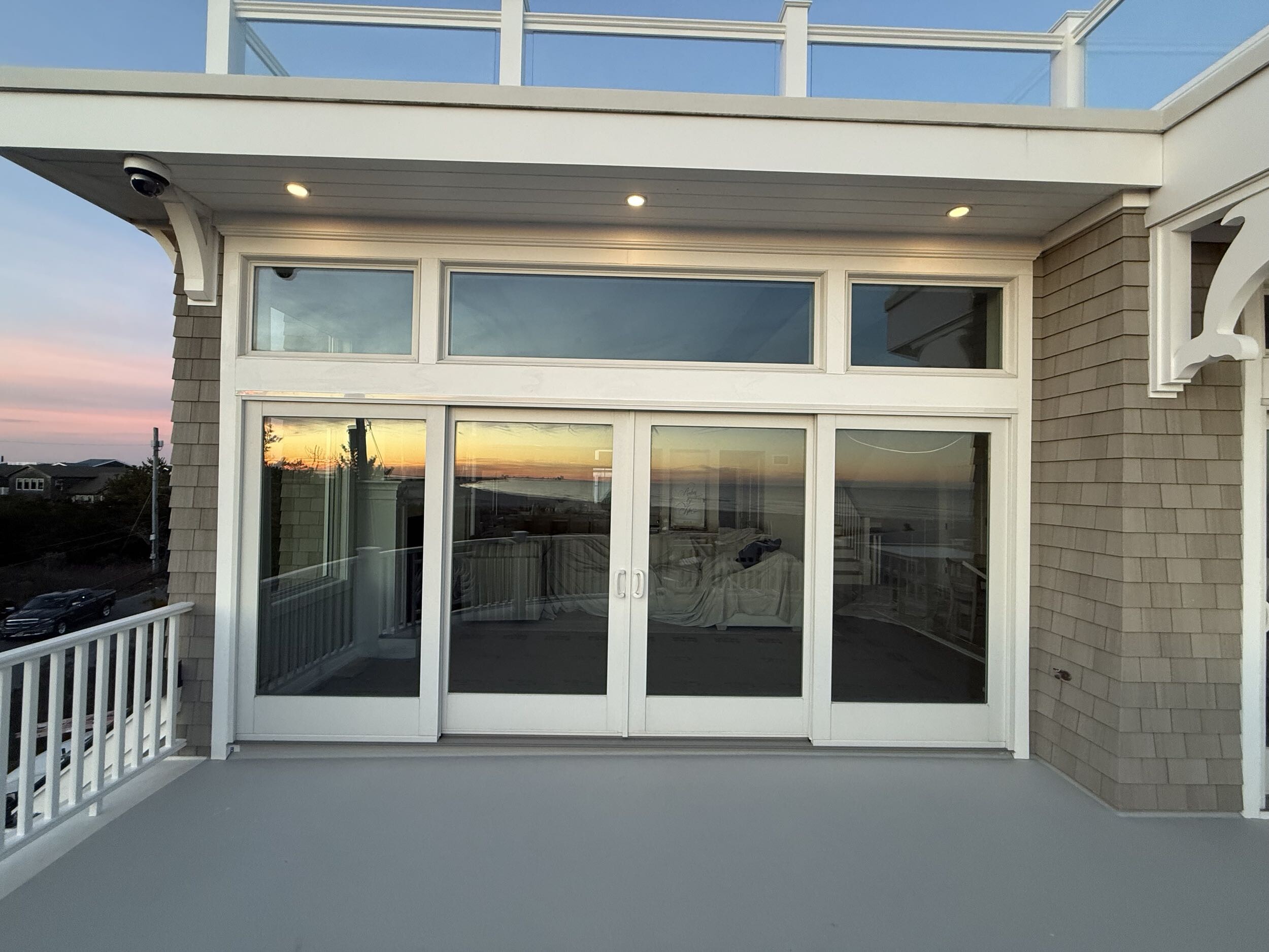
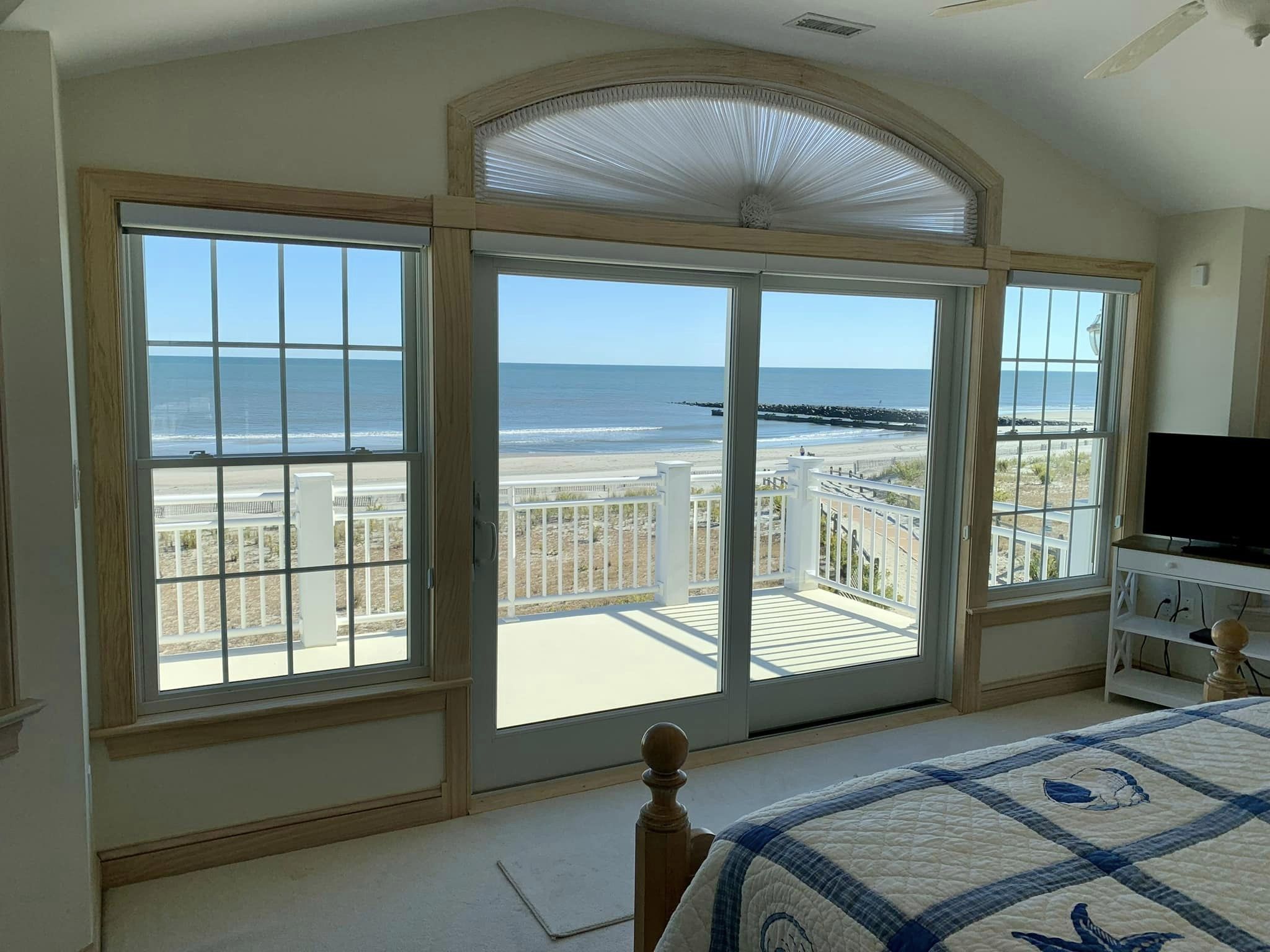
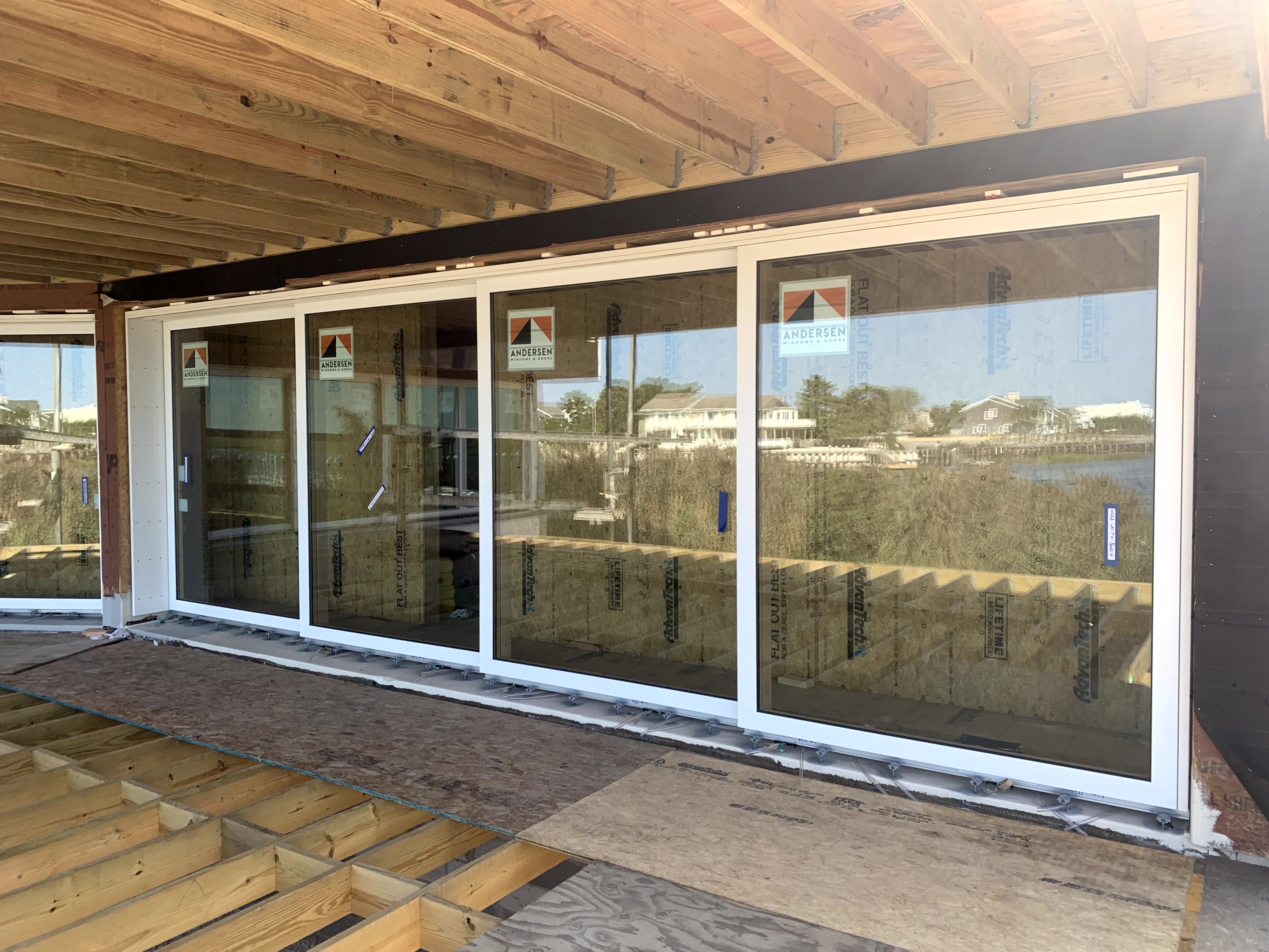
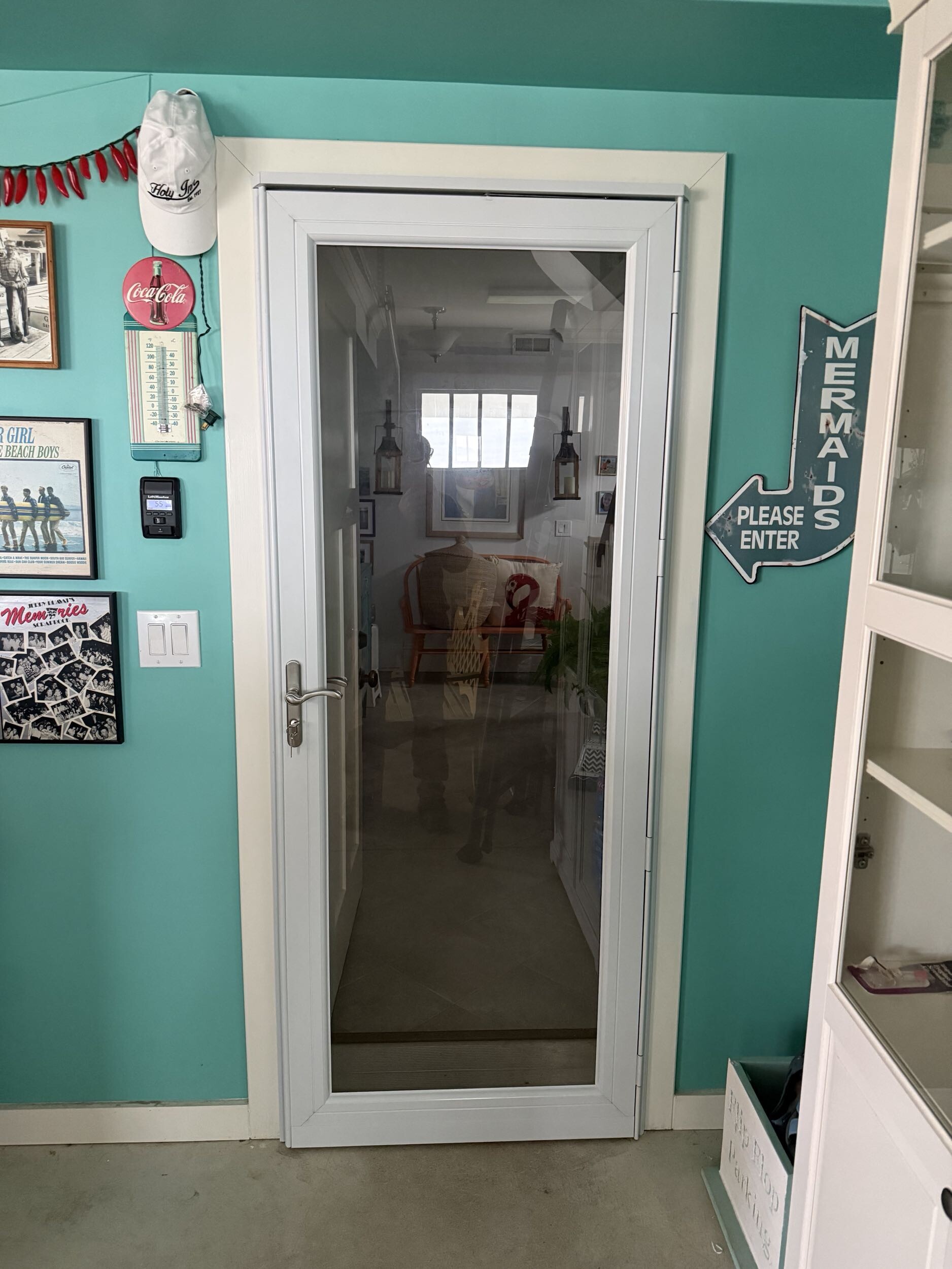
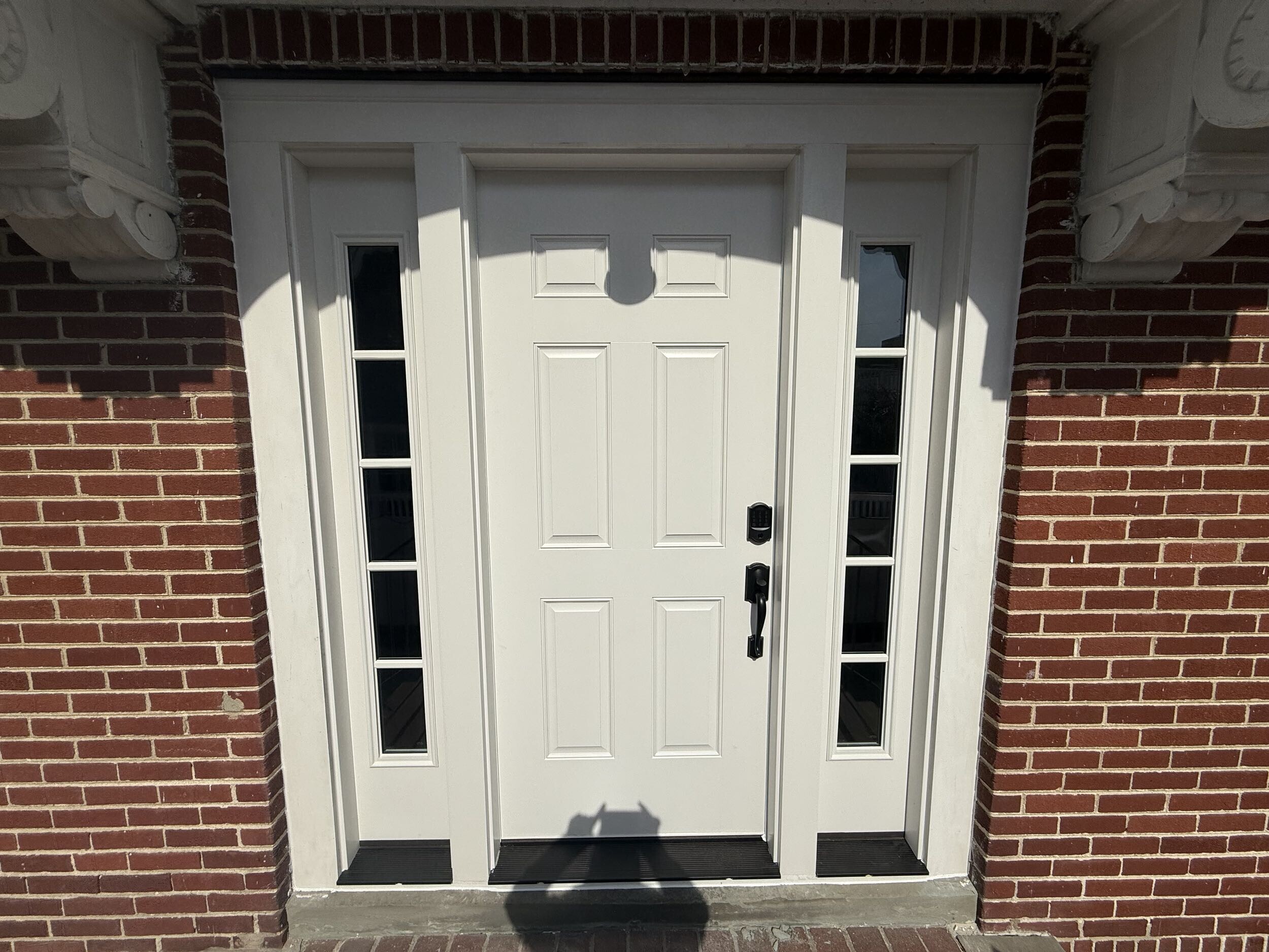
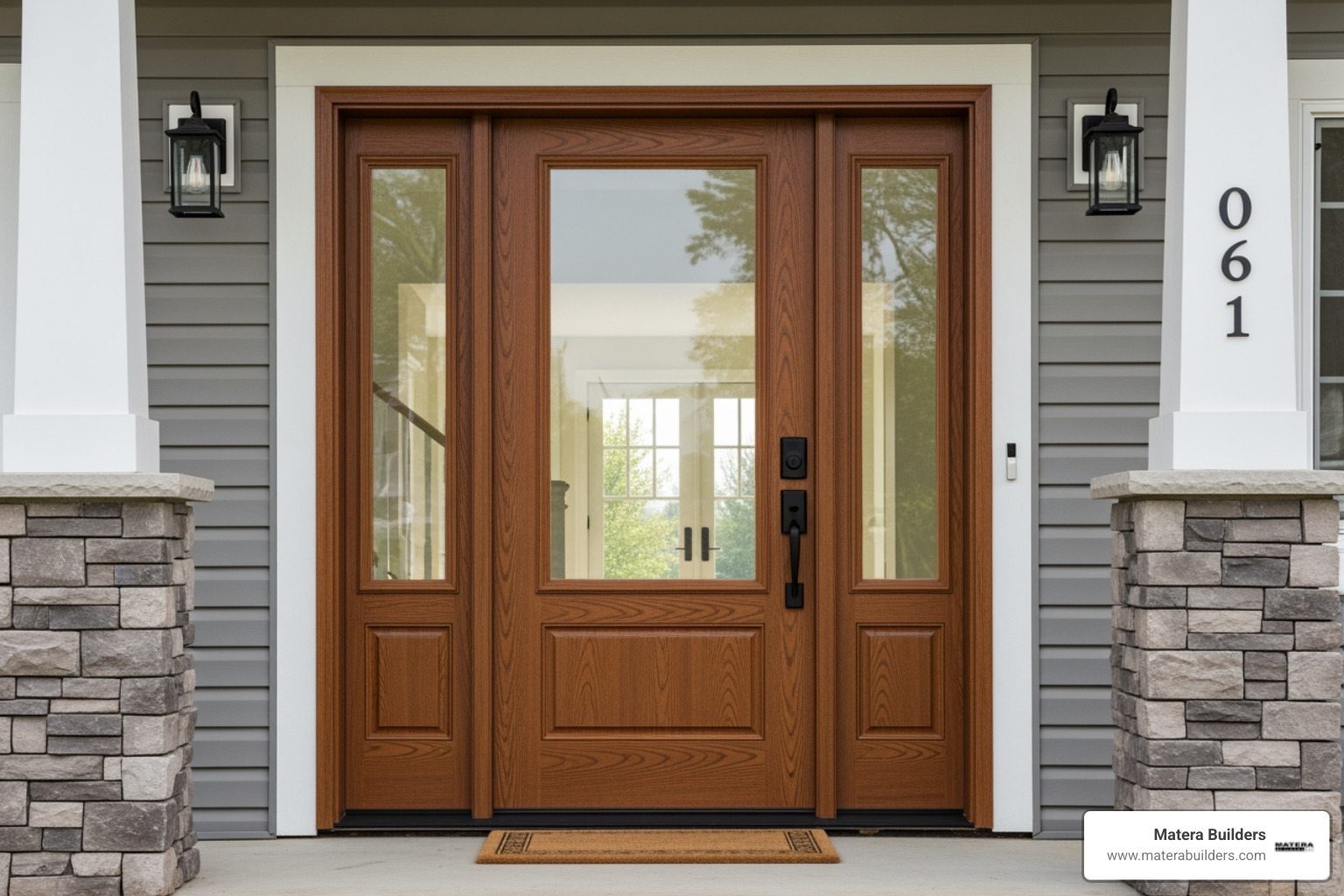
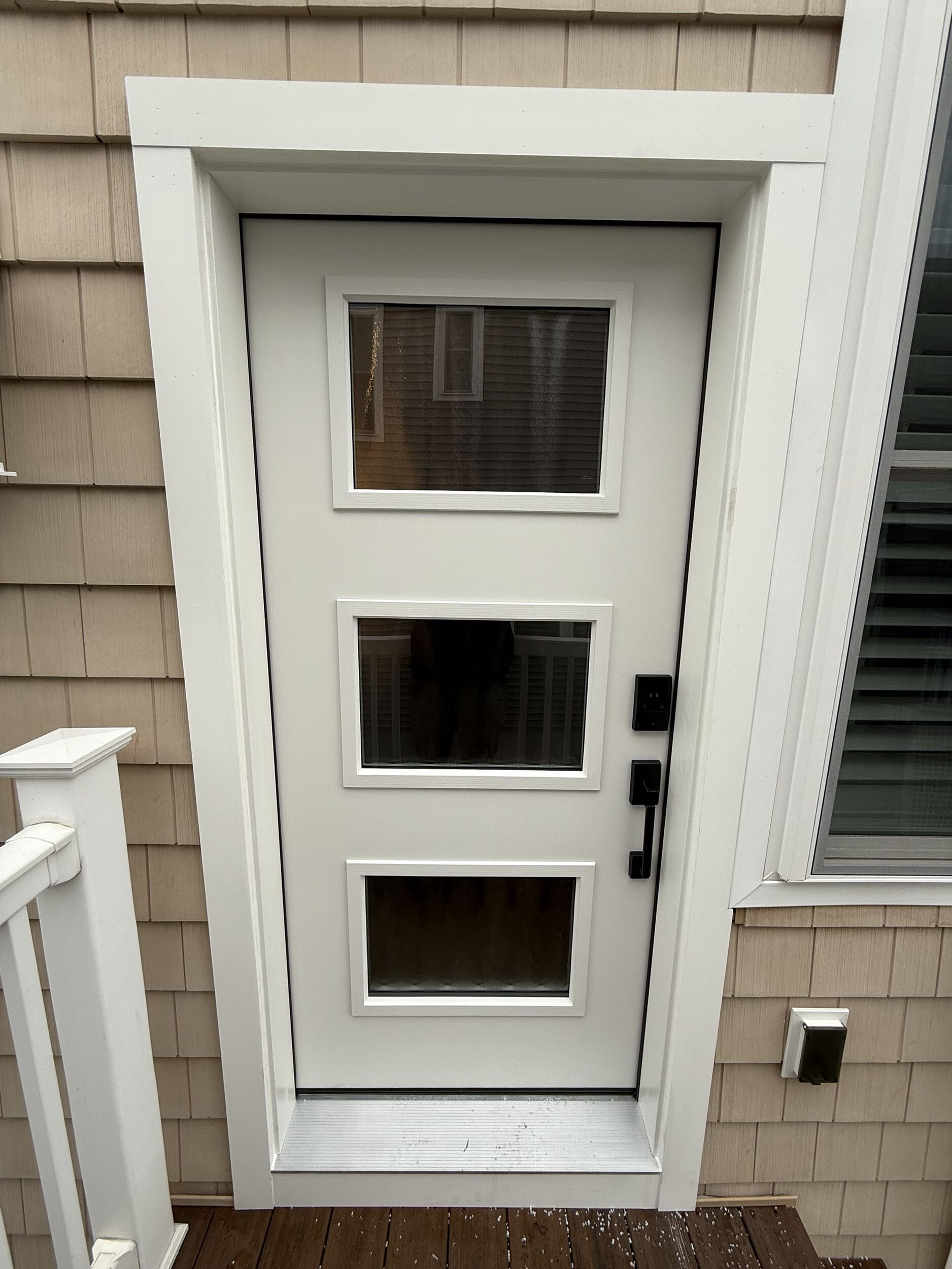
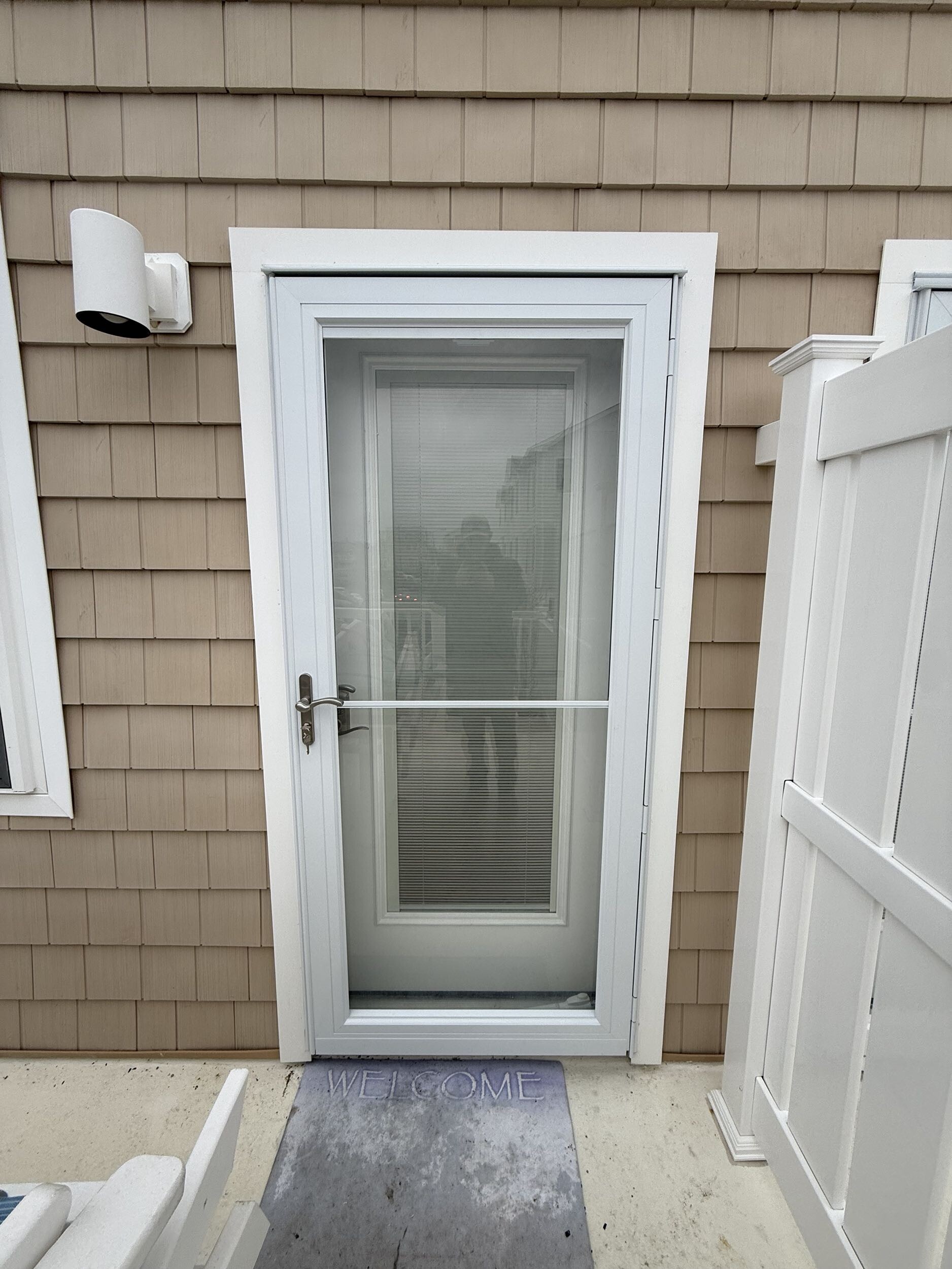
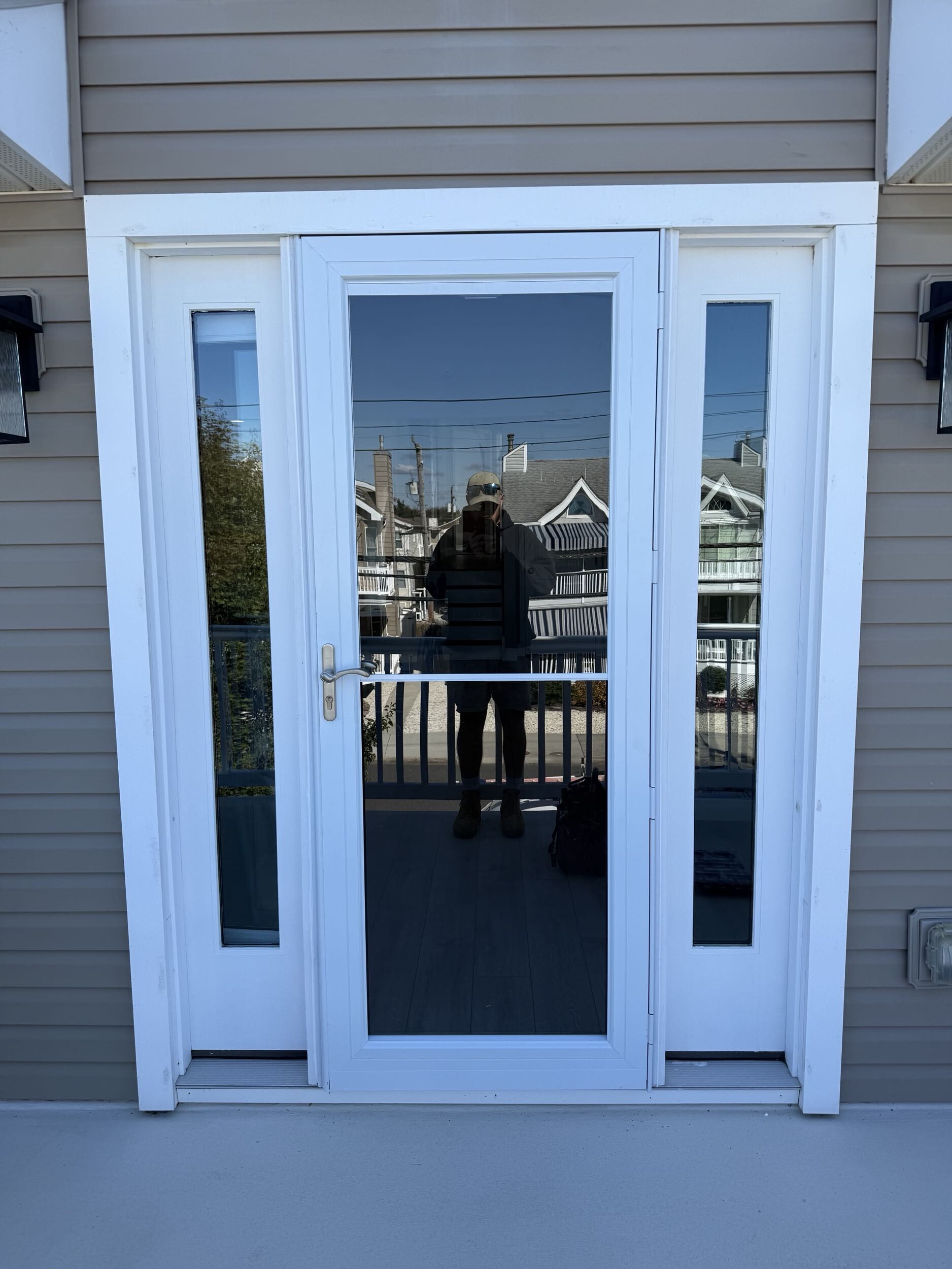
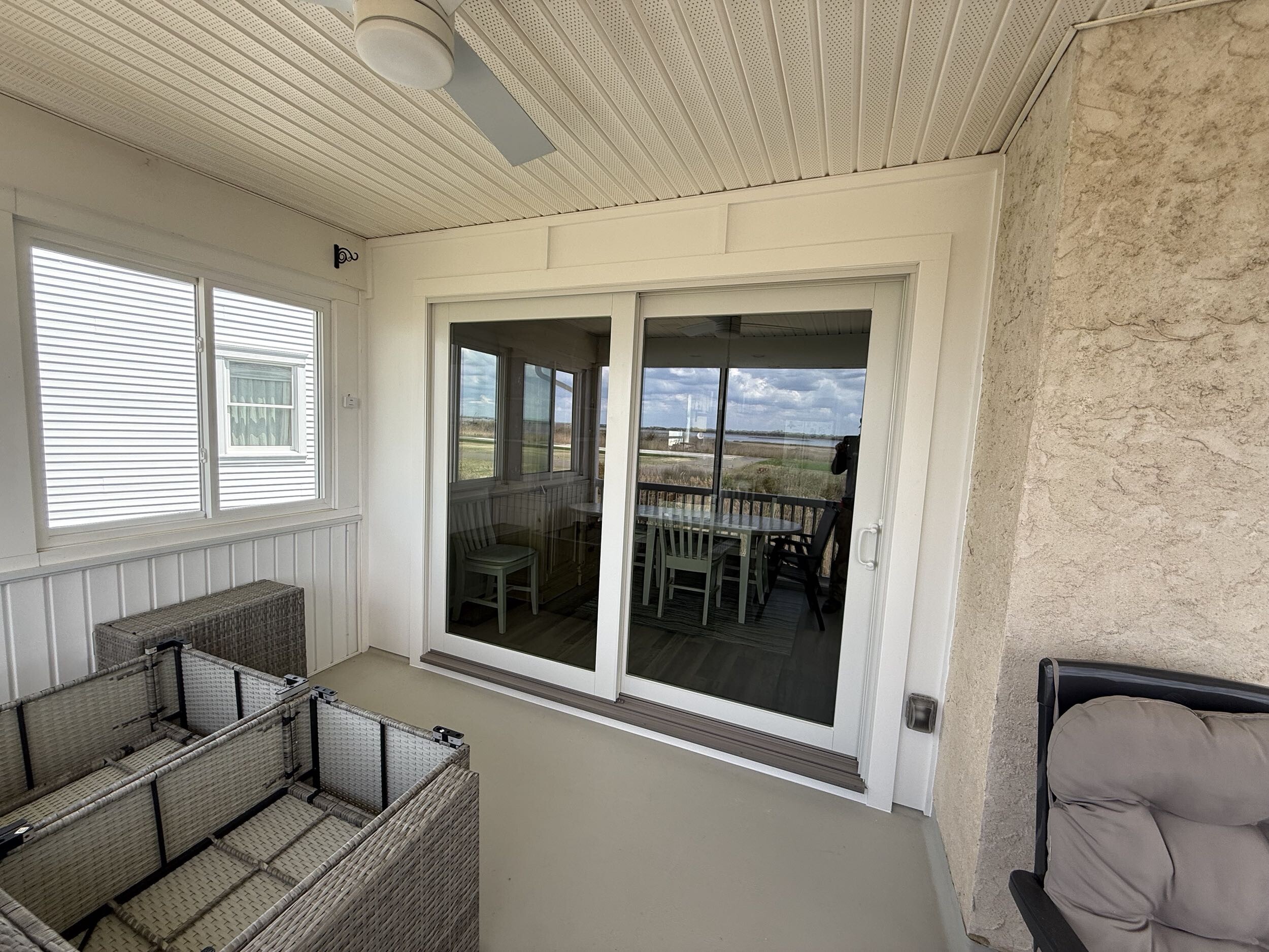
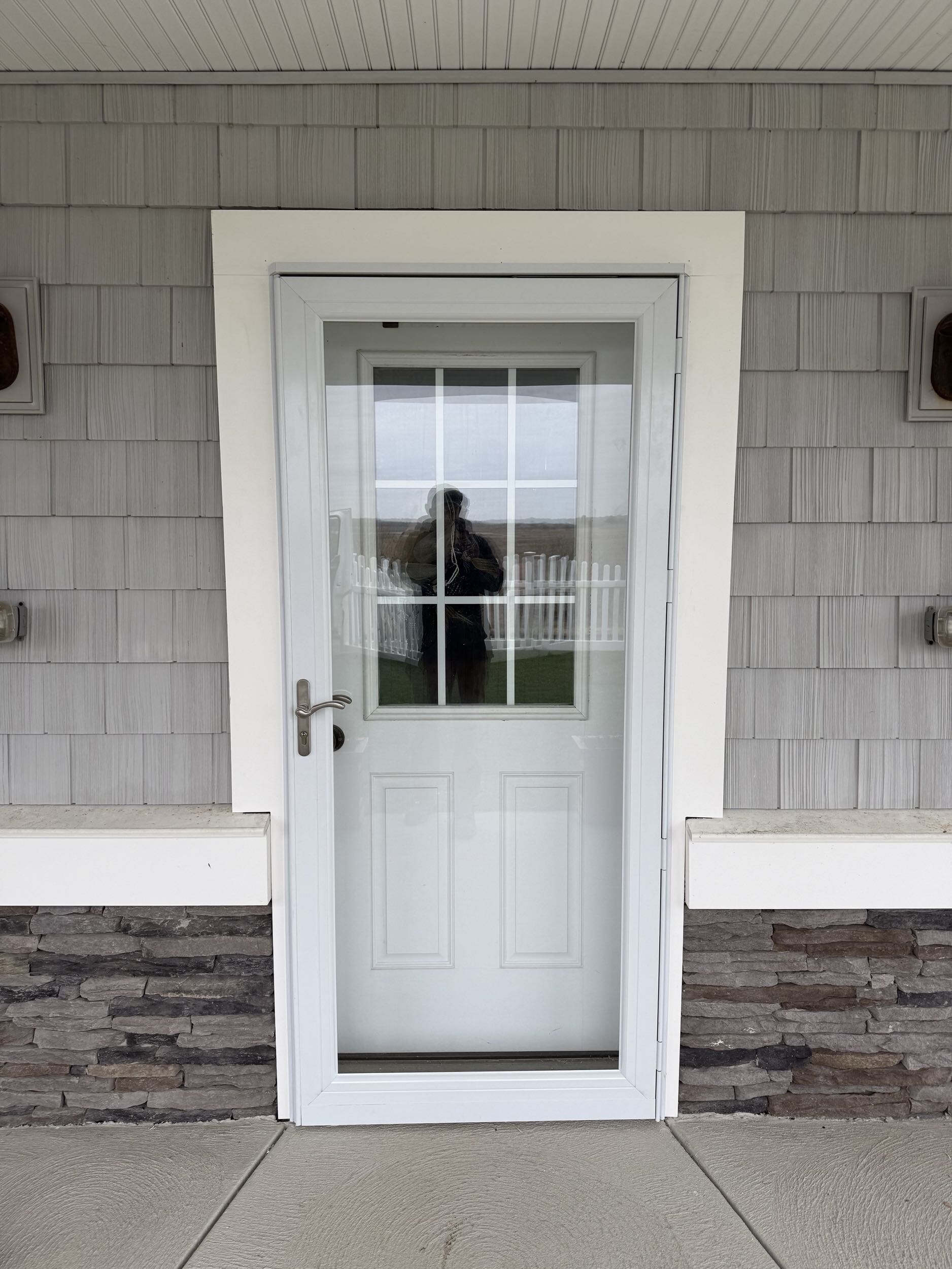
For homeowners who want long term performance at the Shore, we often install products built for these conditions. For details, see More info about Andersen Windows and Doors. We also handle Andersen Doors replacement so the whole envelope of the home seals as one system.
We also plan for normal movement. Houses expand and contract. Siding and trim move with heat and moisture. A good installation leaves the right clearances and uses flexible sealants so the window stays tight without being stressed.
Finishing Your New Windows
Finishing work is where the install becomes durable. We do not just make it look neat. We make sure the window can drain and dry.
We use setting blocks or support blocks where required so the glass is supported correctly in the frame. That helps keep the insulated glass unit from being stressed over time. Then we install the glass or sash components and snap trim pieces into place.
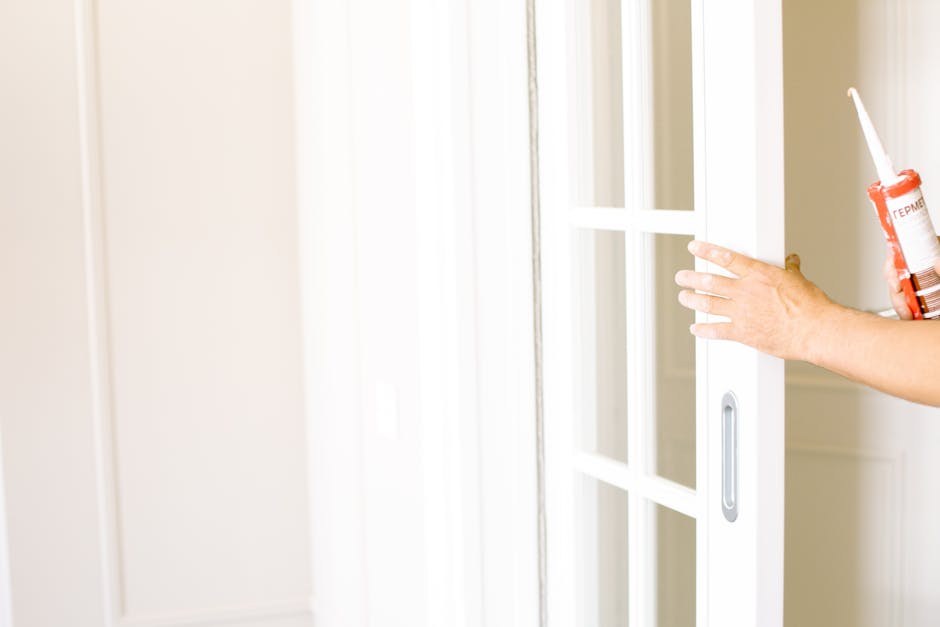
Next comes the sealant work. We apply silicone where it makes sense for water control and long term flexibility. We do not rely on caulk to fix a bad fit. The frame must be set correctly first.
Sealing for the Jersey Shore
In towns like Ocean City, wind driven rain can push water into small gaps. This is why we focus on a layered approach.
- We use butyl caulk on the sill when appropriate because it stays soft and blocks water.
- We install drip caps over the top of the window to direct water away.
- We integrate exterior sealing so water sheds to the outside, not into the wall.
- We often use PVC trim because it looks like wood but will not rot from salt spray.
The goal is not to trap water. The goal is to keep bulk water out and let any incidental moisture drain.
Caring for your windows
A quality Andersen Windows installation should not need constant attention, but a simple yearly check helps catch small issues early.
- Check the seals: Look at exterior caulk and trim joints once a year for cracks.
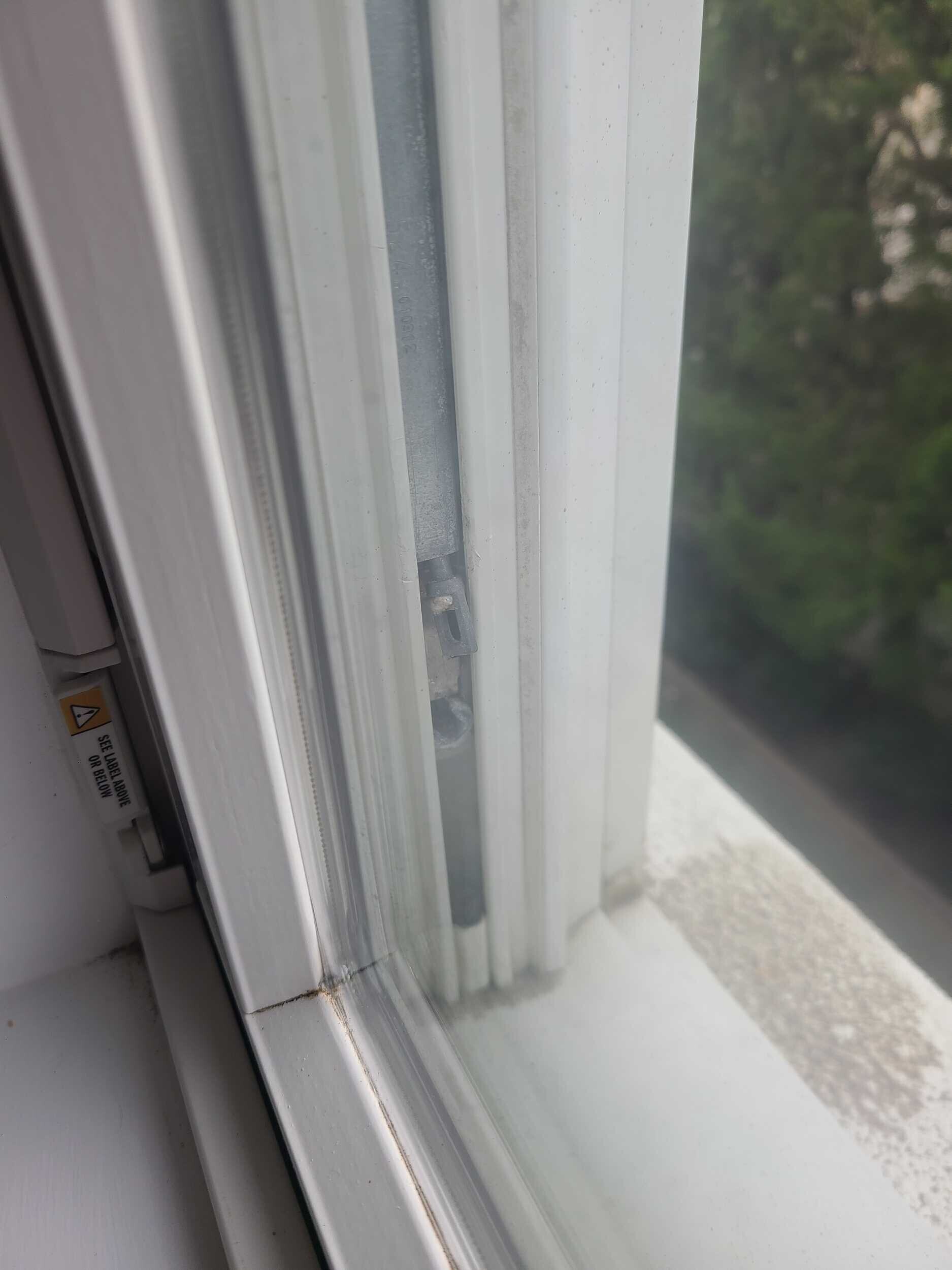
- Clean the tracks: Dirt in tracks can hold moisture and cause wear.
- Lubricate the right way: Use a dry silicone spray once a year. Do not use oil.
- Wash the glass: Use mild soap and water.
- Keep your papers: Good installations include a product warranty and a labor warranty. Keep them with your home records.
If you ever see staining, soft trim, or recurring condensation, address it early. On the coast, small leaks can become big repairs if they are ignored.
Common Questions
How long does it take?
Installing double glazed windows often takes about one hour per window once the opening is ready. A whole house usually takes one to three days depending on access, trim work, and how much hidden damage we find. Weather can also affect timing. We do not open up exterior walls when a big storm is coming.
Can I do it myself?
You can, but it is risky. The hardest part is not the screws. It is the measuring, shimming, and water management details. A window that is slightly out of square may still go in, but it can leak air, bind, or fail early.
Also, many manufacturers require professional installation for full warranty coverage. Even when they do not require it, a poor install can create problems the product warranty will not cover, like water damage from a bad seal.
When should I get new windows?
Common signs your windows are near the end of their life include:
- Fog between the glass: This usually means the insulated glass seal is broken.
- High bills: If your house feels drafty, older windows may be leaking air.
- Hard to open: This can mean the frame is warped or balances are failing.
- Rotting wood: If the wood is soft around the sill or casing, water has been getting in.
- Peeling paint or staining: Often a clue that moisture is trapped behind trim.
If you are not sure, a site visit can help. We can tell you if you need full replacement, or if there is a specific flashing or trim issue that should be fixed first.
Conclusion
Installing double glazed windows protects your home and your family by reducing drafts, controlling moisture, and improving comfort. Matera Builders has been doing this work since 1988. We work on homes across New Jersey, including coastal areas where salt air and wind driven rain shorten the life of average windows.
Mike Werner and our team help homeowners choose the right products and the right install method. That often includes Andersen Windows installation and Andersen Doors replacement so your home is sealed as one system, not a mix of parts.
If you want a clear plan, the next step is a simple evaluation. We can inspect your existing windows and doors, look for hidden rot or air leaks, and explain options that fit your home and budget.
If you want to see how we work, Contact us for interior and exterior renovations. We will help you make a decision based on long term performance, not guesswork.



.jpg)
.jpg)