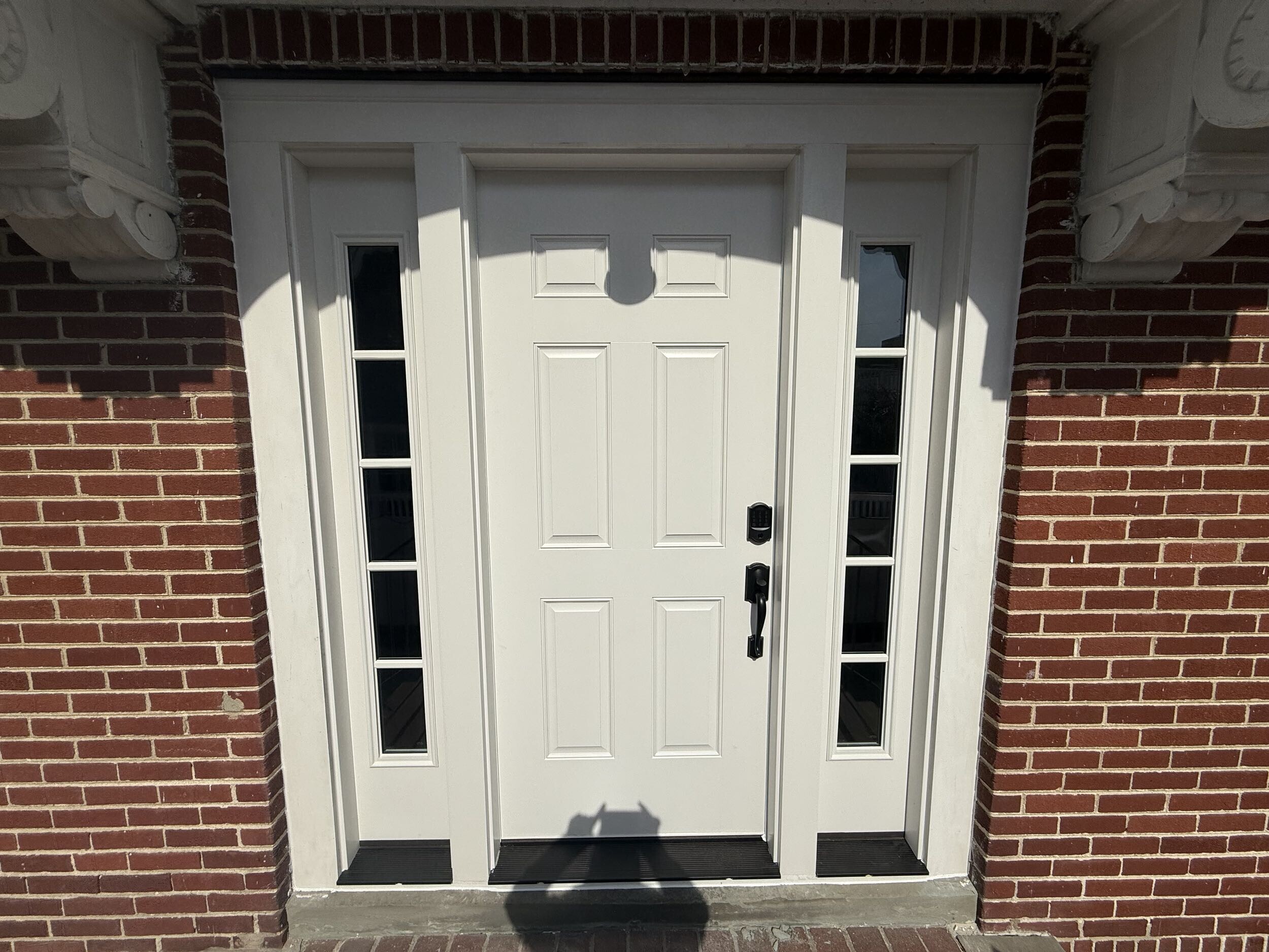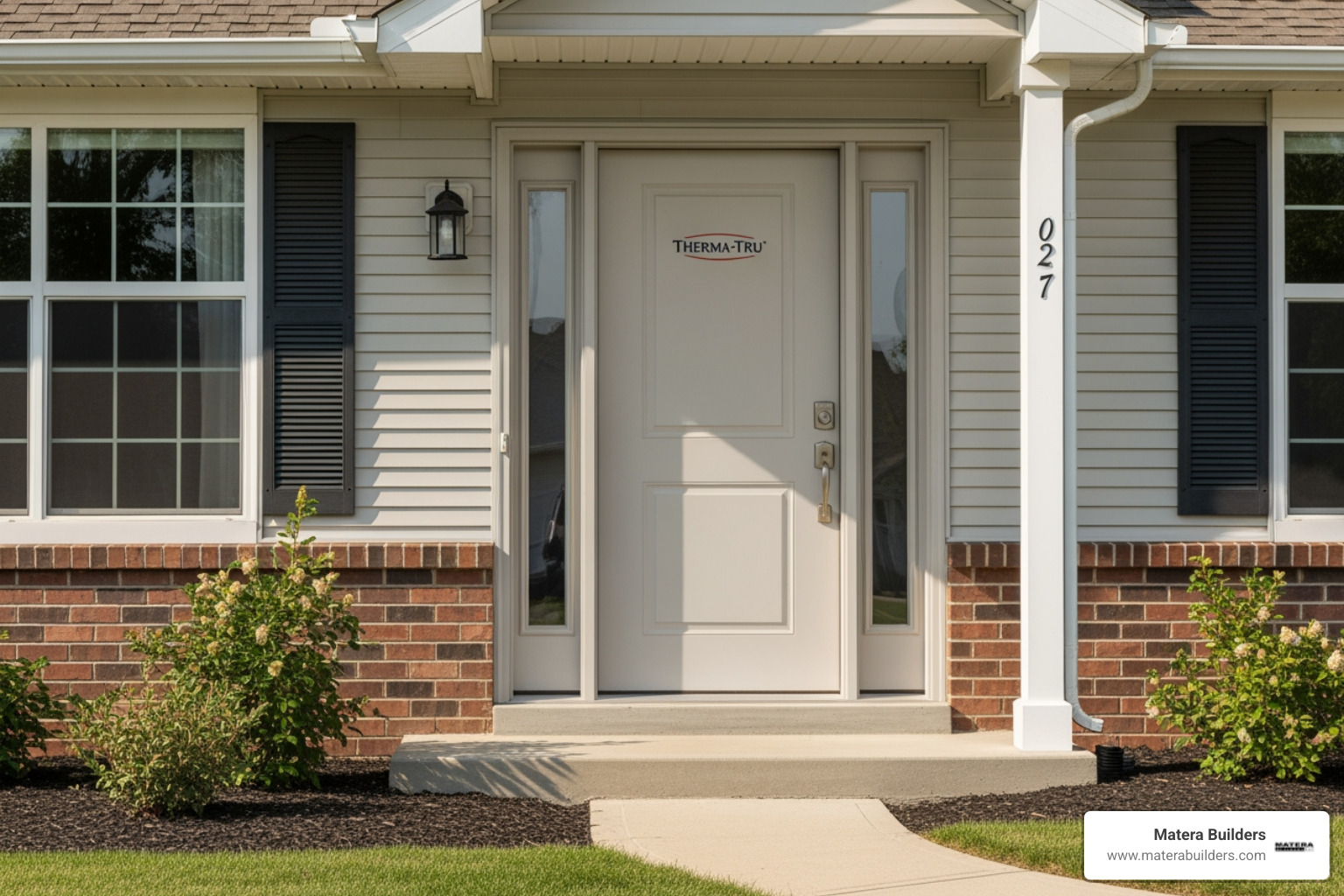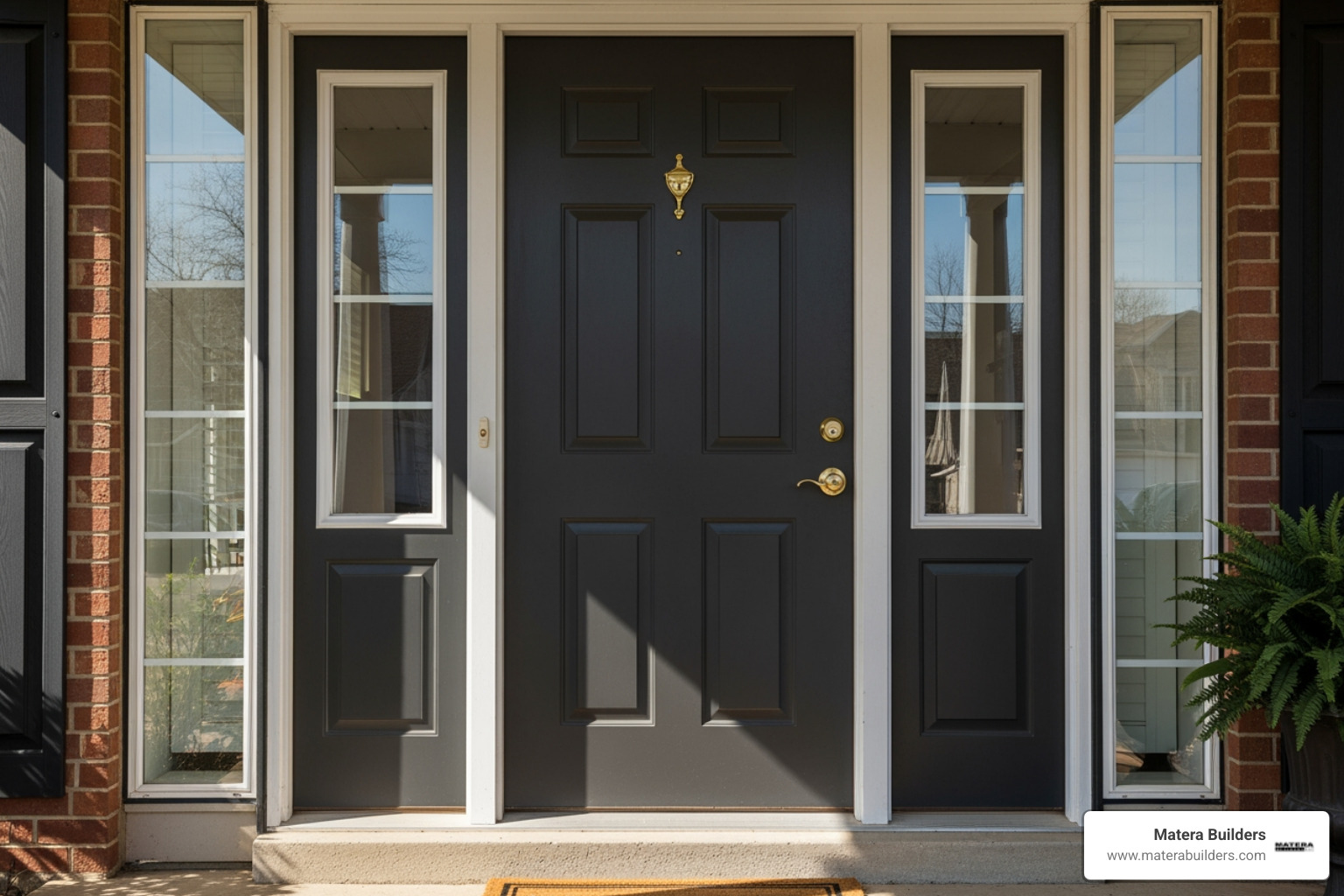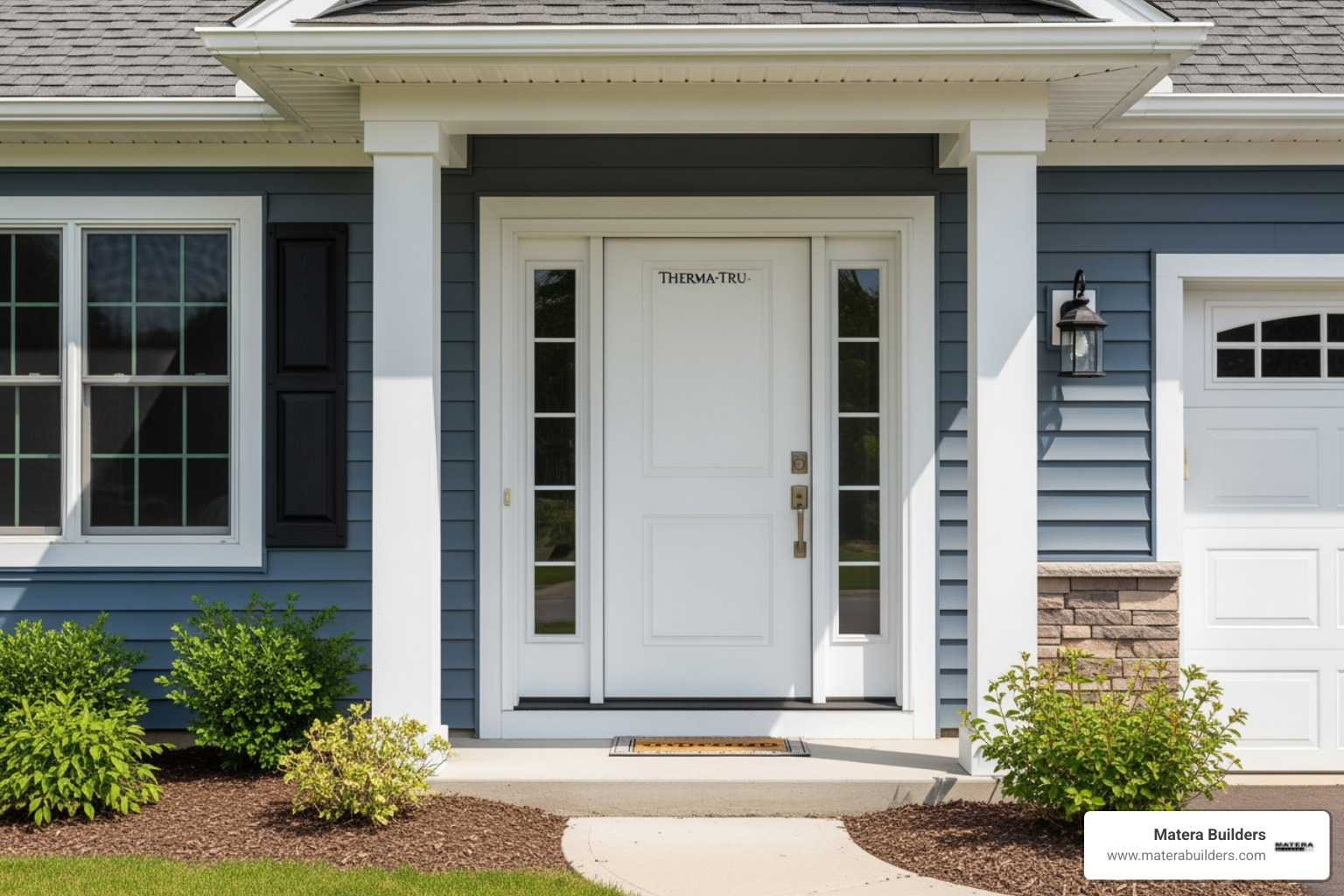



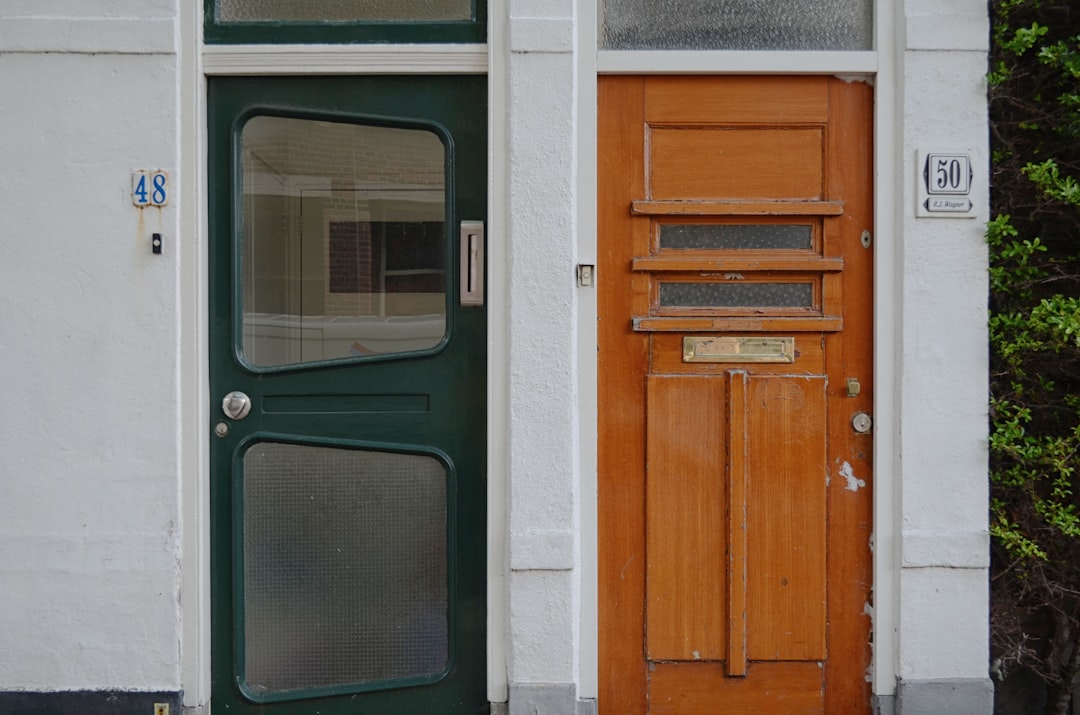
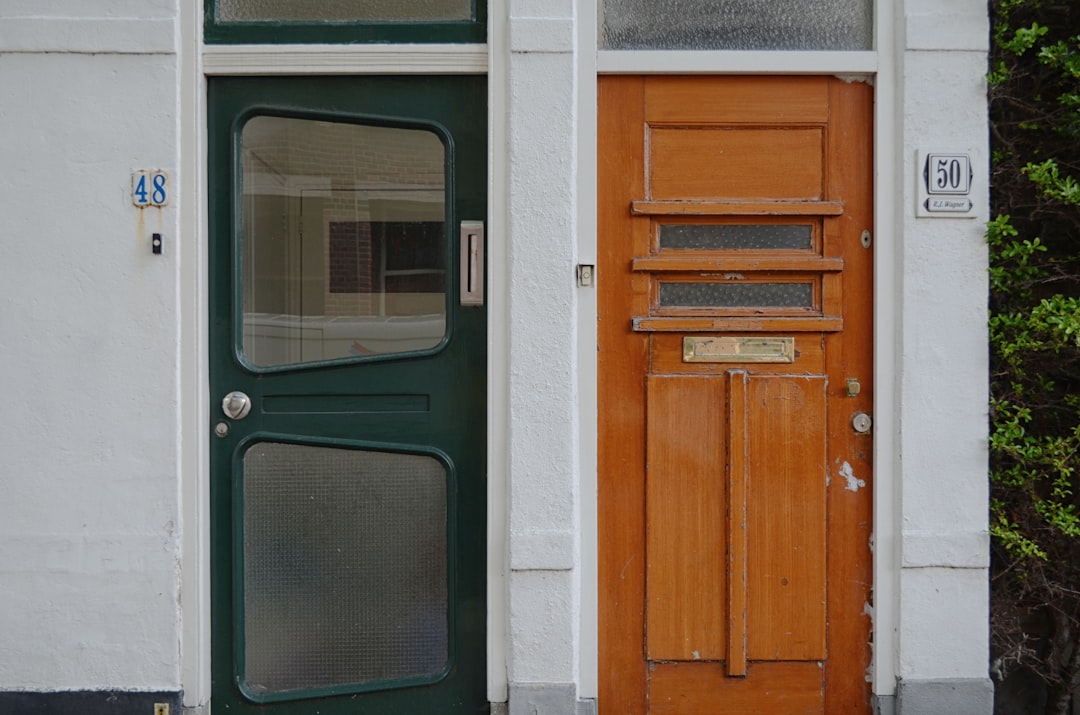
Signs It's Time to Replace Your Front Door
Replacing front door units is a big upgrade for your home. It is also something many people get wrong because they focus on the slab and ignore the opening. In coastal New Jersey, the opening is where most failures start. Water gets behind the trim. Wind pushes rain into small gaps. Salt air finds any exposed fastener.
Here is how the process works:
- Check your current door. Look for drafts, rot, rust, or safety issues.
- Pick your new door. Pre-hung doors are the easiest to install. Pick a material that works for your weather and budget.
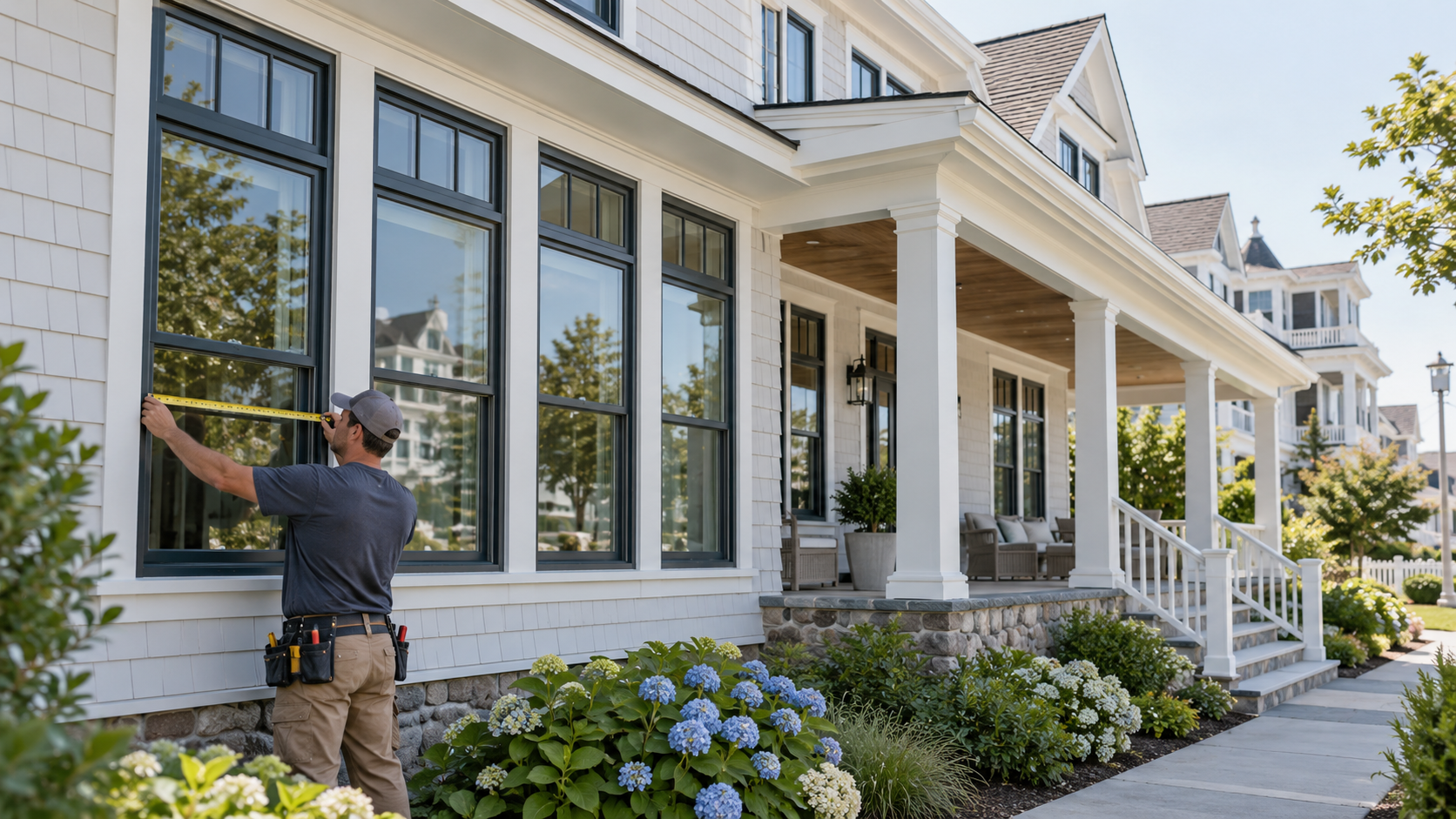
- Measure the opening. Most doors are 36 inches by 80 inches. You must measure your actual opening to be sure.
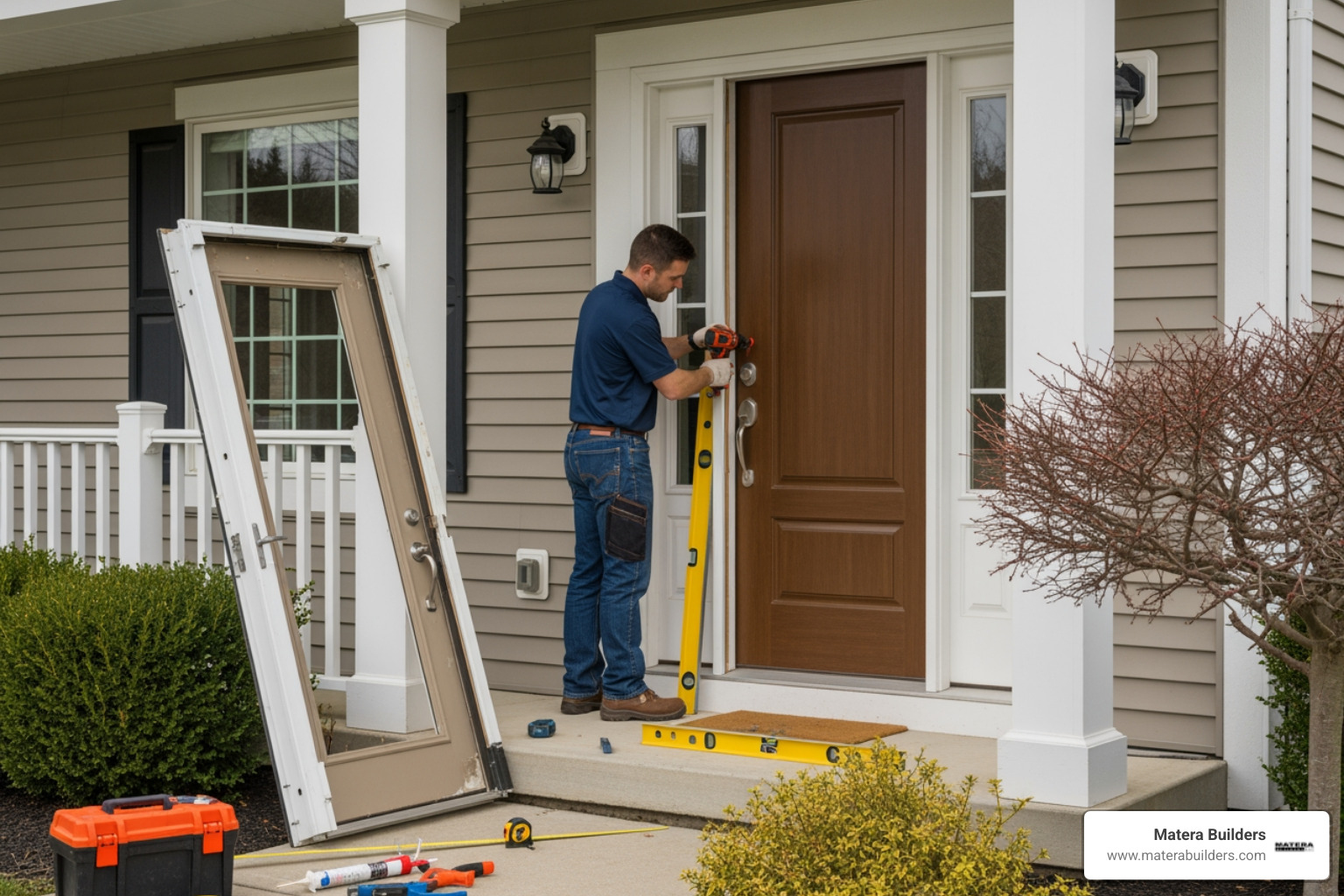
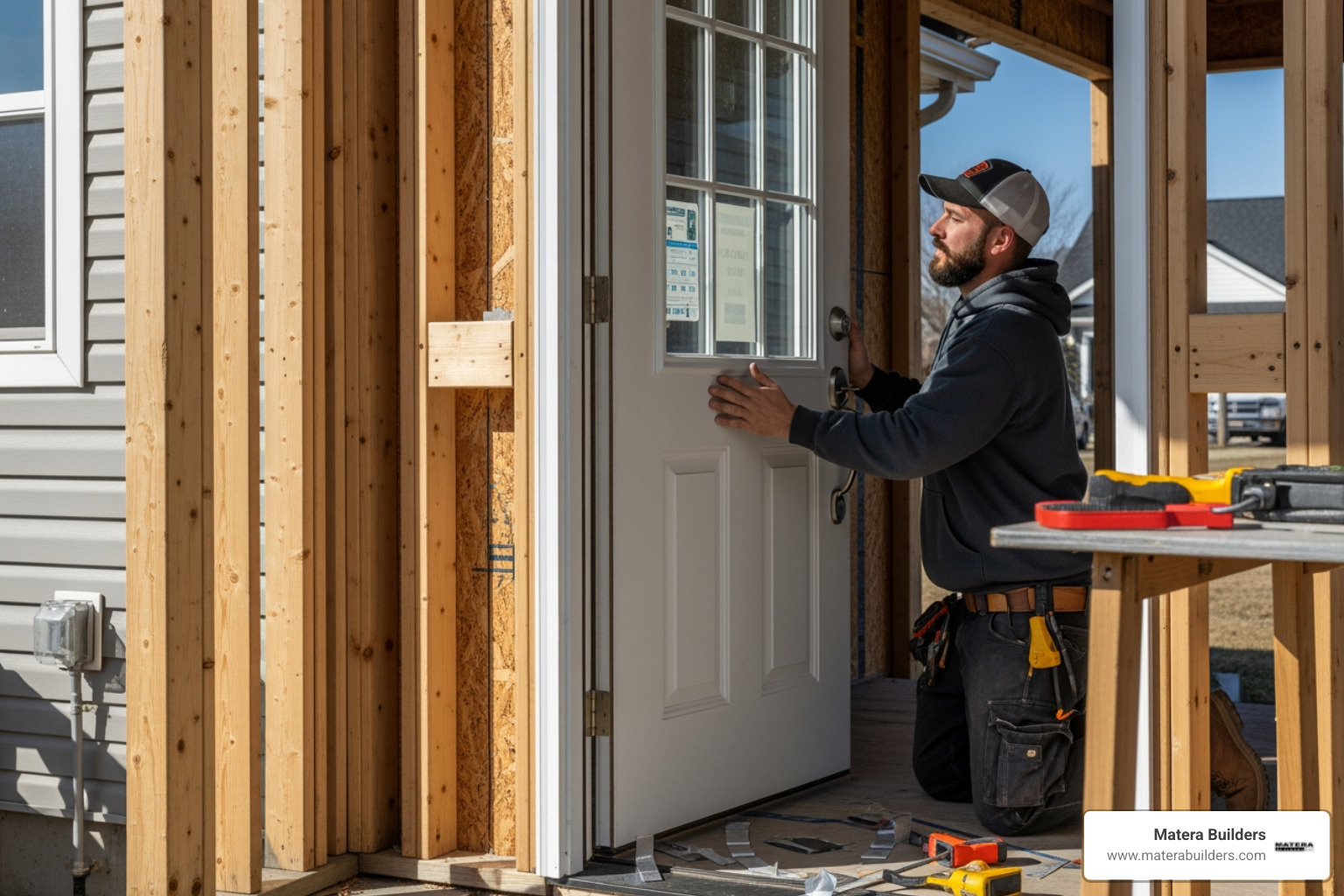
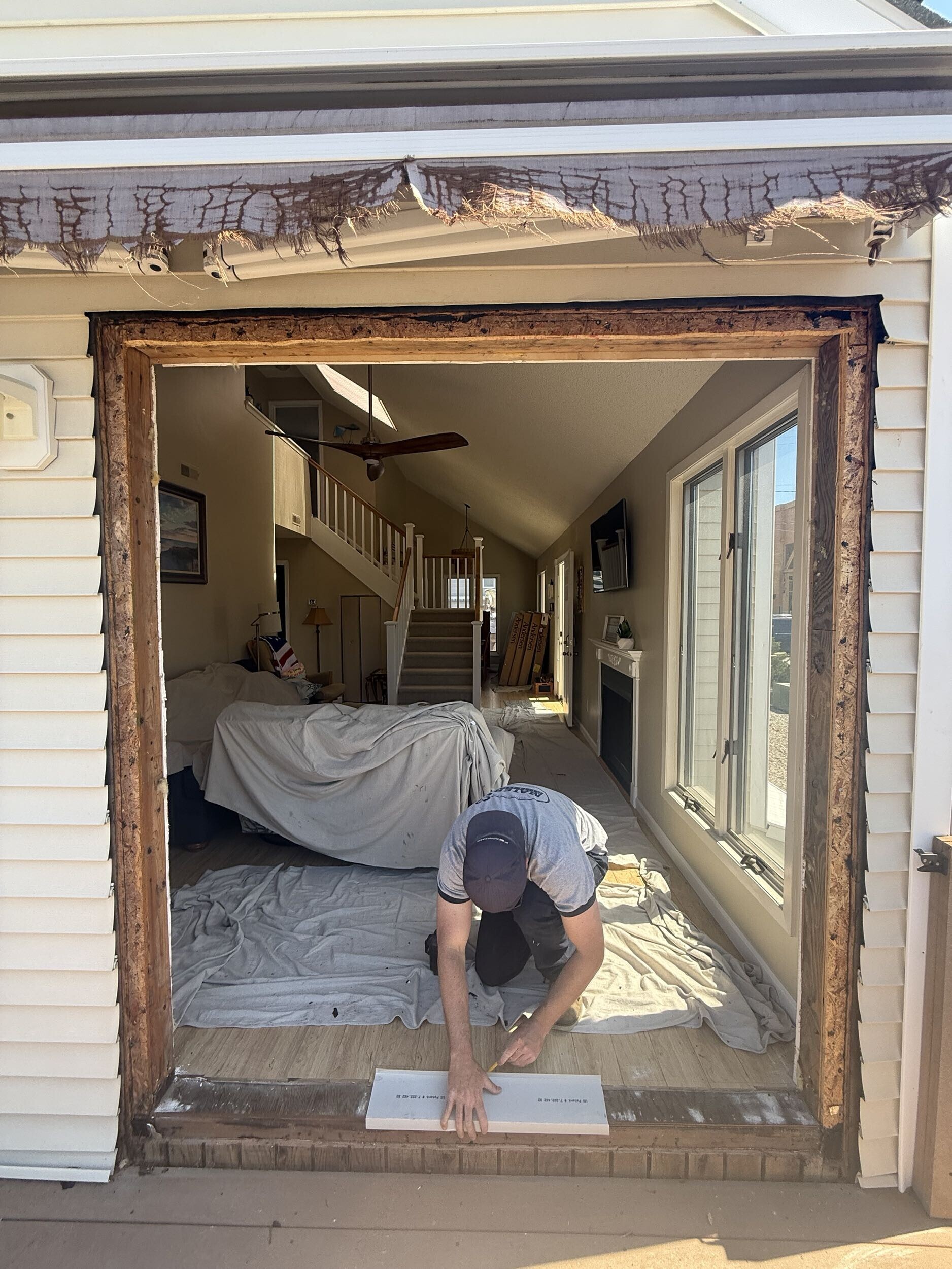
- Take out the old door. Remove the trim, cut the nails, and lift the old frame out.
- Put in the new door. Use shims to make the frame straight. Secure it and add insulation.
- Test the door. Install the locks and weatherstripping. Make sure it opens and closes smoothly.
Your front door does a lot of work. It stops drafts and helps control moisture. It should keep wind-driven rain out. It should also keep your home safe. And it is the first thing people see when they visit.
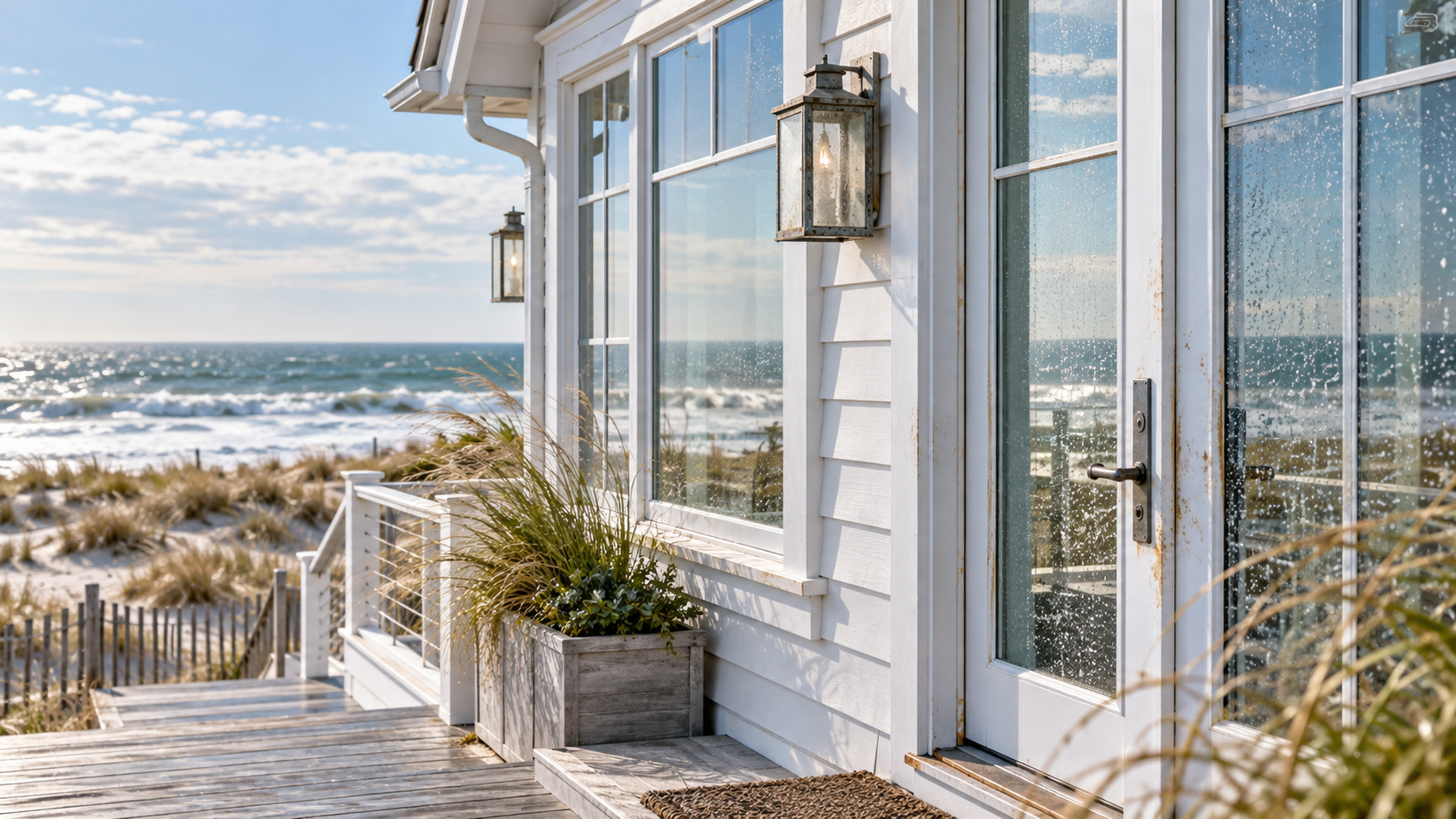
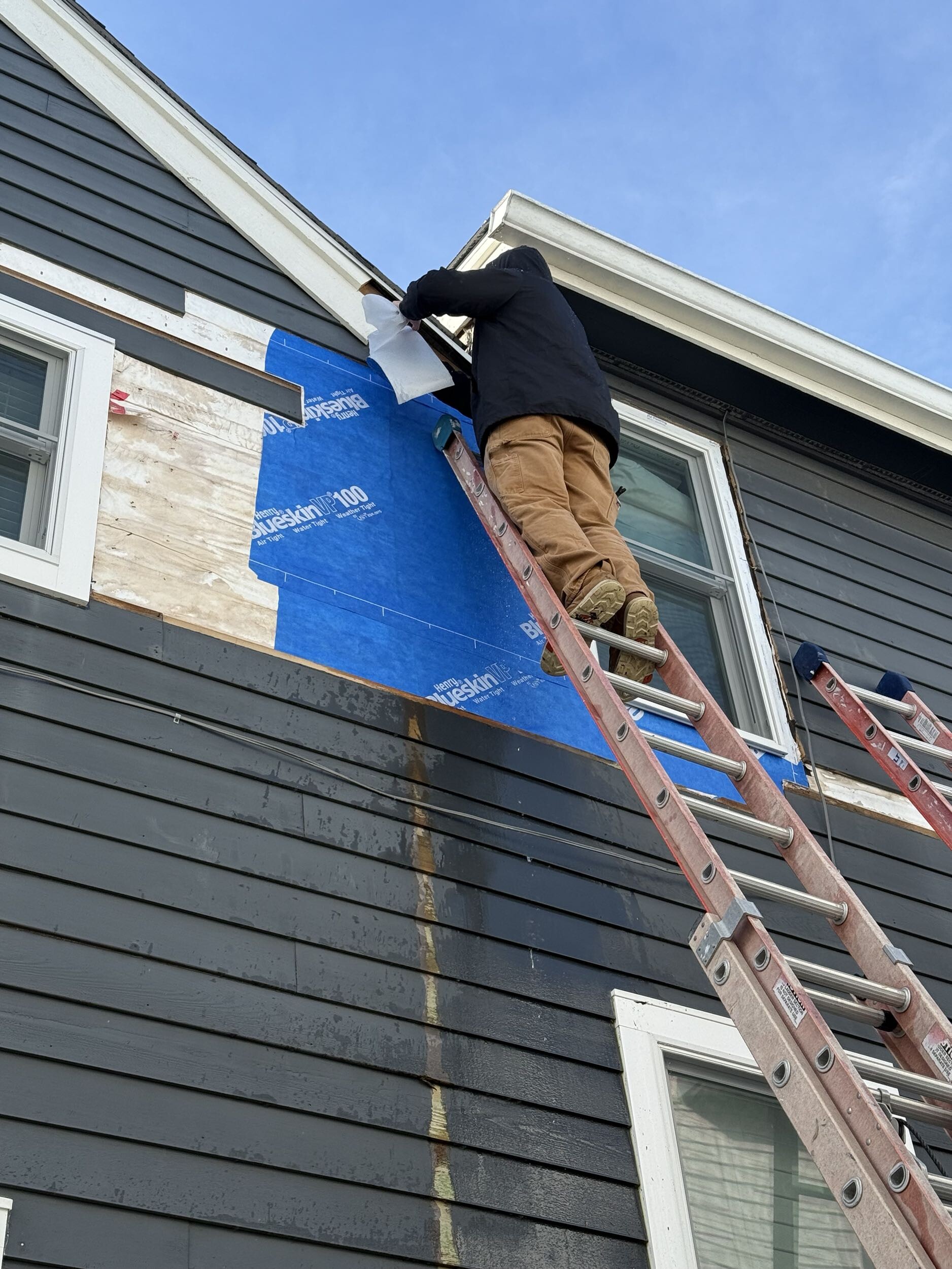
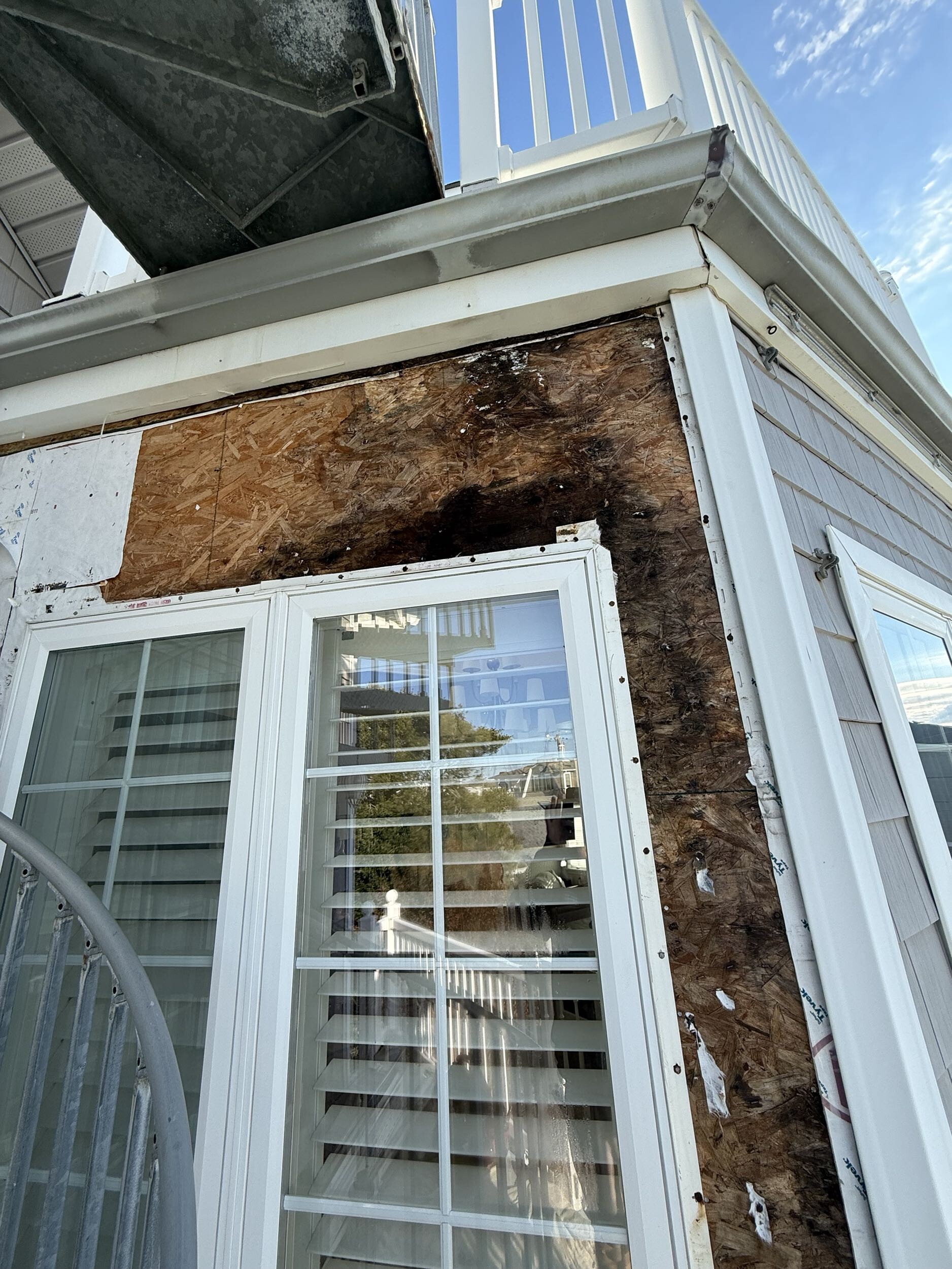
If you feel cold air, see staining, or smell damp wood near the entry, do not assume it is just an old door. It can be a flashing problem. In coastal NJ, a small leak can turn into rot fast, especially at the sill and the lower corners of the jamb.
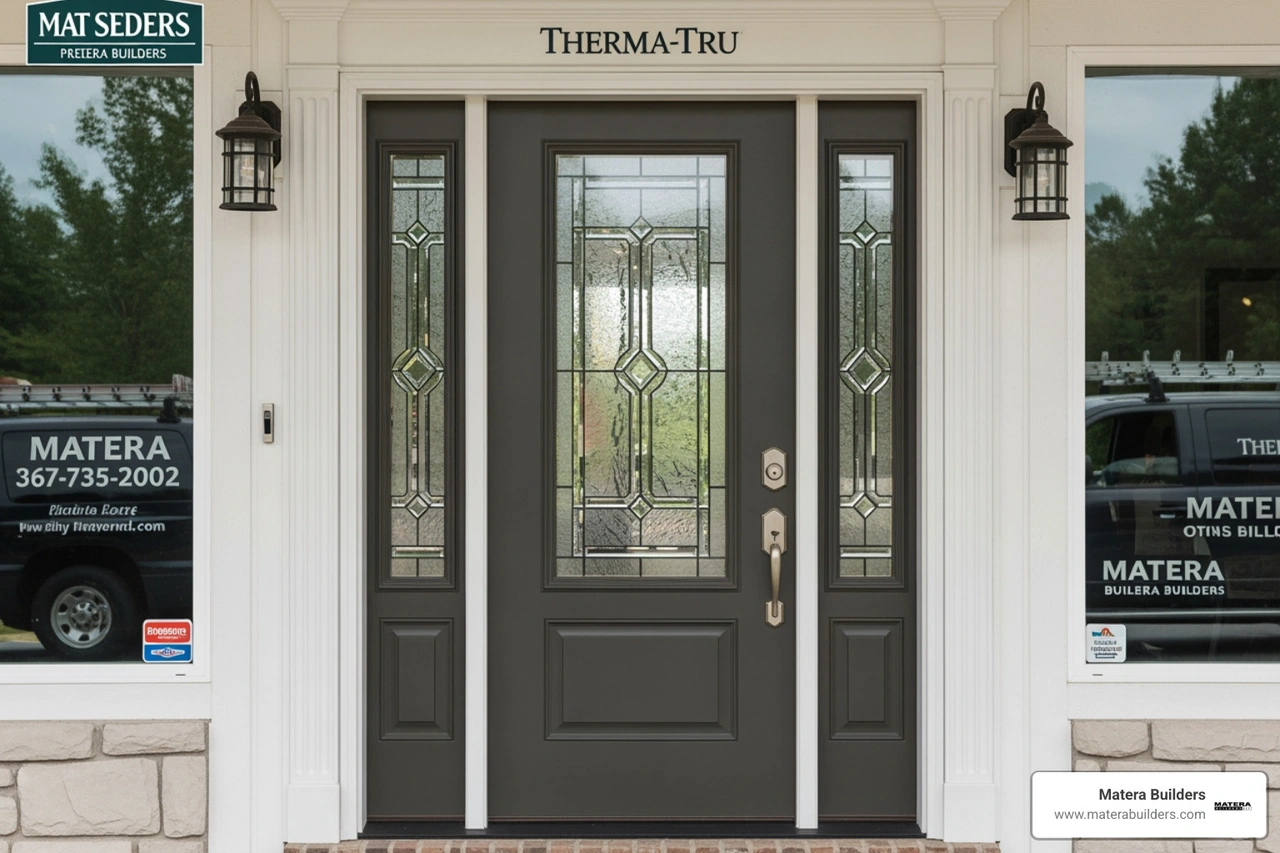
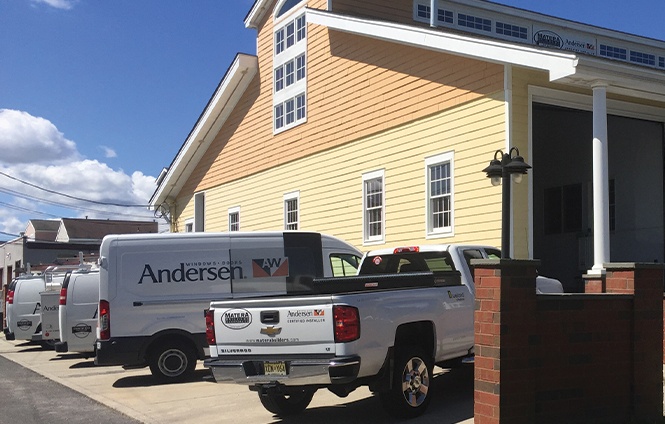
I am Mike Werner, CEO of Matera Builders, an Andersen Elite Certified Contractor and Therma-Tru Certified Installer. I have led high-performance door and window projects in Ocean City, Avalon, Stone Harbor, and Sea Isle City since 1988, with a focus on precision installation. If you are thinking about replacing front door units, this guide will help. It covers everything from spotting warning signs to getting the job done right.
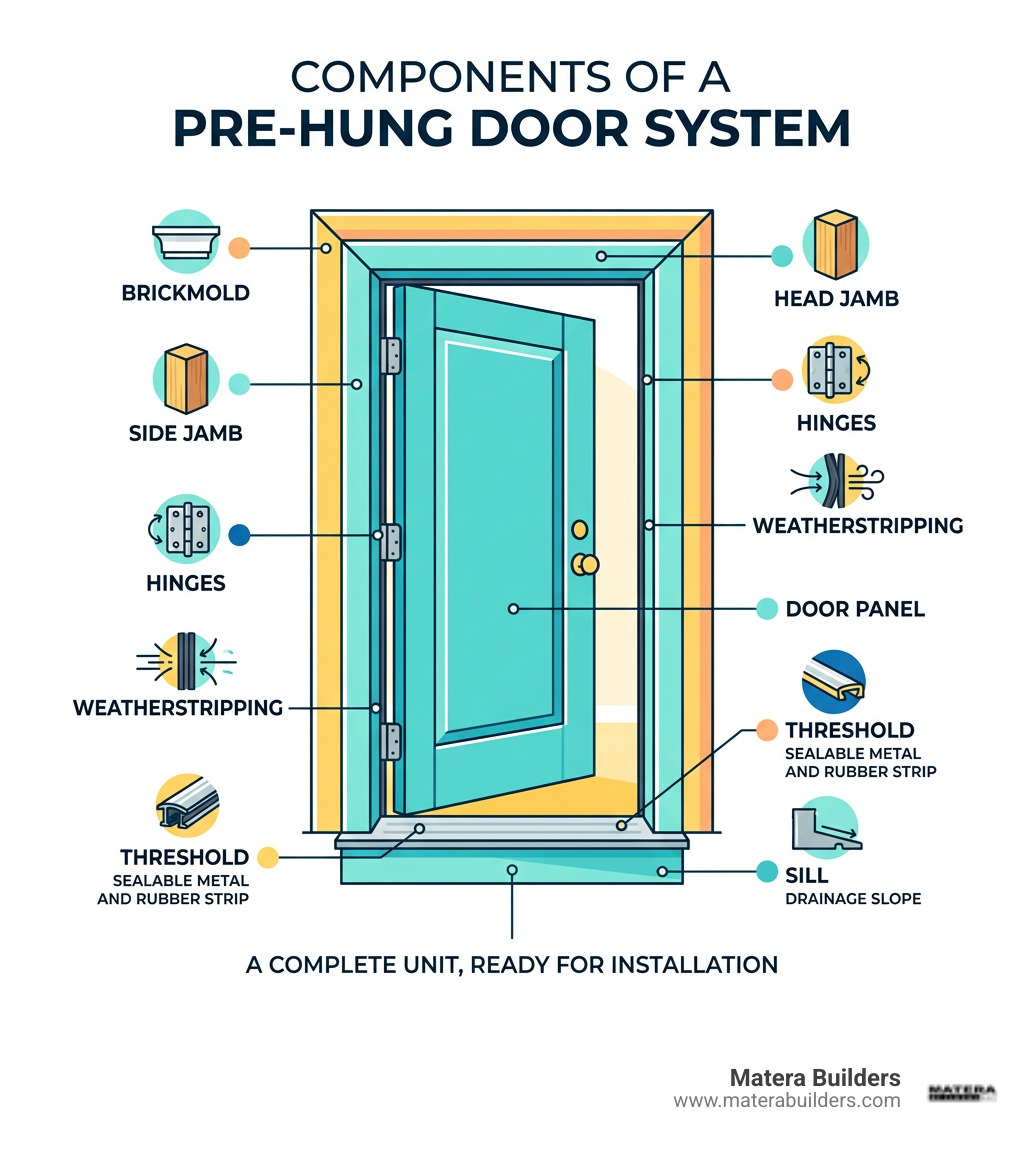
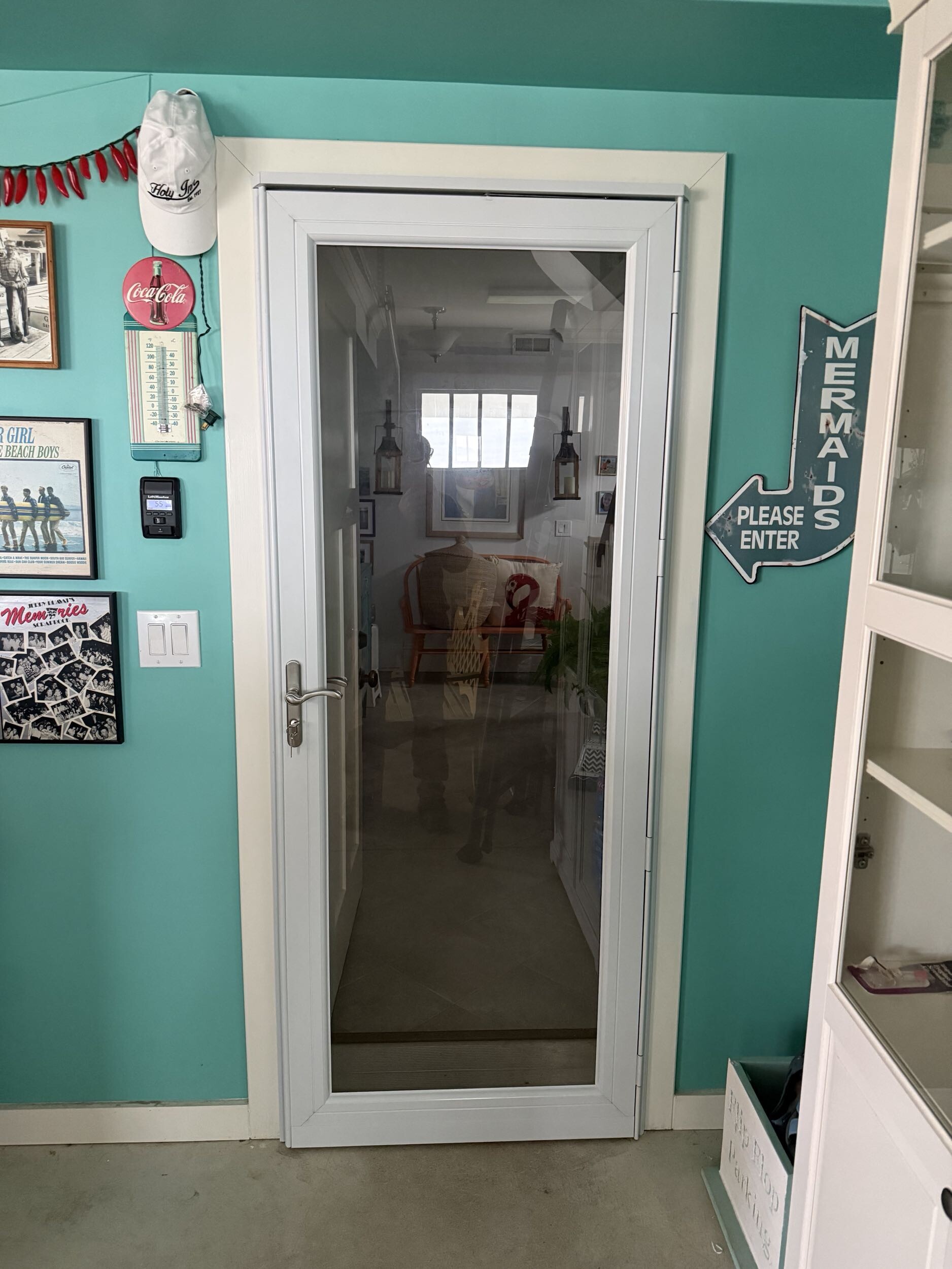
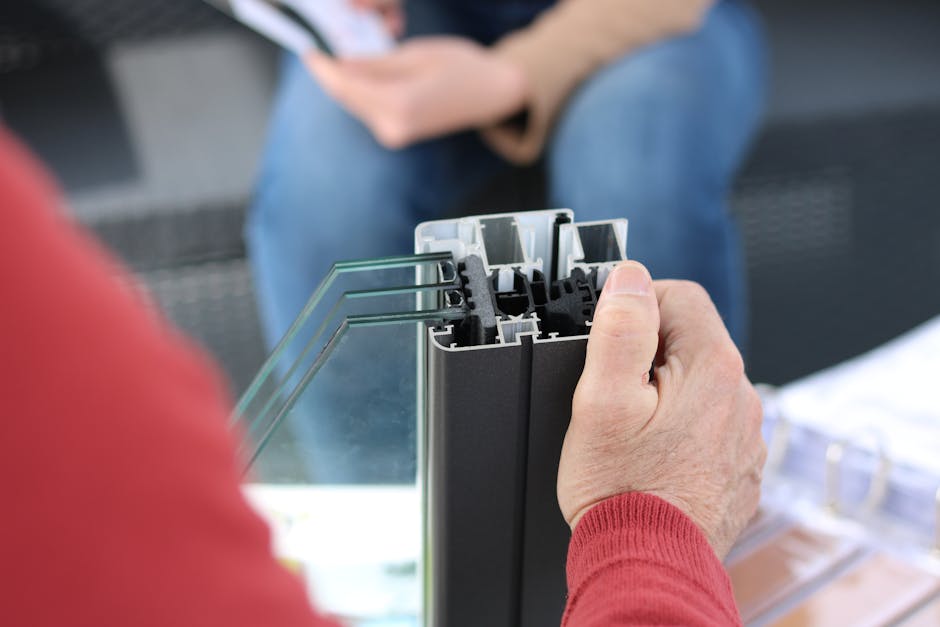
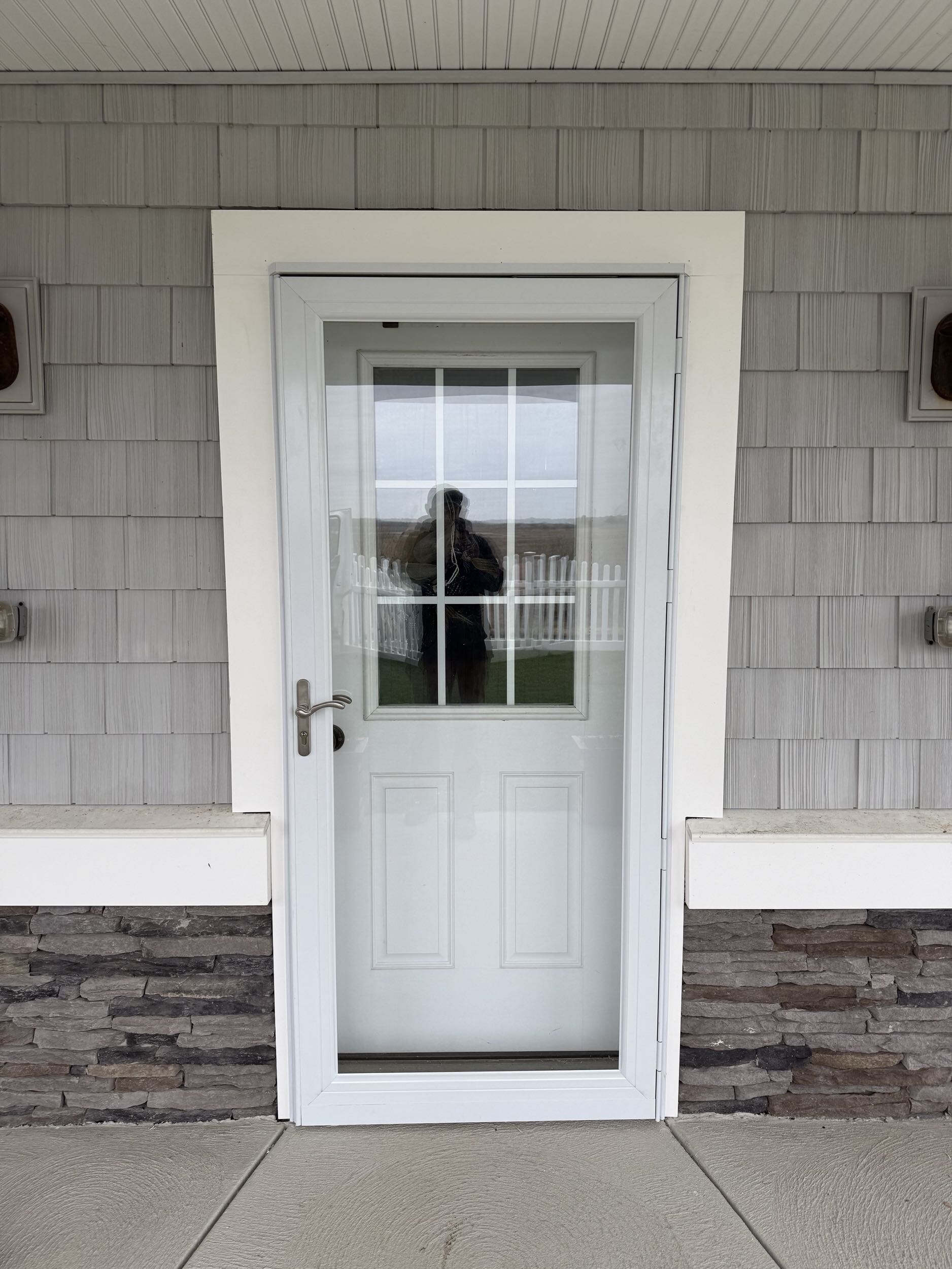
A pre-hung unit is a system. It is the door slab, the frame (jambs), the sill, the weatherstripping, and the trim details that manage water. If any part is installed wrong, the whole system suffers.
Knowing when to get a new door is not just about looks. In our work at the Jersey Shore, a door can look fine but still fail. Water is the biggest problem here. You can have good paint and still have a bad sill pan. You can have a nice handle set and still have air leaks around the latch side.
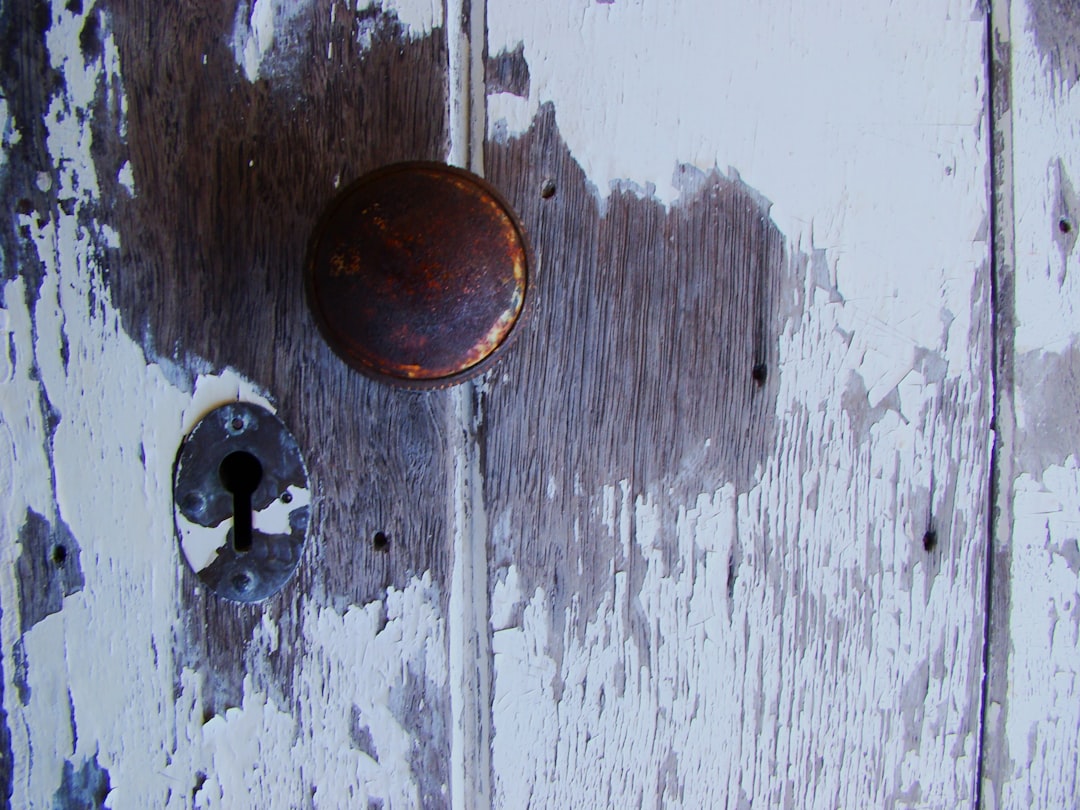
One of the first things we look for is rot. Take a screwdriver and press it into the bottom of the frame and the sill area. If the wood feels soft, you have rot. This often happens because the first installer did not use a proper sill pan or flashing tape. Sometimes the door was set too low, so water sits against the sill. Other times the trim was caulked in a way that traps water instead of draining it.
Other signs you need a new door include:
- Air Leaks: If you see light or feel a breeze, you are wasting money on energy bills.
- Water at the threshold: Puddles, staining, or swollen flooring near the entry often means the sill is not managing water.
- Sticking: If the door is hard to open, the house may have settled or the door has swollen from humidity.
- Loose Hinges: If the door sags, the wood inside the frame might be weak.
- Rust: On steel doors, rust is a big problem. It eats the door from the inside out.
- Security: If the door feels flimsy, your home is not safe.
- Curb appeal: Faded panels, peeling paint, or a dated style can hurt resale value, even if the door still works.
A quick test you can do is the dollar-bill test. Close the door on a bill and pull. If it slides out easily at several points, the door is not sealing tight. That can mean worn weatherstripping or a frame that is out of alignment.
Does Your Front Door Need Replacing? If you have these problems, it is time to stop fixing and start replacing.
Choosing Materials for Coastal Performance
In New Jersey, the right material matters. Salt air and high humidity can ruin a door in just a few years. Some materials work much better than others.
Material Pros Cons Best For Fiberglass No rot or rust. Very energy efficient. Looks like wood. Costs more than steel. Coastal homes. Steel Very strong and safe. Good for budgets. C an rust or dent. Security and budget builds. Wood Beautiful style. Good insulation. Needs a lot of work to keep it nice. Historic homes.
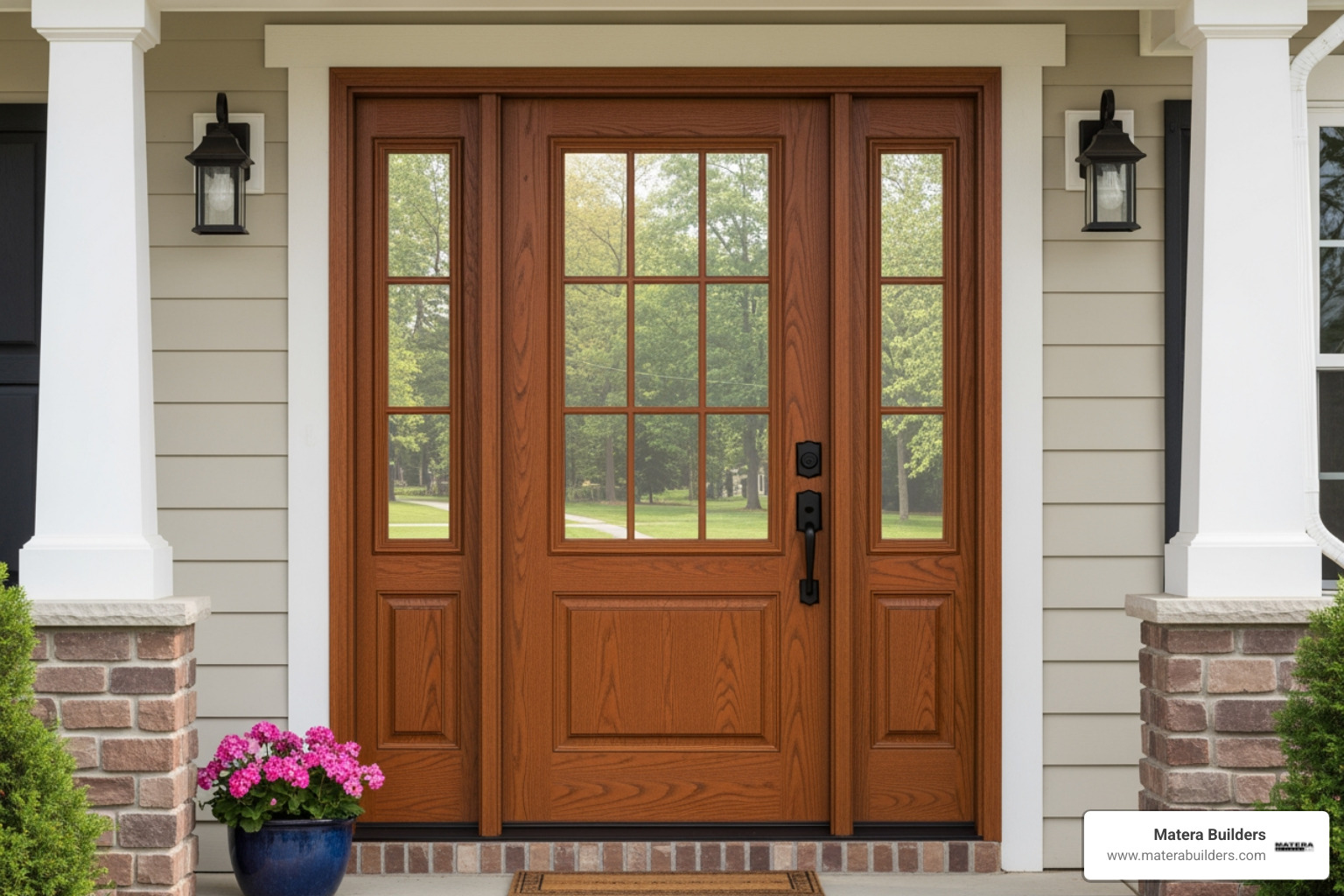
For most of our clients, I recommend Andersen Doors systems we install they are built for coastal conditions. Fiberglass is also a great choice. They use materials like Fibrex that are very strong. Fiberglass is also a great choice. It does not rot or rust. It also does not grow or shrink when the New Jersey humidity gets high.
Check the R-value of your door. This tells you how well it keeps heat in. A wood door might be an R-2. A good fiberglass door can be an R-5. We also use multipoint locks. These lock the door in three spots: the top, middle, and bottom. This keeps the door tight and safe.
Step-by-Step Guide to Entry Door Installation
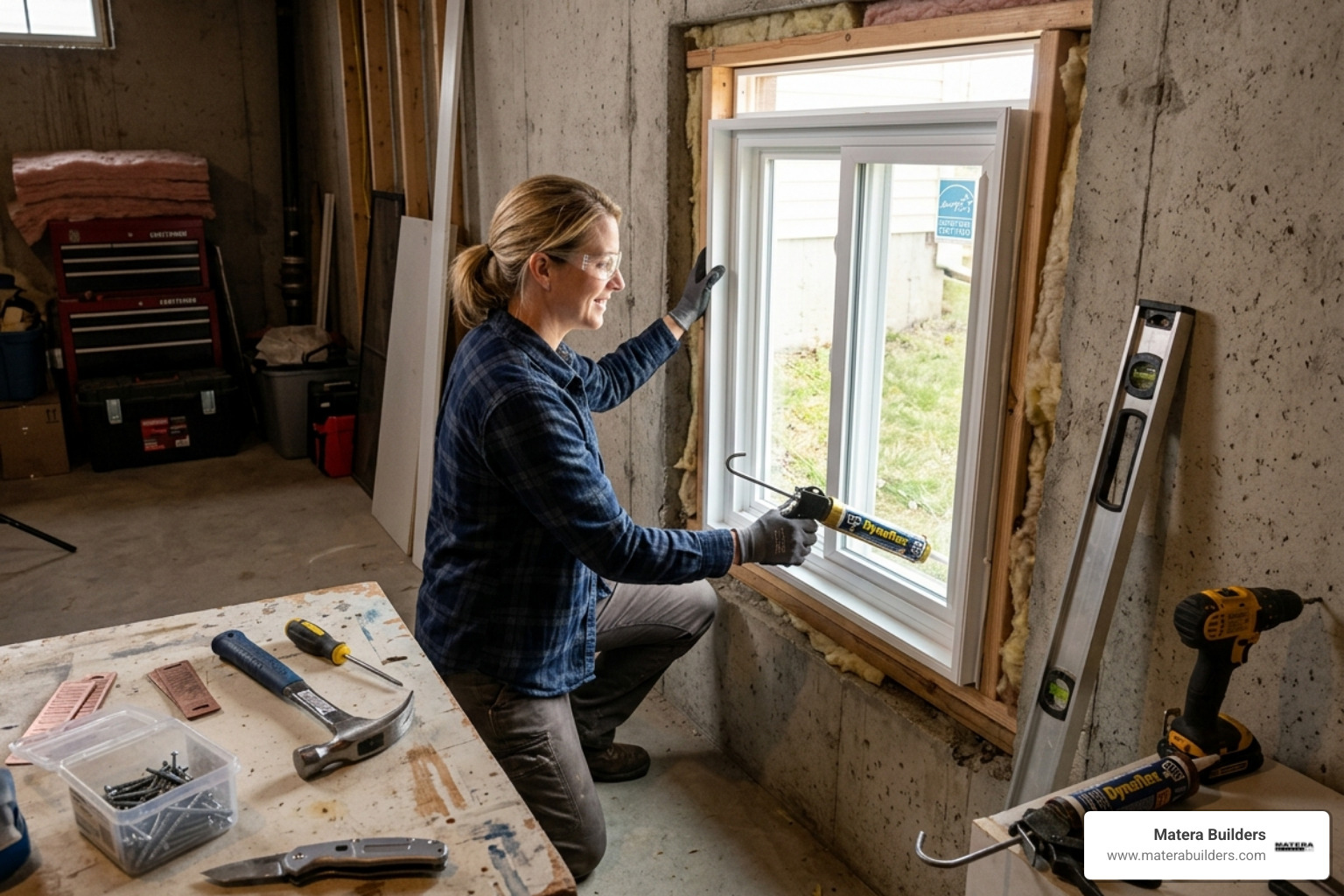
Installing a door takes a lot of care. If you want to do it yourself, you must be very precise. Here is how we do it.
The Tool List
You need a pry bar, a 4-foot level, a hammer, and a drill. You also need shims, a saw, caulk, and foam.
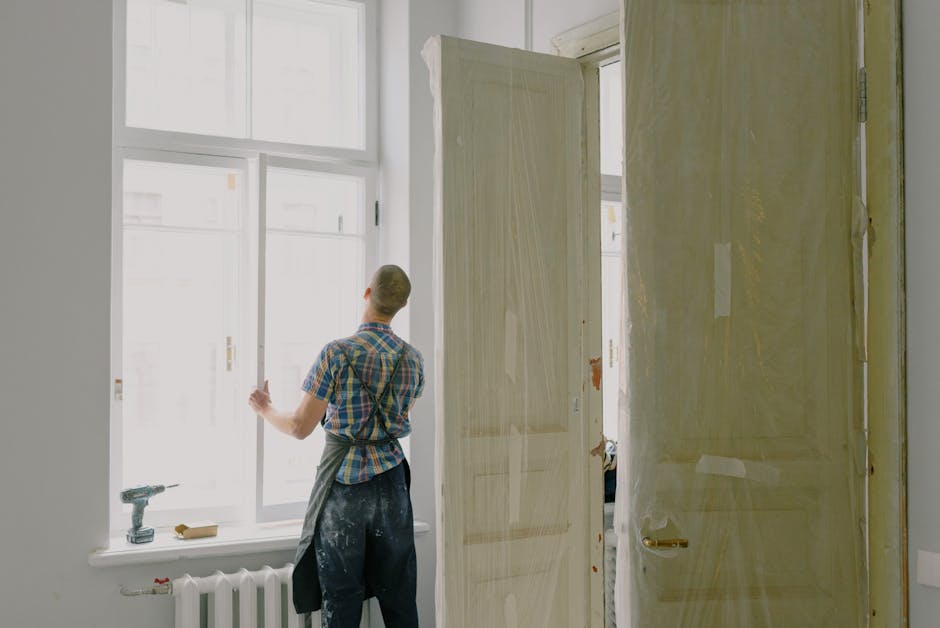
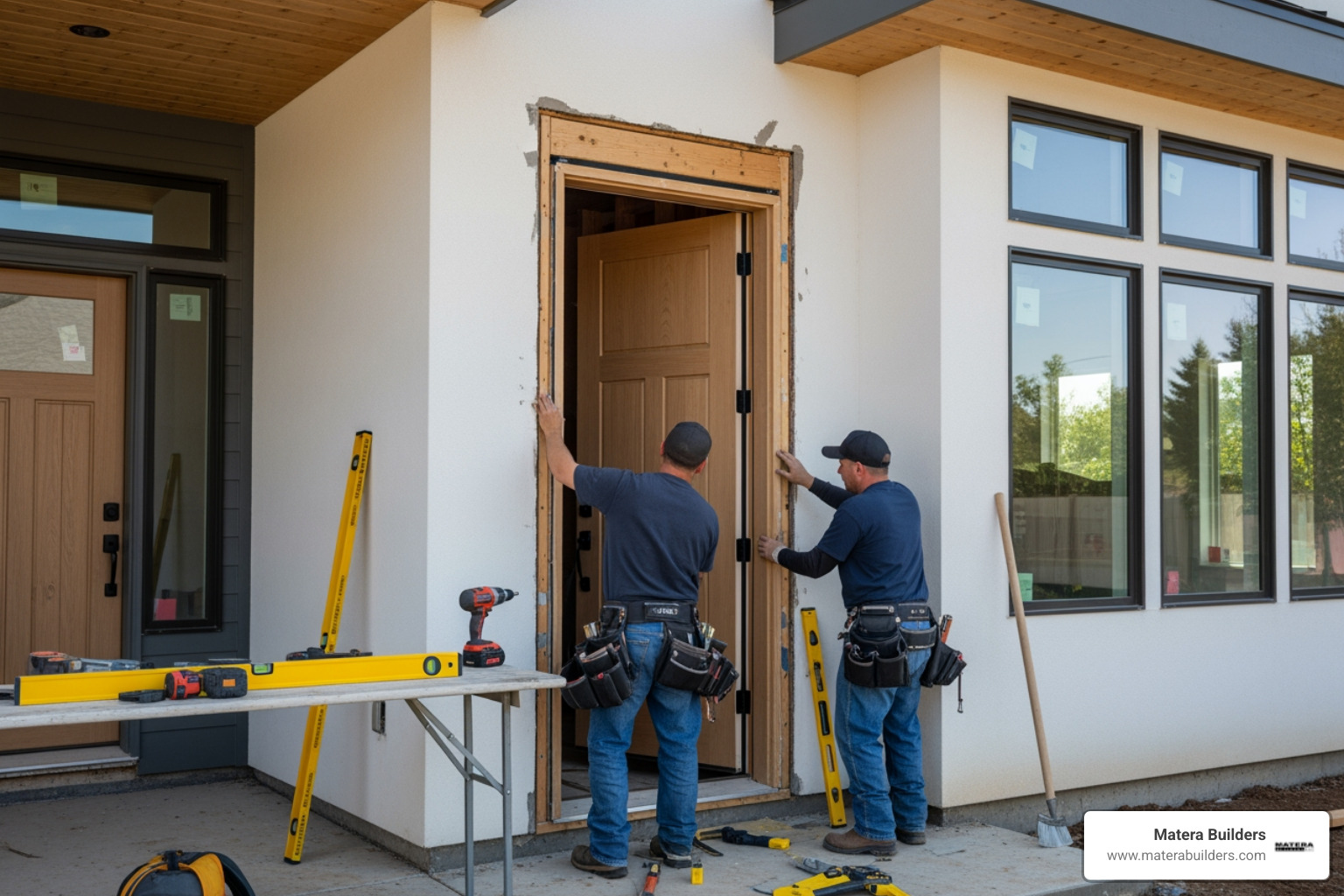
1. Removing the Old Door
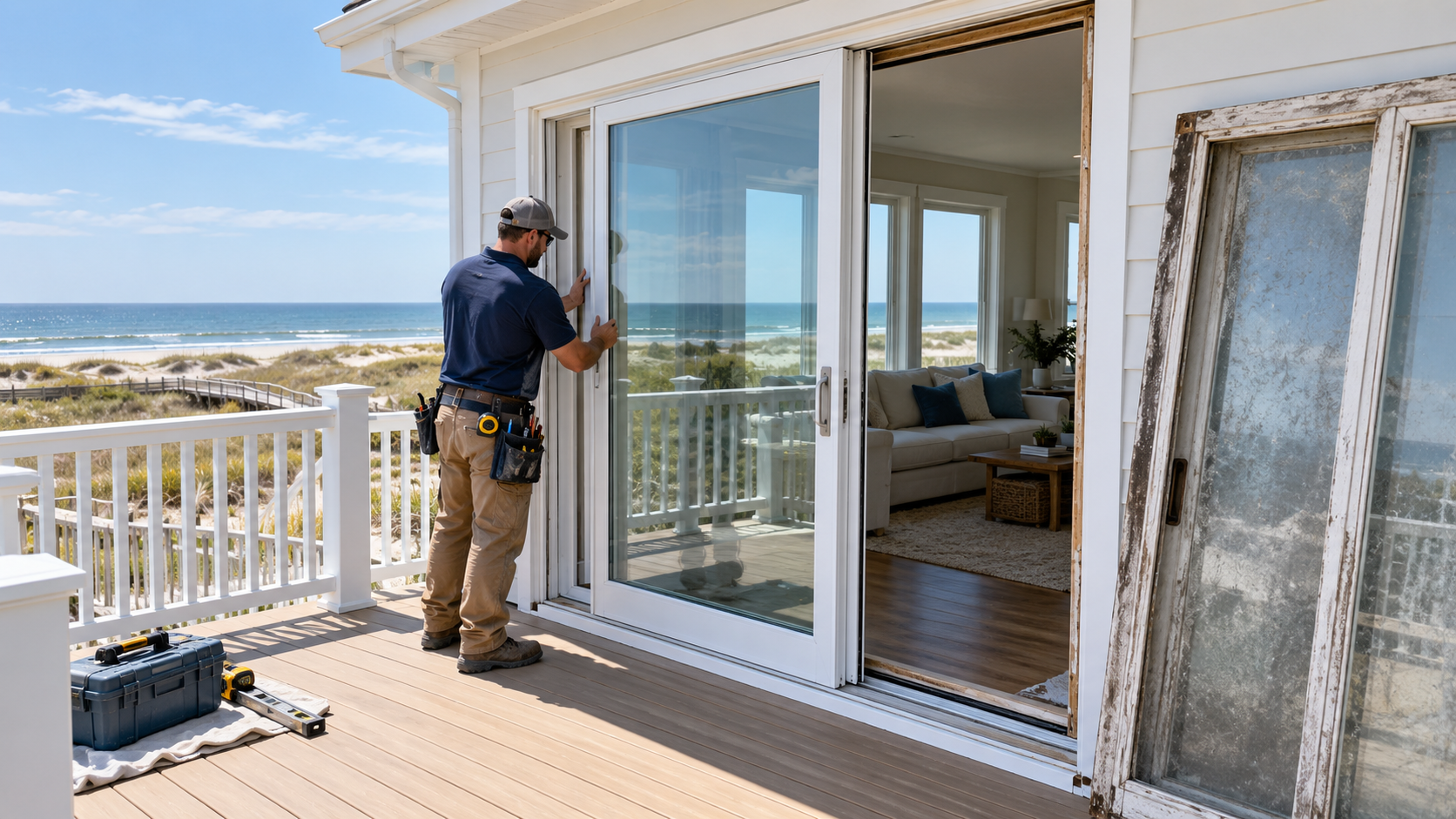
We take off the inside and outside trim. We use a saw to cut the old nails between the frame and the wall. Then we lift the old door and frame out.
2. Prepping the Opening
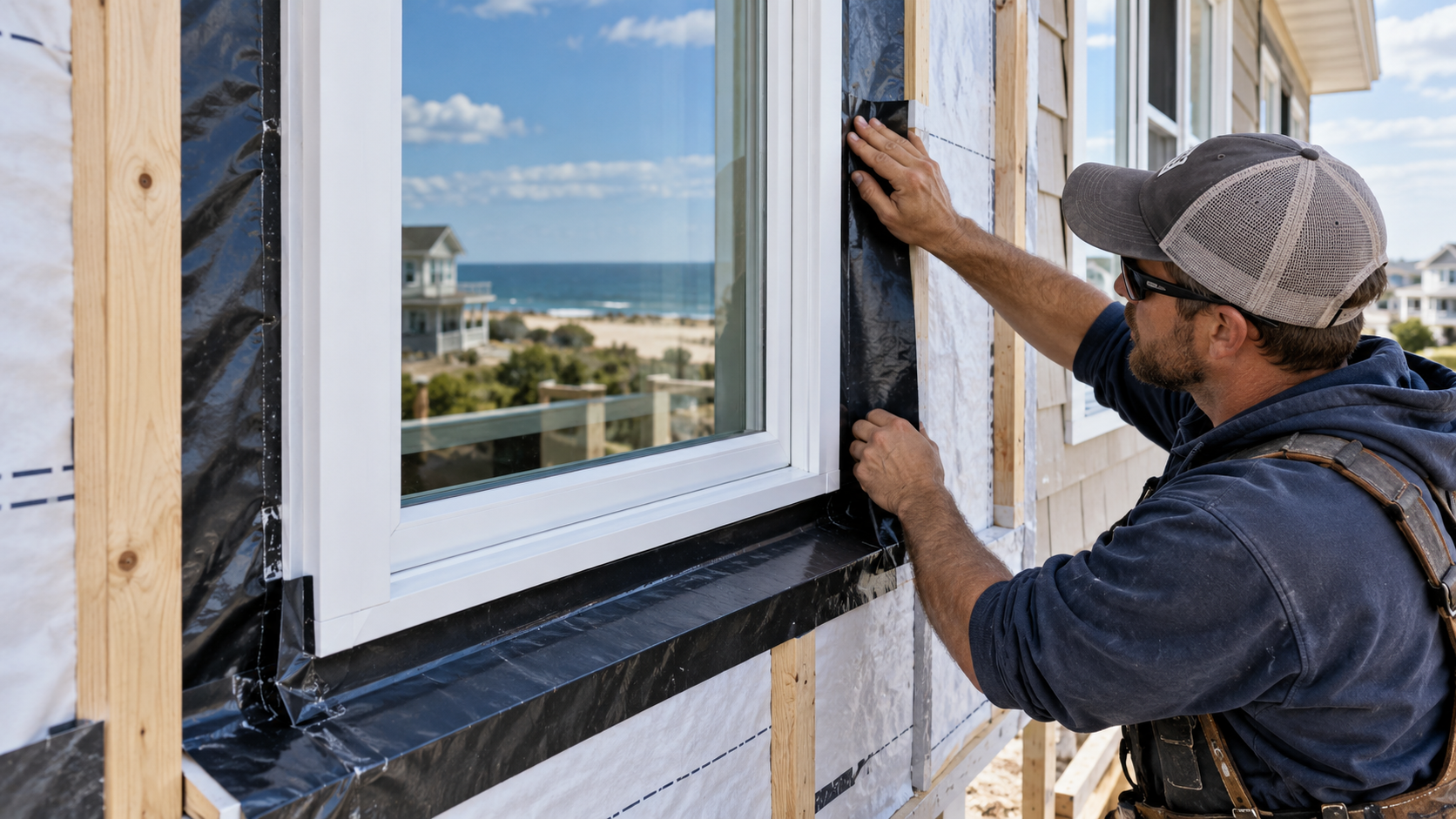
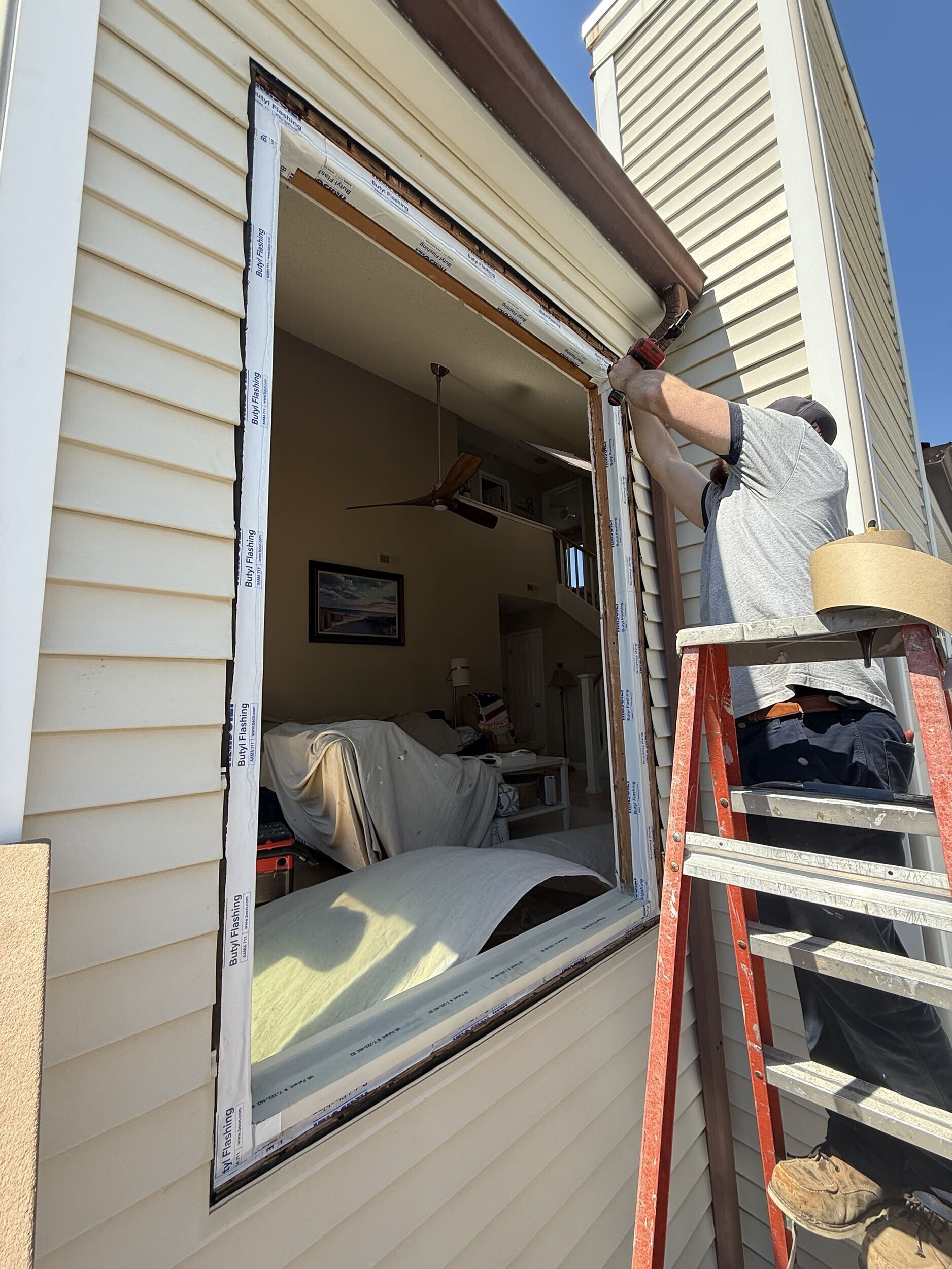
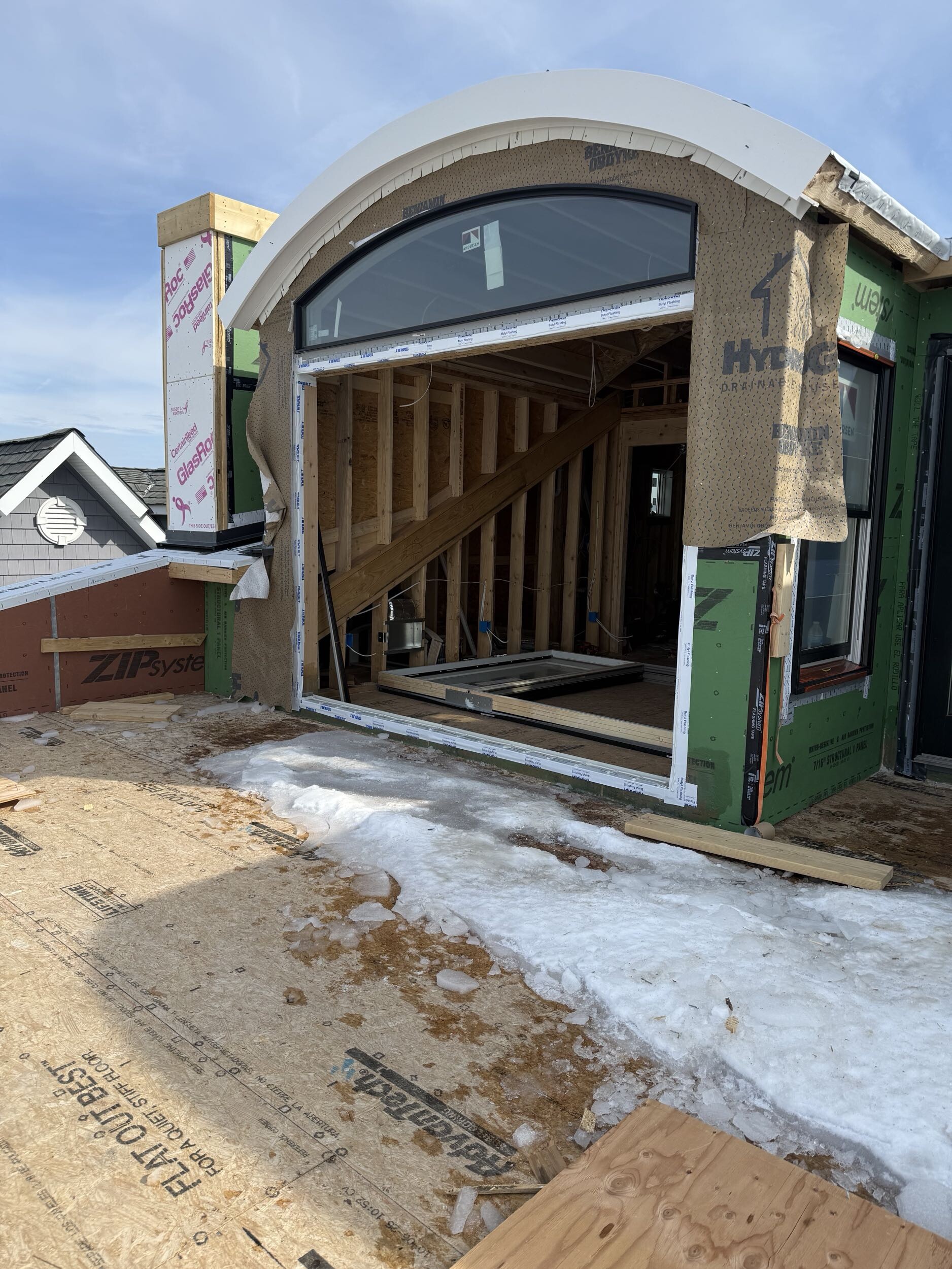
We clean the wood studs and check for rot. We always put in a sill pan. This is a tray that sits under the door. It catches water and sends it outside. We also use flashing tape to keep water out of the house.
3. Setting the New Door
We put caulk on the bottom and the back of the trim. Then we lift the new door into the hole.
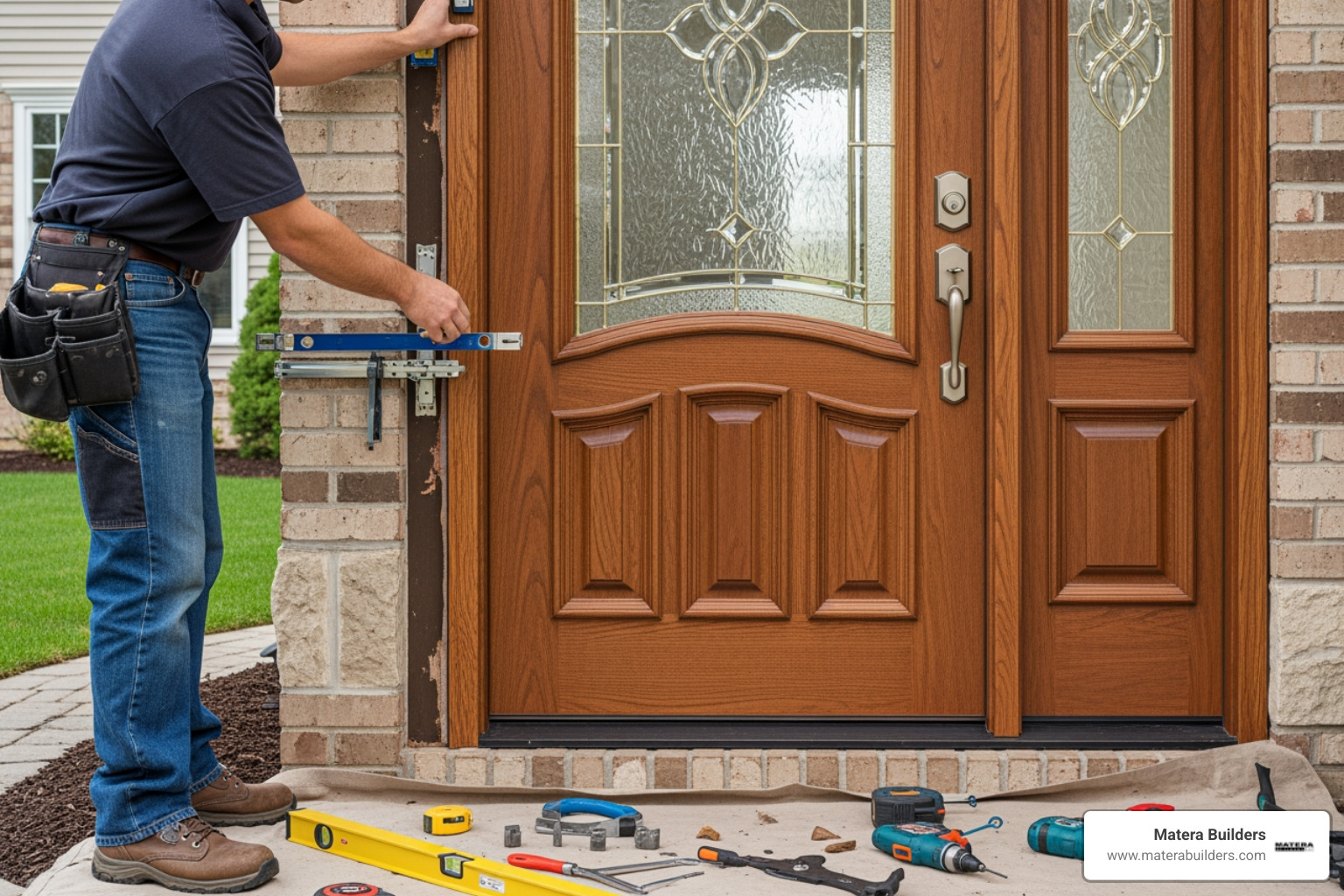
4. Leveling
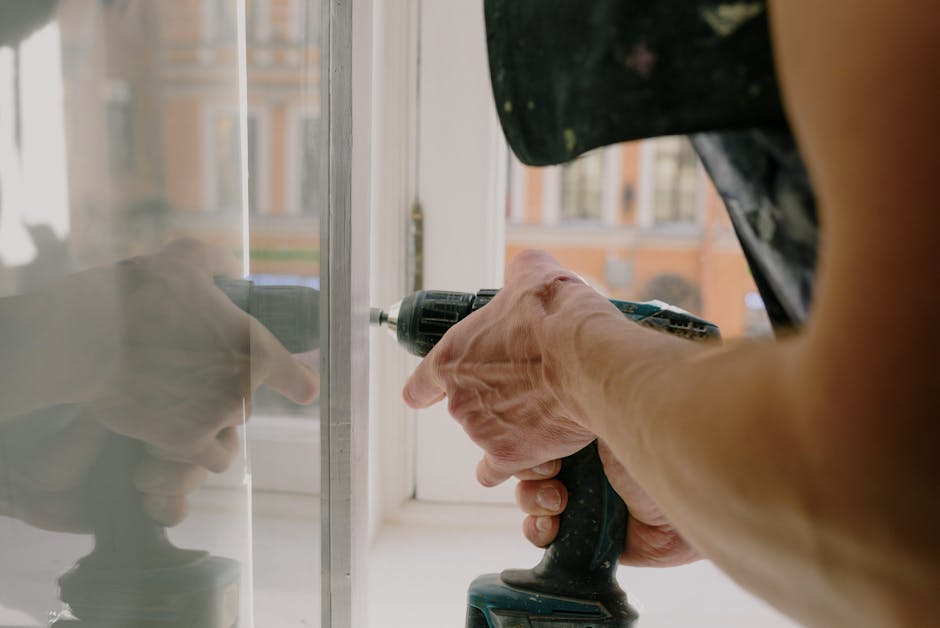
We use a level to make sure the door is straight. We put shims behind the hinges. This makes sure the house frame holds the weight of the door.
5. Sealing
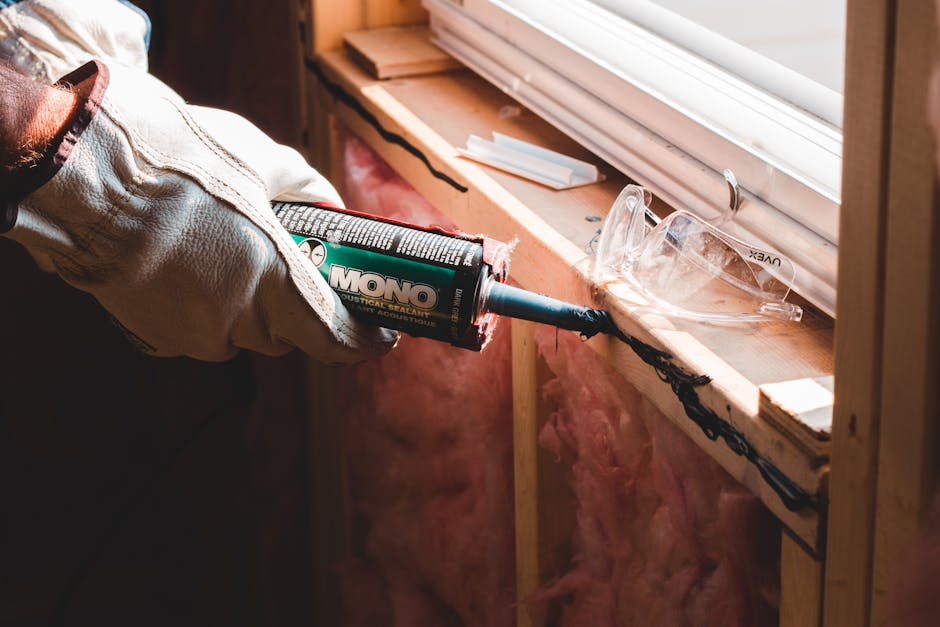
We use 3-inch screws to hold the door in place. We fill the gaps with foam. We use low-expansion foam so the frame does not bend. If the frame bends, the door will not close.
For more on our exterior services, we focus on the small details. Good weatherstripping is what stops those cold winter drafts.
Why Professional Installation Beats DIY
I have been a contractor since 1988. Replacing front door units is hard because most houses are not perfectly square. We often find rot or settled walls when we take the old door out.
A DIY job might result in a door that leaks or sticks. At Matera Builders, we use science to install doors. We know how to protect them from salt air and storms. This keeps the parts inside from rusting.
As a window replacement contractor, I know that brands like Andersen have strict rules for installation. If you do it yourself and make a mistake, the warranty might not cover it. We also handle all the permits and codes for coastal NJ.
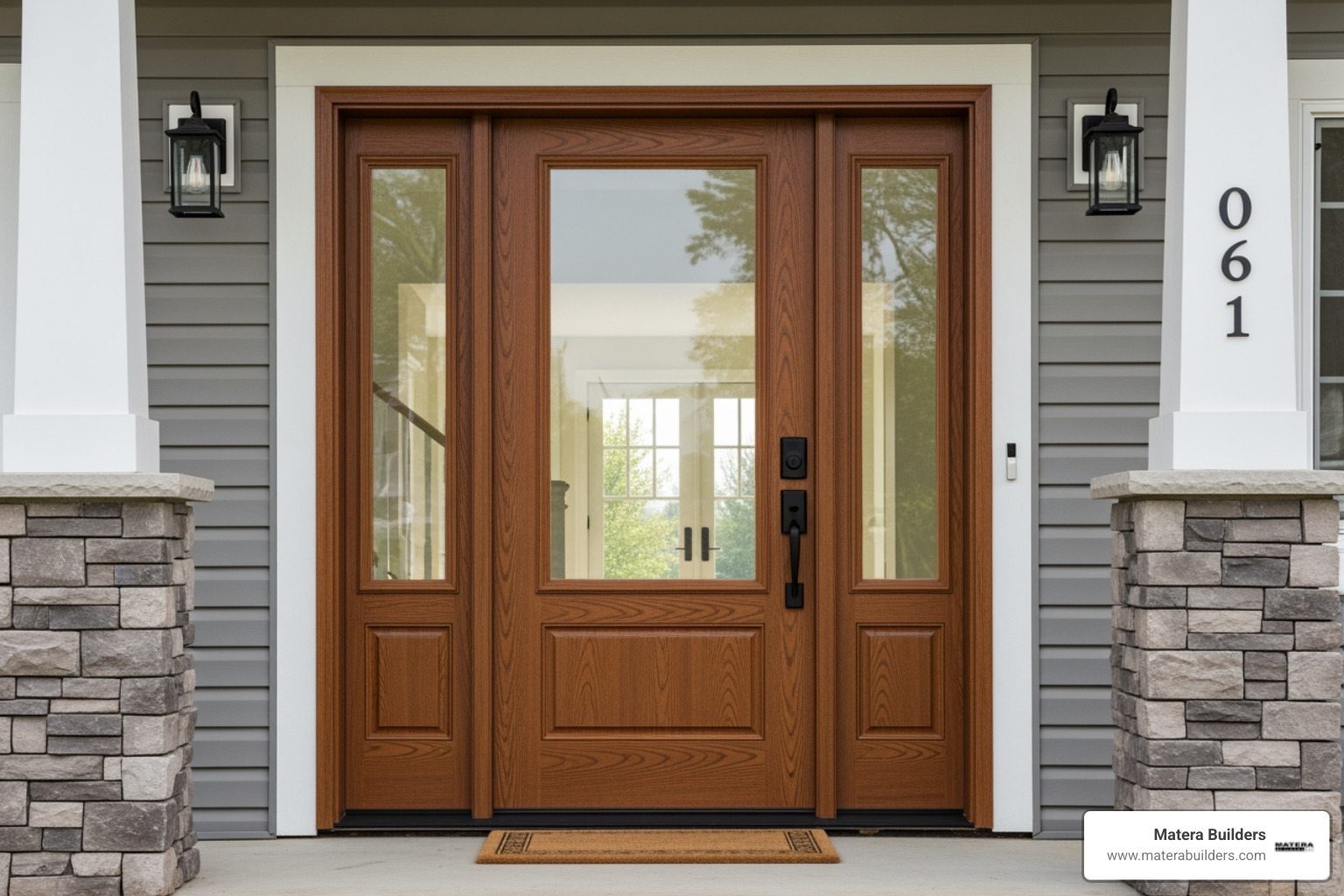
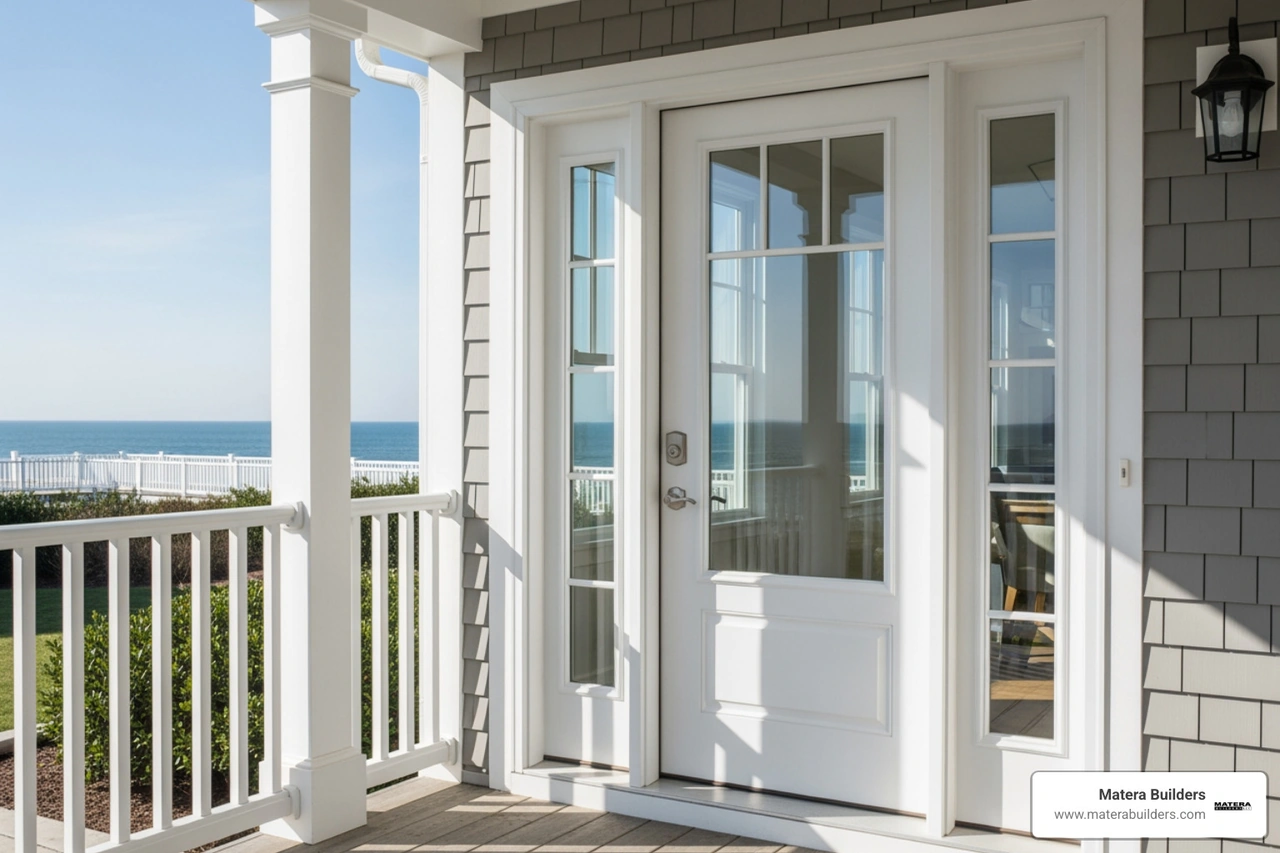
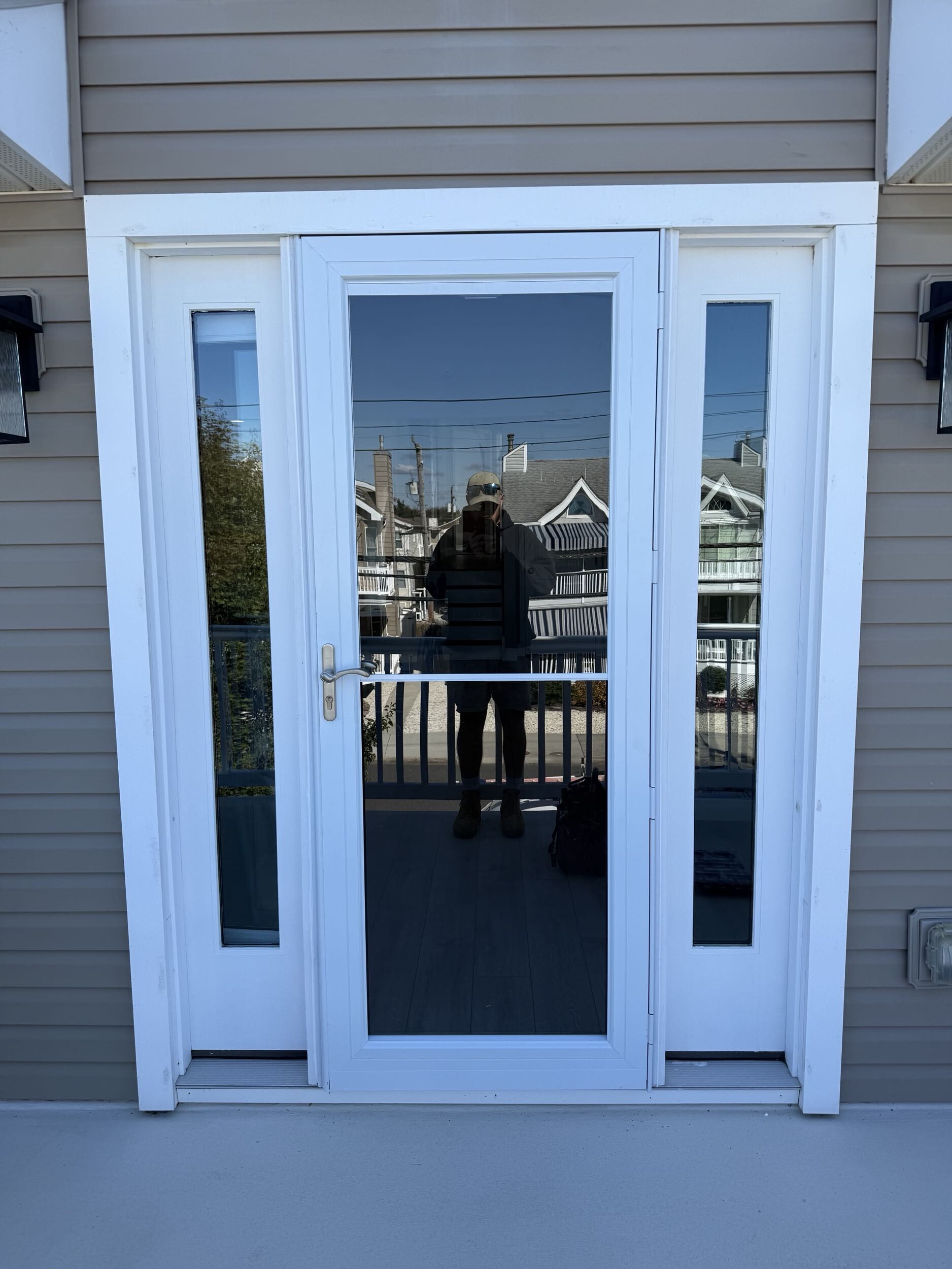
If you want a bigger door or sidelights, you need a pro. We handle big doors that need new framing. We make sure your home stays strong while we work.
Frequently Asked Questions
How to measure for replacing front door
Measure the rough opening, not just the door itself.
- Width: Measure the space between the studs in three spots. Use the smallest number.
- Height: Measure from the floor to the top of the opening.
- Jamb Depth: Measure how thick your wall is.
Most doors are 36 inches by 80 inches. You also need to know which way the door swings. Stand outside. If the hinges are on the right and you push the door in, it is a right-hand inswing.
Average costs for replacing front door materials
- Steel Doors: $150 to $4,000. These can rust near the ocean.
- Fiberglass Doors: $200 to $5,000. These are the best choice for New Jersey.
- Wood Doors: $500 to $6,000. These need a lot of painting and care.
- Labor: It usually costs $800 to $1,200 for a pro to install a door. This can go up if we find rot.
We can give you a clear price after we look at your home.
Conclusion
Replacing front door units helps your home look better and save energy. In our coastal area, you need a perfect installation. Salt air and water will find any mistake.
At Matera Builders, Mike Werner and Our team has been doing this work since 1988. We do not just hang doors. We build entry systems that keep out the weather. We use Andersen doors because they are built to last in coastal conditions. We make sure every job is done with care.
Do you want to update your home? More info about our home renovation services is ready for you. Contact us today for a consultation. We will make sure your new door is installed the right way.



.jpg)
.jpg)